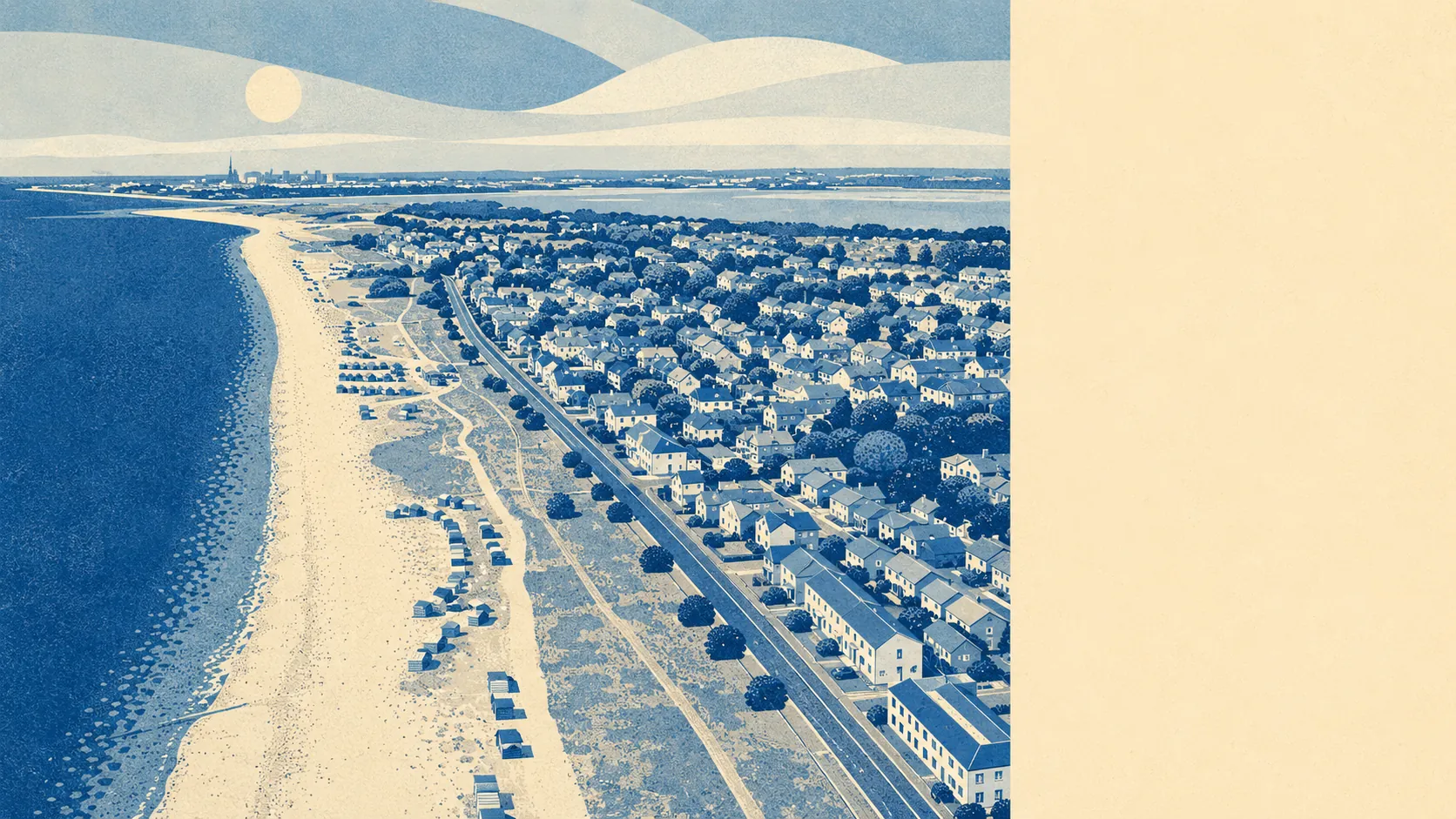
Hayling Island is mostly inhabited by people who already had a life and brought it here, rather than by people who came to start one. The median age is fifty-seven. About three-quarters of households own their home. Three in ten work from home, and most of the rest are retired. One in three households is a single person, and around one in five is a single pensioner. Hayling has not been a magnet for the London-commuter outmigration that reshaped other coastal places, because the people who would have created one looked at the bridge and the train timetable and went somewhere else.
Around three-quarters of homes on Hayling Island are owner-occupied, well above the regional norm. About one in seven addresses is privately rented, and about one in twelve is socially rented. The owner-occupier share is what the demographic produces: an older population that has been on the island for years, paid off the mortgage on a previous house, and bought the bungalow with the proceeds rather than the building society. The private rented sector is small in absolute terms, and the listings that do come up tend to disappear quickly because the natural tenants are couples between jobs or families waiting on a sale rather than a flow of incoming professionals.
The median age on the island is fifty-seven, which is well above the median for England and well above the median for Havant Borough. Around one in seven residents falls inside the prime working-age band of twenty-five to forty-four. The other six in seven are either older than that, younger than that, or recently retired. The age profile is the dominant fact in everything from the bus loadings to the supermarket hours to the kind of business that opens on a side street. A median of fifty-seven is the age at which most people have stopped chasing the next bedroom and started thinking seriously about the next decade.
The median household income on the island runs at around £49,500. That number is not, by national standards, low. It is also not the number that would let any household afford to buy a house here on a single salary. The reason the price-to-income mismatch does not produce visible distress is that most residents already own outright. The mortgage was paid off in the previous house, in the previous town. The income figure funds the daily life. It is not what bought the address.
One in three households is a single person, and around one in five is a single pensioner. About one in nine is a couple with children. Roughly one in thirteen is a lone parent. The combined share of households that include children is small compared with most coastal-town averages. Around three in ten residents hold a degree. One in five carry no formal qualifications. The spread is wider than the average household income would suggest is happening underneath it. The overcrowding rate sits at around two percent, low by any comparable measure. Self-reported health is mostly good: around three-quarters describe theirs as good or very good. Three in ten people work from home, which tells you the kind of professional whose post-school decision was, eventually, to stop commuting at all.
Who lives on Hayling Island is mostly a description of a decision: older, owner-occupier, an income that funds rather than buys, a life-stage past the chase. Not Sandbanks money. Not Bognor's footprint of post-retirement holiday flats either. Somewhere in between, and visibly more done with the rat race than most of the south coast.