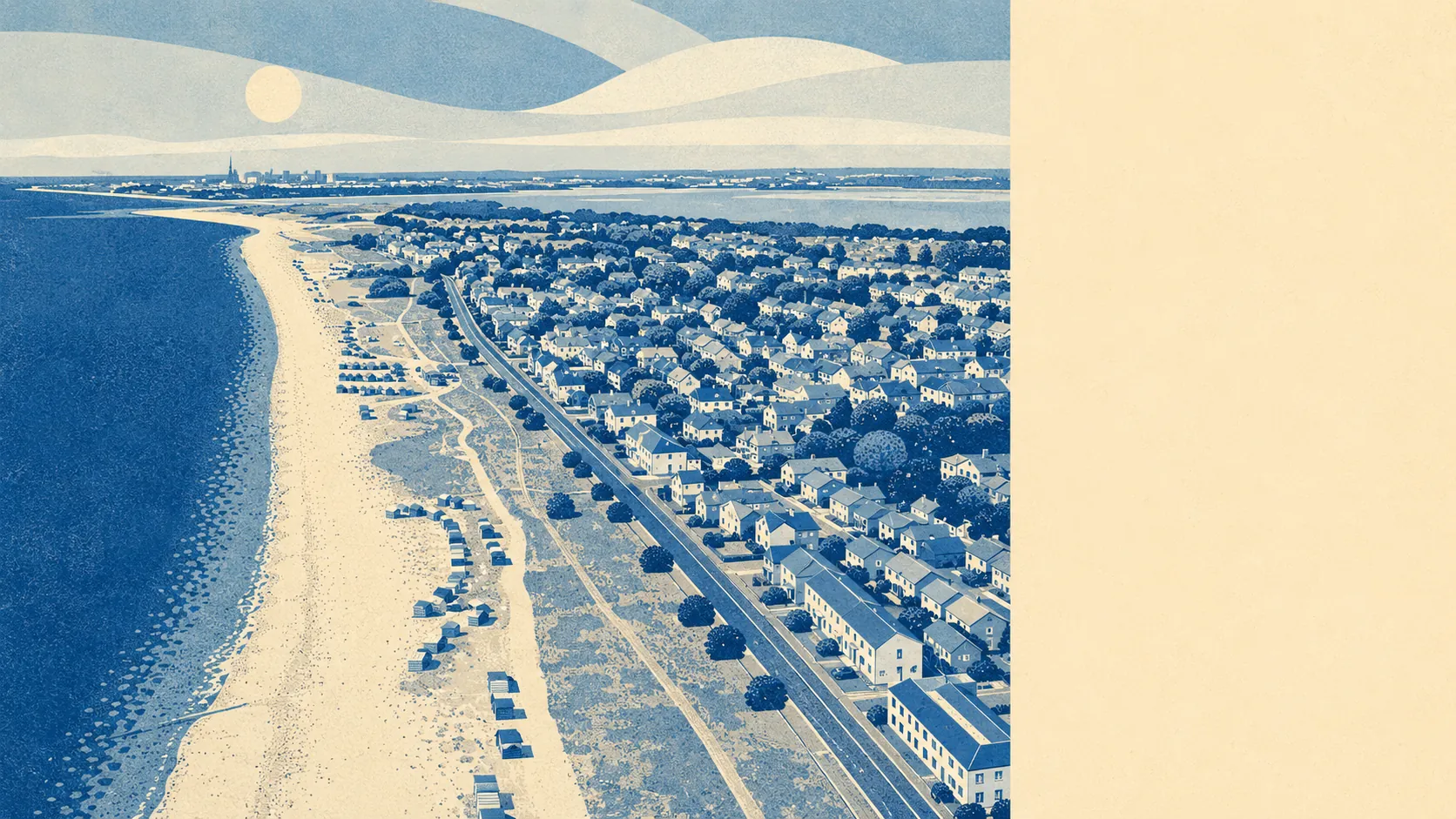
Hayling Island is well connected digitally and poorly connected physically, and the gap between the two is the story. About half of working residents drive to work. Less than one percent commutes by train, because the railway that used to cross onto the island closed in 1963 and nothing has been built to replace it. Three in ten work from home and the broadband is what makes that possible. The bridge does the road, the wire does the work, and the morning queue does the rest.
The nearest railway station is Havant Rail Station, on the mainland at the northern end of the bridge. Anyone using the train commutes by driving or busing to Havant first, which is what the under-one-percent train share reflects. From Havant, direct trains run west to Portsmouth & Southsea Rail Station and east along the coast, with onward services to London and to Cardiff. The Hayling Billy Line opened in 1867 and ran for ninety-six years before closing in 1963. The bridge that carried it was demolished in 1966. Nothing has been built to replace it. Eighty-four bus stops are spread across the island, and the bus accounts for less than two percent of journeys to work. Buses run from the island to Havant and onward to central Portsmouth across the road bridge. They are useful if you live near a route and your destination matches one. They are not the main thing that gets people about.
Broadband on the island runs at urban speeds despite the place being a former marsh ringed by tidal water. Gigabit availability reaches around three-quarters of postcodes. Superfast coverage runs at nearly every postcode. The share of postcodes unable to reach the universal service obligation is essentially zero. Mobile coverage at fast data speeds from at least one operator reaches every postcode the brief carries. Three in ten residents work from home, which is what the digital connectivity has enabled in a place that the rail network gave up on sixty years ago. The wires do what the trains do not.
A typical drive from the island to the nearest town centre takes around twenty minutes. The same trip by public transport runs at around thirty-two minutes, and by cycle at around thirty-eight. On foot it runs at around an hour and a half. Those numbers sit underneath the half-of-the-working-population-drives statistic. Island commutes are not impossible without a car, but they tilt heavily toward the car in a way the demographic has accepted as the trade for everything else the island offers. Anyone hoping the bus and the bike will substitute for the car needs to live within walking distance of a route that runs the journey they actually need. On a four-mile-by-four-mile island, walking distance is doing a lot of work.
Connectivity on Hayling Island is split down the middle: digital excellent, physical adequate-to-poor. Anyone whose work runs on bandwidth is well served. Anyone whose work runs on getting somewhere by ten in the morning will be reaching for car keys before the bus timetable.