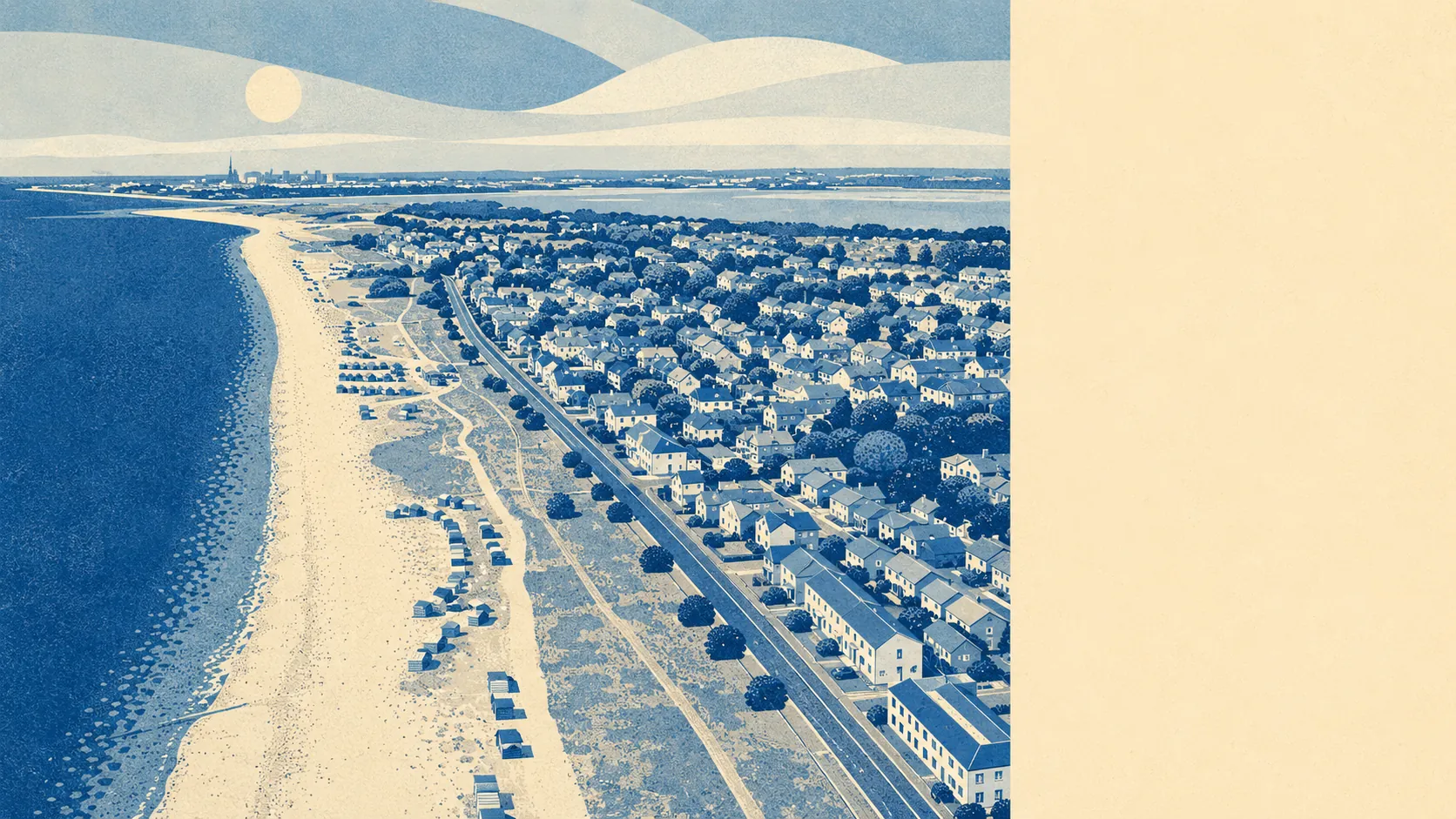
Yes, in most cases, because most of the housing stock on Hayling Island is post-war and sits outside the listed register. There are forty-nine listed buildings on the island. One conservation area covers a defined part of it. Two scheduled monuments add a thin extra layer in their immediate surroundings. The vast majority of homes sit outside all three boundaries. The freedom to extend depends on which house, not on which island.
There are forty-nine listed buildings on Hayling Island, of which one is Grade I, one is Grade II starred, and forty-seven are Grade II. Listed status restricts changes that would be permitted as of right on an unlisted house, and the restrictions cover both internal and external work. Most of the island's listed entries are churches, military structures, and a small number of older domestic buildings, rather than the kind of run-of-the-mill family house most buyers actually move into. The oldest survive from the medieval period: St Peter's Church traces to the twelfth century, and St Mary's Church carries a yew tree estimated to be a thousand years old or more in its churchyard. The listed register on the island is small in absolute terms and skewed toward institutional buildings, which means the average buyer is not the buyer who has to live with the constraint.
One conservation area covers a part of the island. The boundary and name are not published in the public register, which is a data-publication quirk rather than a planning quirk: the area exists, it just is not labelled on the open dataset this report works from. Conservation areas tighten the rules on alterations visible from the public realm, particularly demolition, replacement windows, and changes to roof line and street frontage. Permitted development rights are reduced rather than removed, and the threshold for needing full planning permission drops. A buyer inside the boundary should expect a slightly longer conversation with the planning officer about anything visible from the street, and not much extra friction on anything that is not.
For most houses on Hayling Island, extending is a permitted-development question first and a planning-application question second. The post-war housing stock, which makes up the bulk of the island, sits outside the listed register and almost certainly outside the conservation area. A rear extension, a loft conversion, a single-storey side return all proceed in the usual way for an unlisted house outside a designated area. Owners of a listed property or a property inside the conservation area face a longer process: listed building consent or conservation-area consent, and a planning officer who will ask careful questions about anything visible from the street. The two scheduled monuments on the island add an extra layer for any work close to them, but the island's residential stock is not concentrated around either of them.
The freedom to extend or alter a home on Hayling Island is the freedom of any moderately heritage-touched coastal place: real for the majority, constrained for a small and known minority. Roughly fifty buildings and one conservation boundary are the addresses that will need the longer route. Everyone else extends in the usual way.