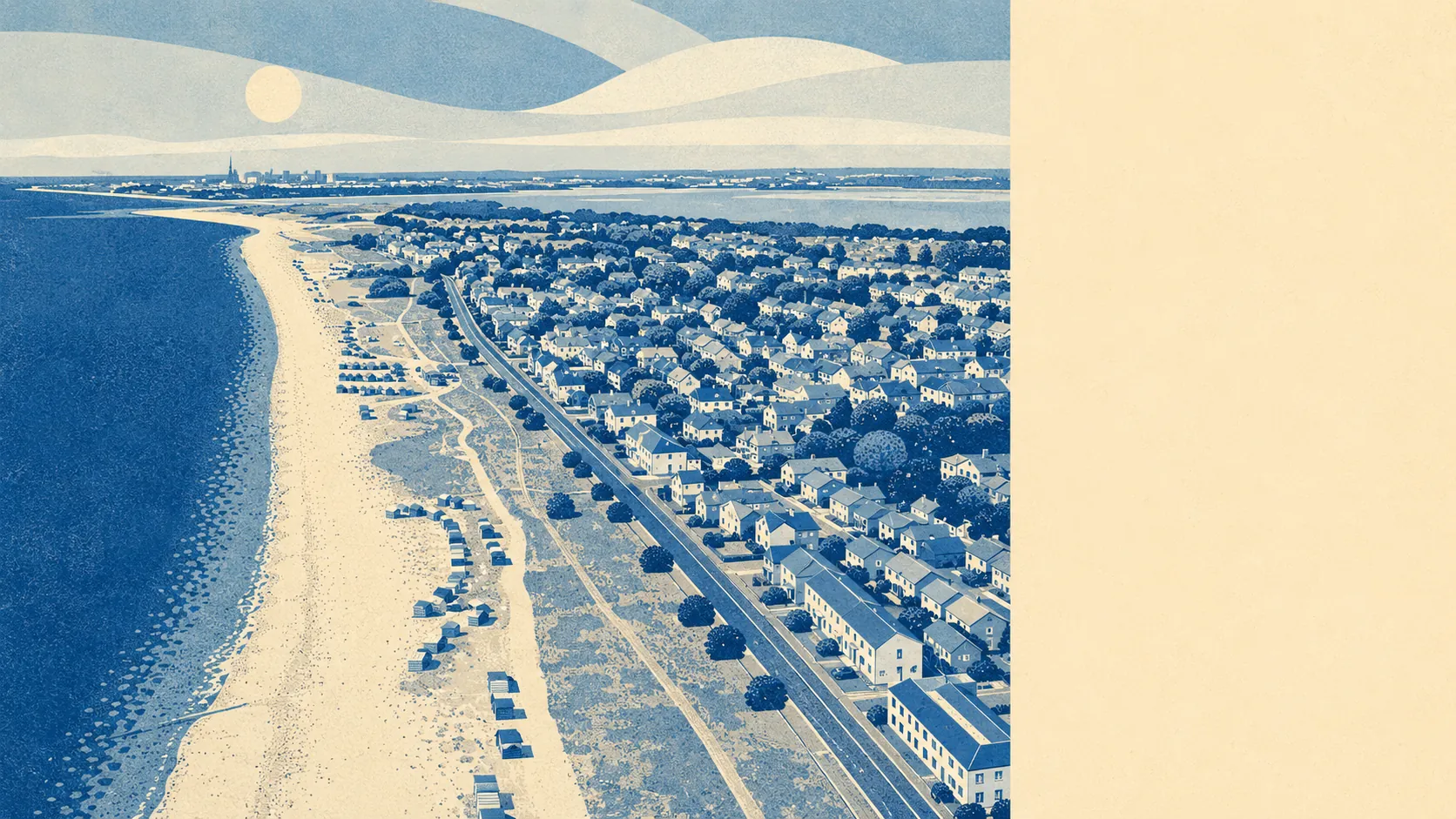
Crime on Hayling Island runs at a rate the rest of Havant Borough would happily borrow. The island's figure for the last twelve months sits at roughly sixty-five recorded incidents per thousand residents, about 23 percent below the borough average of around eighty-five per thousand. Around 1,140 reports across the year, in a residential population of seventeen thousand. The geography, the demographic, and the absence of a night-time economy together produce the quietest set of figures inside the borough boundary. Safer than the borough it sits inside. The map and the bridge say so before the residents do.
The Hayling figure sits well below the Havant Borough average of around eighty-five recorded incidents per thousand, and the gap is not an accident. The borough average folds in mainland Havant, Bedhampton, and Leigh Park, places that carry higher rates and pull the headline up. The island's figure stands separately because the island stands separately. There is one bridge at the northern end, tidal water on every other side, and a median age of fifty-seven on the residential population. Opportunist crime, the category that depends on a quick exit, finds the only road off the island shared with every commuter, every delivery van, and every dog-walker heading north. The pattern is not a security policy and nobody markets the island on it, but the geography is the geography. The night-time economy that drives the difficult figures in urban centres is largely absent from Hayling. There is no leisure strip, no concentration of late-opening venues, and no commuter flow large enough to import an urban incident profile. Summer brings day-trippers and cyclists across the bridge, but daytime tourist flow does not produce the late-evening volume that drives the worst weekly numbers elsewhere. The figure covers the year ending March 2026, which is recent enough to reflect the current shape of the place. It is also a residential rate, with the denominator drawn from the people who live on the island rather than the people who visit it, which means the rate reflects what residents experience over a year. A buyer wanting more than the headline can look at the address-level grain of the published crime data. Every island, however quiet, has streets that report more than others. The headline says the average across an island where the average is genuinely low. The address tells whether a specific corner of it sits above or below.
The headline answer to the safety question is that Hayling Island is, by the public statistics, one of the safer places to live on this stretch of the south coast. The geography does most of the work, the demographic does the rest, and the bridge audits the result. The numbers are what they are because the place is what it is.