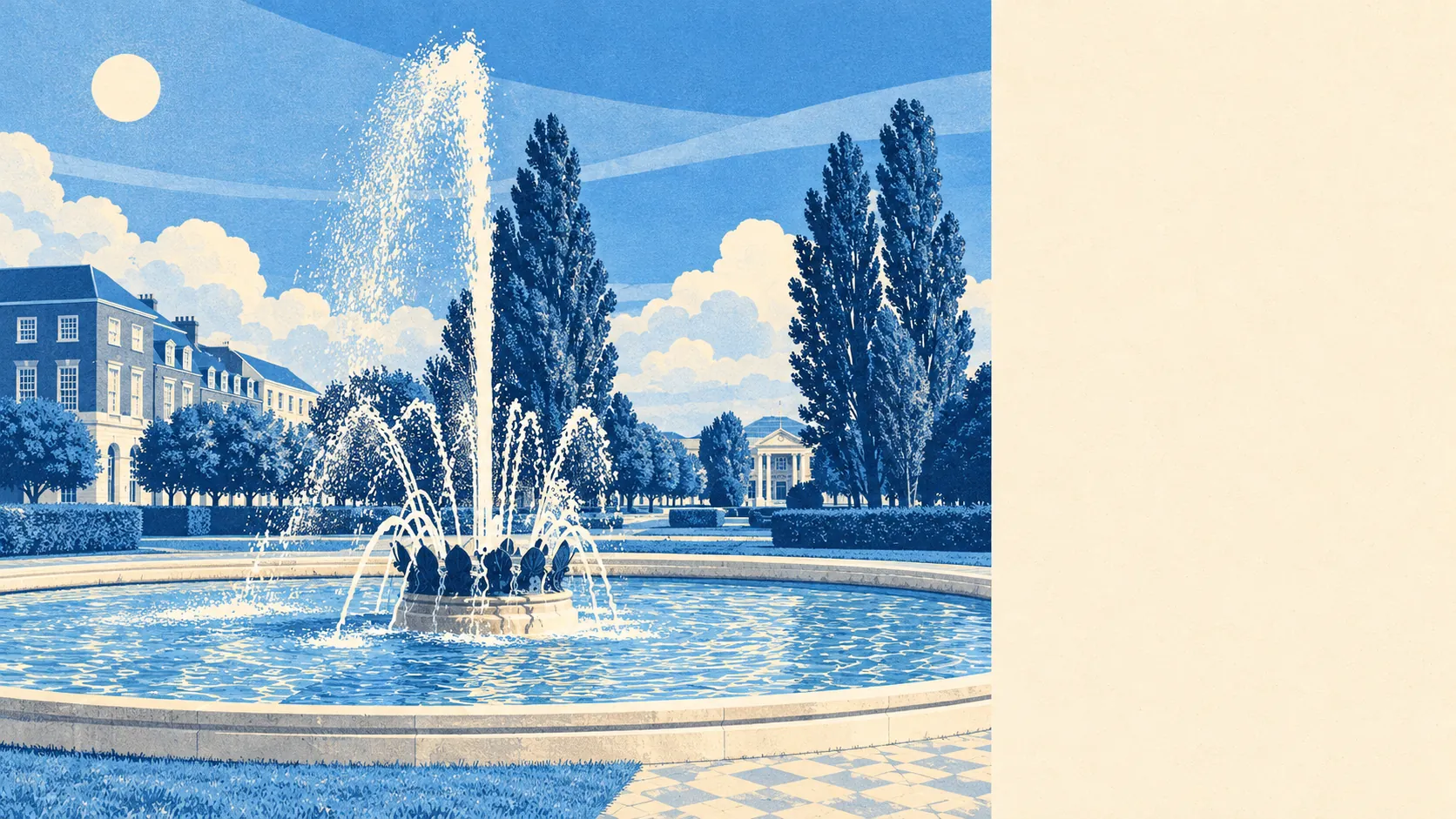
The area around Welwyn Garden City is green almost by design statute. The nearest green space is a short stroll from most front doors. There are about twenty within a kilometre. Water and a cycle route are a little further on. The countryside here is kept like a lawn, and the lawn is kept like a policy.
The average home in Welwyn Garden City is about 160 metres from the nearest green space, and has around 20 green spaces within a kilometre. That is a park, a green or a playing field at the end of most roads, which is what the town was laid out to provide in the first place and still does.
Water takes a little more walking. The nearest blue space, a river, lake or pond, is about 570 metres from the average home, and there are about 7 within a kilometre. Digswell Water, Tewin Water and Water End all sit on the edges of the town, and the names were given by people who knew where the wet bits were.
The National Cycle Network is about 670 metres from the average home, and about 48% of homes are close to a route. That puts a signed way out of town within reach of half the households. Getting out to Lemsford, Tewin or the parkland at Panshanger is a ride for an afternoon.
For everyday amenities, the town counts 248 shops, 29 pubs and 17 restaurants. The shops dominate, which fits a town built around a shopping centre and a neo-Georgian high street, and the restaurant count is short for a town of this size. Most evenings out will start at one of the pubs.
Welwyn Hatfield's air carried fine particles at about 7.5 micrograms per cubic metre in 2024, the figure for the whole council area.
Around the edges, the surrounding villages and estates give the town more history than its own 1920 founding date suggests. Brocket Hall and Hatfield House are nearby, Mill Green has a working mill and museum, and Shaw's Corner sits out at Ayot St Lawrence. On the outskirts of Old Welwyn, the Welwyn Roman baths are preserved in a steel vault underneath a motorway junction and are open to visitors, which is the most Hertfordshire compromise between heritage and traffic anyone could design.
Private gardens are generous. Welwyn Garden City has about 99,600 square metres of garden for every 1,000 residents, which means most homes have their own outdoor space as well as the public greens around them. The name was a description before it was a brand.
On the business-rates valuation list, the town has 1,266 rateable premises. Offices make up the largest group at 376, warehouses come next at 183, and shops are third at 174. Those are premises on the valuation list, counted differently from the shop figure above, and a listed premises is not always a trading business. The mix still shows a working town with a strong office and industrial base, much as its founders intended when they built employment areas into the plan.
Eating out is a safe bet on hygiene. Of the 184 food premises rated in the town, about 80% hold the top score of five, and fewer than 1% sit at the bottom of the scale.
No protected-landscape designation overlaps Welwyn Garden City itself. There is no area of outstanding natural beauty, no site of special scientific interest and no ancient woodland inside it. The green here is the planned kind, parks and verges and playing fields laid out for people to use, and the wilder countryside starts beyond the town edge.
The surroundings are one of Welwyn Garden City's real strengths, with green space close to almost every home, generous gardens and open country a short ride away. For a buyer who wants grass on the doorstep, this is the town that put it there on purpose.