Welwyn Garden City was designed for living in, and a century later its best feature is how easy it makes leaving. The station is in the middle of town, built into a shopping centre. Nine in ten homes can get gigabit broadband. Four in ten workers had already stopped commuting at all by the last census. For a buyer, the commute becomes a choice instead of a sentence.
Welwyn Garden City Rail Station is in the town centre, and Welwyn North and Hatfield (Herts) stations are close enough to act as spares. At the 2021 census about 4% of working residents took the train, 42% drove and 39% worked from home, a split taken in the middle of the pandemic. The town has 259 bus stops, each averaging about 50 weekday departures, and about 81% of those stops still have a service at weekends. The A1(M) and the A414 carry the drivers. Broadband is the easy part: gigabit connections reach about 91% of premises, superfast about 97%, and every postcode gets 4G or 5G from at least one operator. The original station was meant to be temporary. It lasted until the Howard Centre replaced it in the 1980s.
The plan that makes the town work is also what boxes you in. There are 150 listed buildings in and around Welwyn Garden City, one at Grade I, four at Grade II* and 145 at Grade II, and seven conservation areas, including one named after the town itself and others at Peartree and Beehive. On top of ordinary planning, the town has its own environmental protection rules, the Scheme of Management, written to keep the founders' design intact. Changing the outside of a house here can mean more than one set of permissions. Louis de Soissons drew the town's look in the 1920s. Homeowners are, in effect, still asking him.
Hertfordshire Constabulary's records put crime at about 96 per 1,000 residents in the year to May 2026, about 4% below the Welwyn Hatfield average. Violence and sexual offences, the broad category that leads almost everywhere, make up 33% of incidents against 35% nationally. Anti-social behaviour is higher than the national share, 24% against 16%, and so is shoplifting, 12% against 8%. A town centre built around one big shopping mall gets the crime that big shopping malls get.
River and sea flooding barely registers. The Environment Agency's river-and-sea flood zones take in a fraction of one percent of postcodes at zone 2 and none at zone 3, and there is no recorded historic flooding. The wider postcode indicators, which include surface water, tell a different story: about 8% of postcodes carry at least one high-risk flag, 11% a medium one and 33% a low one. Surface water is where the risk is.
Just over half of households, about 55%, own their homes, and the typical resident is 40. The Office for National Statistics models gross household income at about £68,000 in the financial year to March 2023. Much of the housing was built by the town's development corporation and passed to the district council between 1978 and 1983, which explains why ownership runs lower than the tidy front gardens suggest.
The Land Registry recorded 452 sales in the year to May 2026, at a median of £415,000. Flats went for about £240,000, terraced houses £420,000, semis about £540,000 and detached houses £760,000. The terrace is the default home here and costs almost exactly the median, so the typical house and the typical price are, for once, the same thing. Council tax band C is the most common, and only about 15% of homes are in bands A and B. The Office for National Statistics' typical private rent for the whole of Welwyn Hatfield borough, Hatfield included, was about £1,470 a month in April 2026.
On the council tax list, terraced houses make up about 40% of homes, flats 28%, semis 15%, detached houses 11% and bungalows 5%. Only about 7% were built before 1930. Period property, in a town that began in 1920, mostly means the 1920s. The upside of skipping the Victorians shows on the energy certificates: about 65% of certificated homes are rated C or better and only about 5% E or worse. About 80% of homes heat with mains gas, and about 10% rely on electric heating alone.
Across the 20 primary schools in the town's postcode districts, the average Key Stage 2 maths score is 105. The three secondaries in those districts, which include Monk's Walk School, Ridgeway Academy and Stanborough School, average an Attainment 8 score of about 46. Across Hertfordshire, Ofsted grades 203 of its 227 graded settings good or outstanding. A campus of Oaklands College is near the town centre.
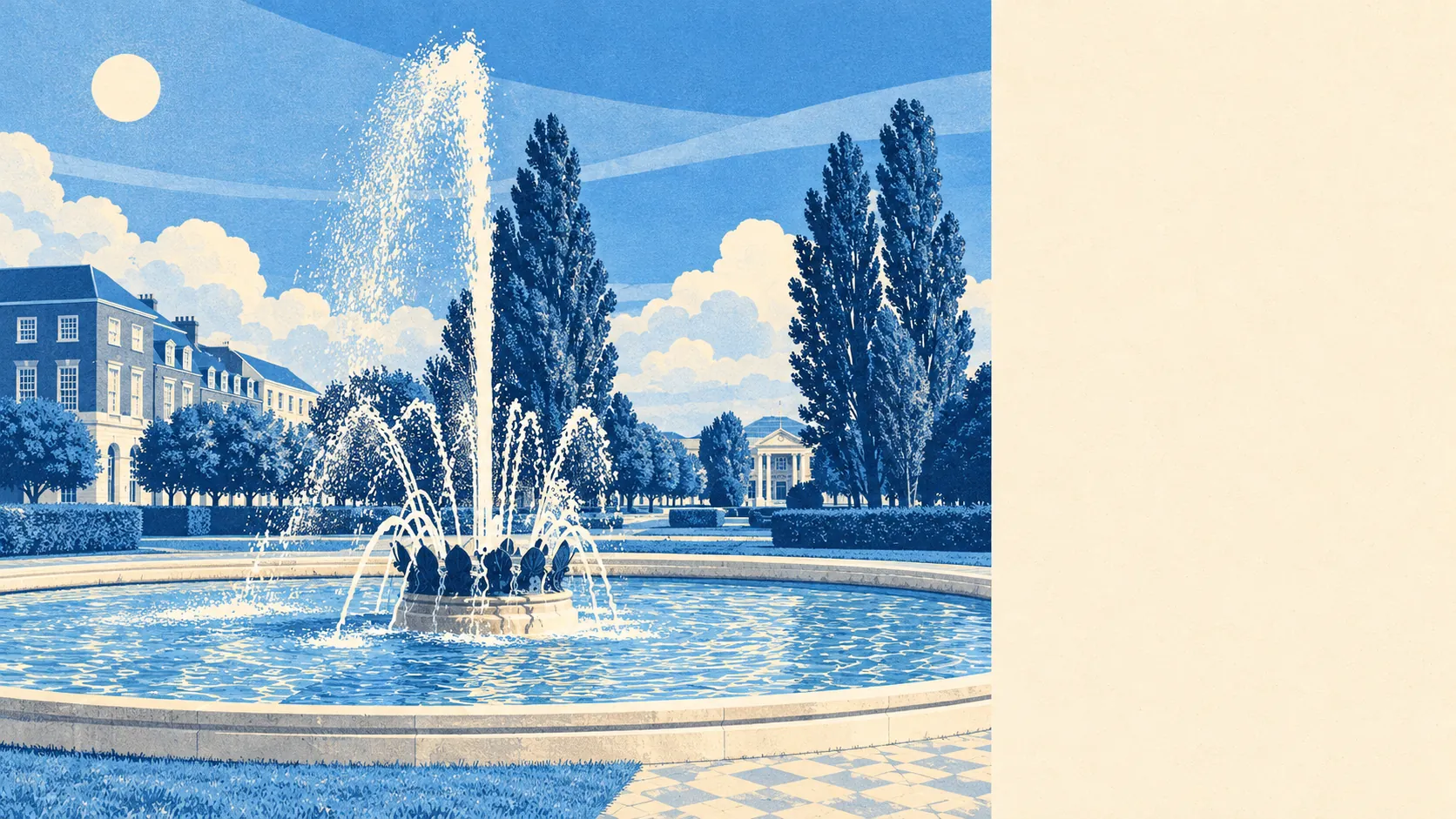
The average home is about 160 metres from the nearest green space, with around 20 green spaces within a kilometre and water about 570 metres away. Parkway, the long central mall at the spine of the town, was once described as one of the world's finest urban vistas, and Panshanger's historic park is on the edge. Ebenezer Howard promised the benefits of the countryside without its drawbacks. On this measure, the town has kept its word.
Howard founded the place in 1920 after his first attempt at Letchworth, and in 1948 it became one of the first new towns as well. The Times that year called it "far from perfect" while crediting it with making the New Towns Act possible. De Soissons also designed the Shredded Wheat factory, built in 1924 and now listed at Grade II. Production moved away in 2007. The white silos stayed, because they are listed, which is the town's planning philosophy in one building.
The town is right for commuters and home workers who want a station on foot and broadband they never have to think about, and for families who want a park at the end of the road. Anyone planning to rip off the front and add a storey, or hunting for a Victorian villa, should look elsewhere.
What a buyer gets here is a station in the town centre, buses that keep running at weekends and a connection that makes working from home unremarkable. What they give up is a free hand with their own house, because the town's design still has the final say. Welwyn Garden City is a better place to live than most places built to a plan, provided you are happy to live by it.