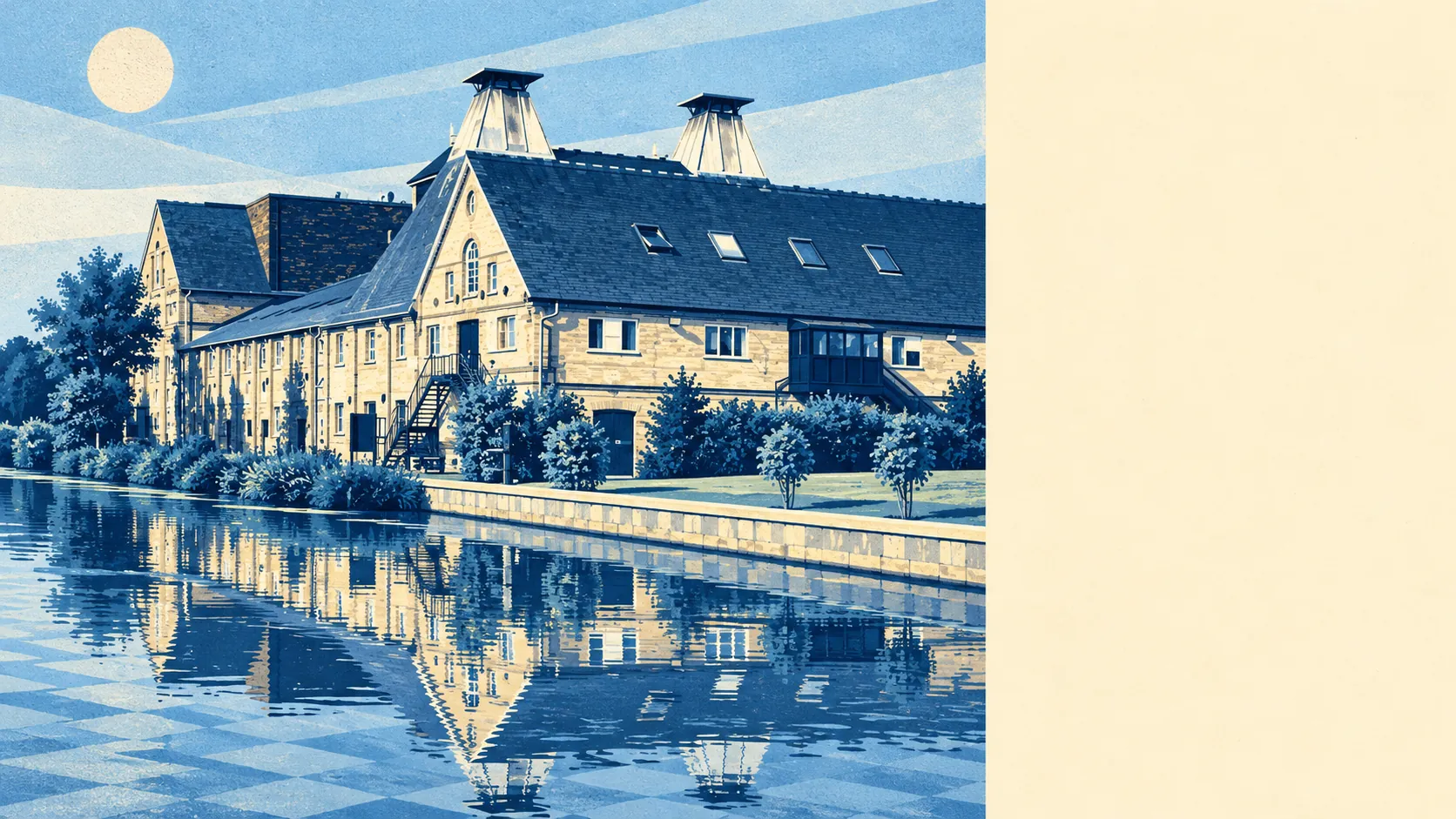
Yes, you can extend a house in Sawbridgeworth, though in the old parts of town you will be asking permission first. The town has well over a hundred listed buildings. Four conservation areas reach into it. The clay underneath moves with the weather. People here still apply to alter their homes all the time, and a newer house on an ordinary street gives you far more room to manoeuvre than anything near the old centre.
Historic England lists 162 buildings in and around Sawbridgeworth: 1 at Grade I, 10 at Grade II* and 151 at Grade II. Listing covers the whole building, inside as well as out, so altering a listed house in any way that affects its character needs listed building consent on top of any planning permission, and that includes internal walls, windows and fireplaces. Carrying out that work without consent is a criminal offence, which is a sterner consequence than most home improvement projects carry.
Four conservation areas fall in and around the town: Sawbridgeworth itself, Lower Sheering, High Wych, and Harlow Mill and Old Road North. Inside them, demolition needs consent, works to trees need notice, and changes visible from the street get looked at more closely than they would elsewhere. Sawbridgeworth's town centre was made a conservation area in 1968, so the planners have been looking at those streets far longer than any current homeowner has been altering them. Lower Sheering has a Sawbridgeworth postcode but sits across the county boundary in Essex, in Epping Forest District, so check which council actually covers the address before drawing anything up. Sending plans to the wrong county is a slow way to find out.
There is one scheduled monument in the area, the strictest protection there is. It matters only to land right beside it, where even digging foundations can bring in a separate set of rules.
People are not put off. East Hertfordshire's planning register holds 1,427 applications across the town from April 2024 to June 2026, and 629 of them were made in the last twelve months. That is a steady flow of extensions, lofts and alterations, which shows that changing a home here is normal and that the paperwork is a routine part of it. Nothing in that count says how many were approved.
The British Geological Survey puts the whole area in class 3 for shrink-swell, the ground movement that happens when clay soils swell in wet weather and shrink in dry spells. For an extension that usually means deeper foundations than a builder might quote by habit, and a structural engineer's view before the plans are fixed, especially near trees, which draw moisture out of clay. It is a design problem that engineers handle every day, not a reason to give up on the extension.
In practice, a post-war or later house outside the conservation areas can often use permitted development rights, the national allowances for modest extensions without a full application. Being listed or in a conservation area narrows those rights, and in some cases removes them. Ask East Hertfordshire Council, or Epping Forest for Lower Sheering, to confirm in writing what applies to the specific house, and do it while you can still walk away.
Freedom to extend in Sawbridgeworth is limited: easy enough on the newer estates, and slow and conditional anywhere near the old town.