It's greener than any town with a market square has a right to be. The nearest green space is usually a couple of minutes' walk from the front door. There's water nearby too, with the Rother running past the town. The commons around it are dotted with ancient burial mounds. Most towns this size have a park, but Midhurst is surrounded by an entire landscape.
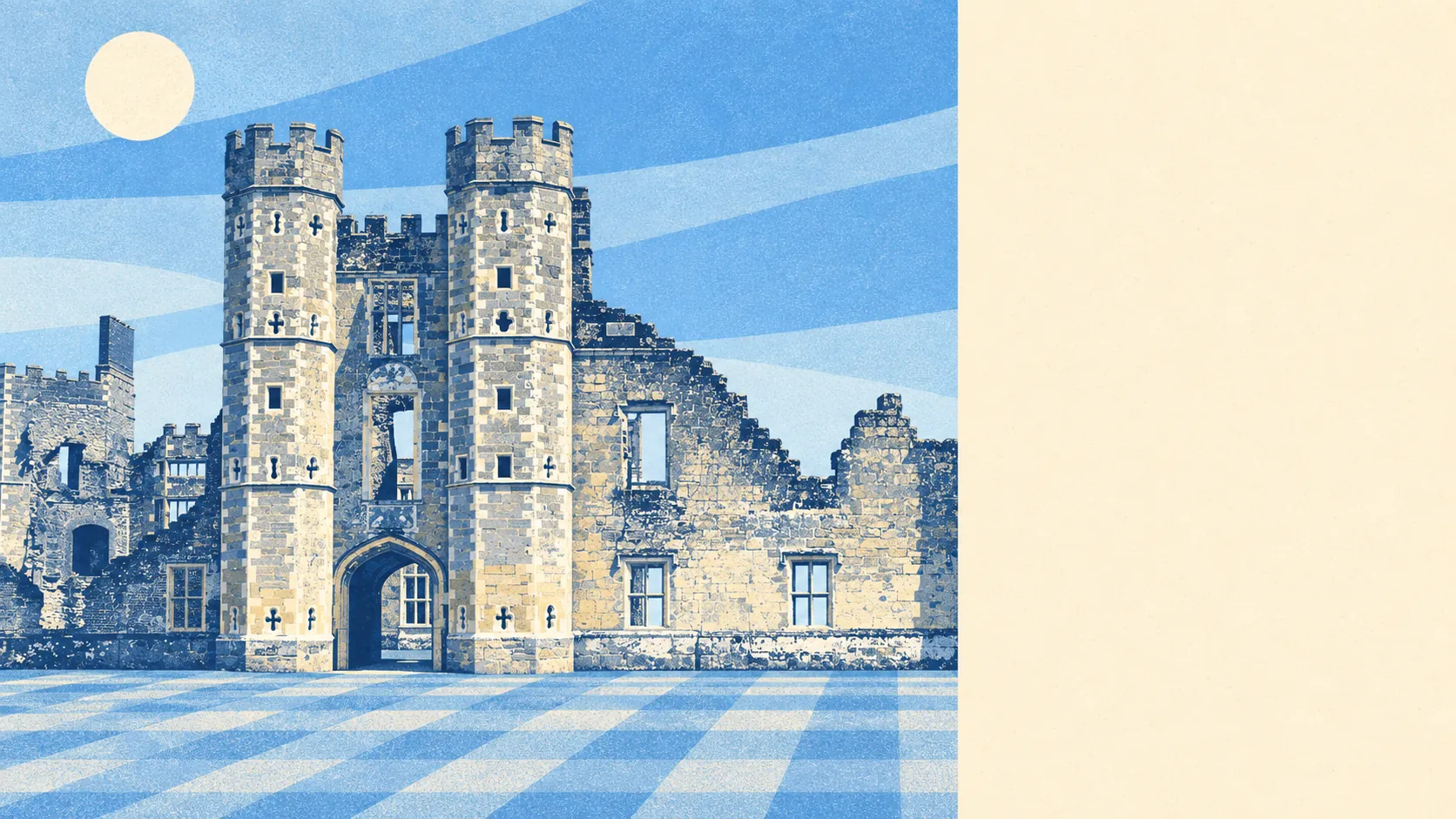
On average, the nearest public green space is about 170 metres from a home, and there are about 13 green spaces within a kilometre. That includes the Town Meadow below the old town, the sports ground next to the Cowdray ruins, and St Ann's Hill, where the castle mound makes a better viewpoint than it ever made a castle.
The nearest water is about 220 metres away on average, and there are about 27 bodies of water within a kilometre. The Rother and South Pond are the obvious ones, and there are more ponds and streams than most buyers expect to find so close to a high street.
The National Cycle Network is about 9 kilometres away on average, and no postcode here is close to it. Cycling means country lanes and whatever roads you're happy to share with lorries. There's no ancient woodland within the town itself either, so the older woods are something you head out to rather than live beside.
The high street is well stocked for its size. There are 117 shop premises of all kinds, 12 pubs and 7 restaurants. That's more pubs than restaurants by a comfortable margin, which tells you how the town prefers to spend its evenings.
Fine-particle air pollution across the Chichester council area was about 6 micrograms per cubic metre in 2024. That's a figure for the whole district, not a street-level reading, but it fits a place where the main source of pollution is traffic passing through.
Midhurst feels like a working old town sitting in a tidy slice of countryside. The Market Square, the Spread Eagle and the church of St Mary Magdalene and St Denis form the old centre. Just beyond it are Cowdray, the Rother and Woolbeding Bridge. Out on Bepton Down and the commons around the town, the burial mounds are older than anything in Midhurst itself. Easebourne, across the river, and Cocking, to the south, are villages close enough to reach without anyone thinking of it as a trip.
Private gardens are generous. Across the area there are about 213,000 square metres of private garden for every 1,000 residents. That's the measure that shows how much outdoor space people actually have at home, and in Midhurst the garden is often the second reason people buy the house.
The business rating list holds 273 premises in the area. The largest category is shops, with 103 premises, followed by offices at 51. Those figures count premises on the valuation list, not businesses open today, but they describe a market town that still does its own shopping and has a steady weekday trade to go with it.
Of the 43 food premises with a hygiene rating, about 93% hold the top score of five and none sit at the bottom. Whichever pub you choose, you're very unlikely to regret the kitchen.
No area of outstanding natural beauty, site of special scientific interest or ancient woodland overlaps the town itself. That doesn't make the area lesser countryside. The town is compact, and the surroundings do their work without needing an official label.
The setting is one of Midhurst's real strengths. Green space, water and old commons are all within an easy walk, and few towns of this size can say the same.