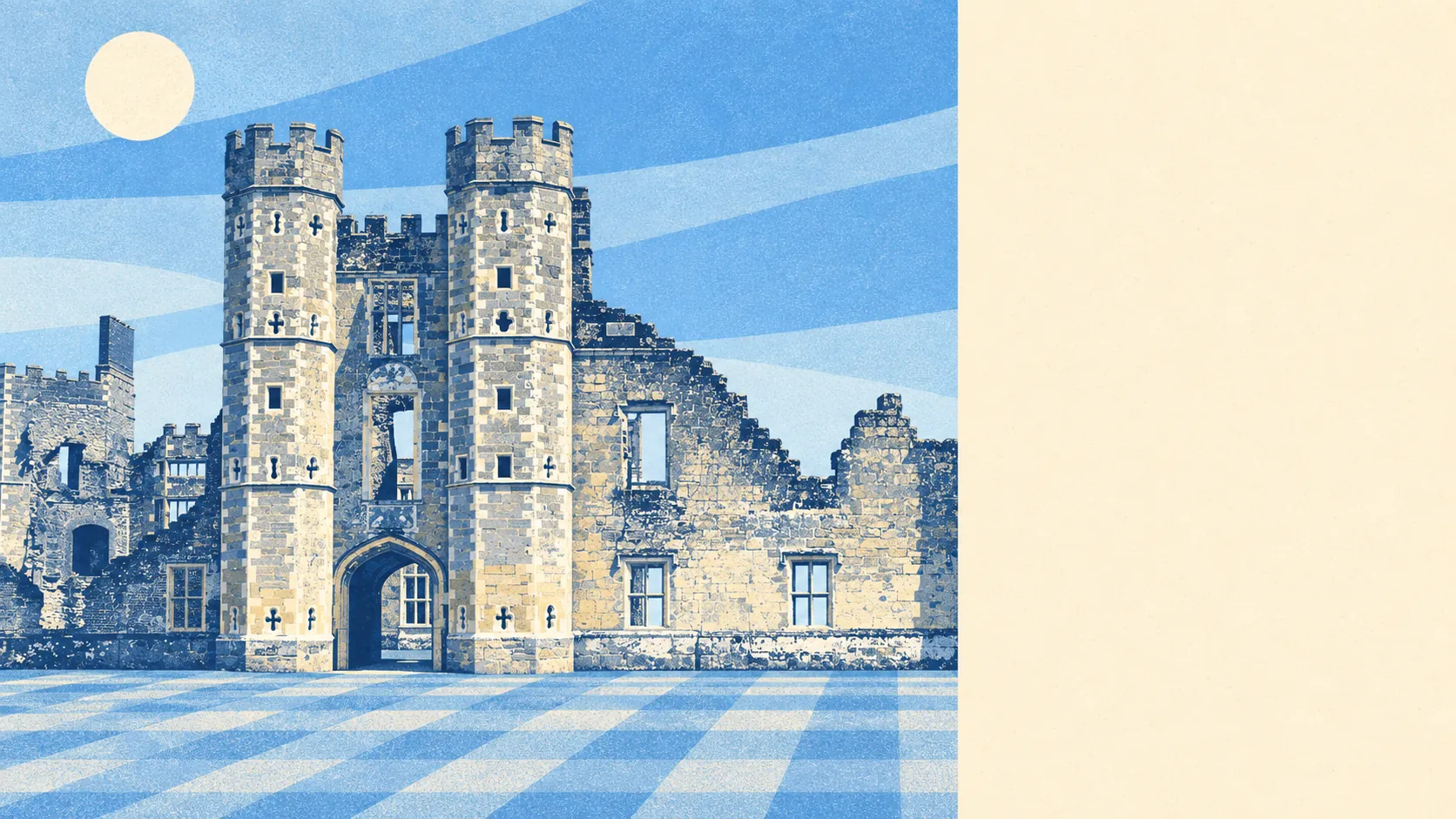
Midhurst is a good place to live if you own a car and have nowhere urgent to be. Crime runs at about half the district rate. There's green space at the end of most streets. Over half of commuters drive, and almost nobody takes the train, because there isn't one. A handsome, safe town that decided long ago that transport was someone else's problem.
The housing is more mixed than the postcard suggests. On the council-tax list, terraces make up about 28% of homes and flats about 26%, with detached houses at 19%, semis at 16% and bungalows at 12%. Only about 22% of the stock was built before 1930, which surprises people whose whole impression of Midhurst comes from the Market Square. Most of the town went up after the war on the south side, around Little Midhurst, Holmbush and Fairway, and that's where most of what comes up for sale actually is. Energy ratings split down the middle: about 51% of certificated homes sit in bands A to C, a third in D, and about 15% in E or worse. About 74% of homes heat with mains gas, and about 11% rely on electric-only heating. Better to find out which kind you're looking at before the viewing than when the first January bill arrives.
The Land Registry's figures for the twelve months to May 2026 put the typical sale at about £380,000, across 82 sales. Detached houses went for around £625,000, semis around £403,000, terraces around £340,000 and flats around £221,000. Those two ends of the range are nearly three hundred thousand pounds apart, and they sit in the same small town, often within a few minutes' walk of each other. Band D is the most common council-tax band, and only about 18% of homes fall in the cheaper A and B bands, so the scenery is already priced into the bill.
Renters have to work from a wider figure. The typical private rent across the Chichester area was about £1,320 a month as of April 2026. That covers the whole district rather than Midhurst's own streets, so treat it as a benchmark for your budget, not a quote for the flat above a North Street shop.
Safety is the easy part. Recorded crime came to about 42 incidents per 1,000 residents in the year to May 2026, roughly 48% below the Chichester district average of 81. The worst damage ever done on St Ann's Hill was by a Bishop of Durham, who had the castle largely dismantled while it was in his hands, and at least he had the paperwork.
Getting anywhere is the weak spot. The last passenger trains ran in 1955, and fewer than 1% of commuters now use rail. About 54% drive to work and about 28% work from home, which is the town's way of dealing with the problem: stay put. Buses run to Chichester, to Guildford via Haslemere, to Worthing via Petworth and to Petersfield via Rogate, from 60 stops in the area, and about 96% of the stops with timetable data get a weekend service. Superfast broadband reaches about 95% of the town and gigabit about 2%, so home workers can manage their video calls, but nobody should be planning to upload a feature film before lunch. Fast mobile data from at least one network reaches everywhere, which is more than the railway ever managed.
On flood risk, how you measure it matters. About 10% of postcodes sit at high risk on at least one flood indicator, and that measure includes surface water. The Environment Agency's river-and-sea flood zones are a smaller story: about 1% falls in Flood Zone 3 and under 1% in Zone 2. The River Rother is a scenic feature far more often than a threat, but check the exact address anyway. Green space is where Midhurst wins without trying. The nearest green space is about 170 metres away on average, with about 13 within a kilometre, and water is roughly 220 metres off. The countryside starts at the end of the road, and it's the one thing in Midhurst you don't need to drive to.
Heritage sets the rules in the old town. The area holds 115 listed buildings: 2 at Grade II* and 113 at Grade II, with none at Grade I. The Midhurst conservation area covers the historic core. Much of North Street is Tudor behind 18th-century fronts, so a new window there is a conversation with the planners rather than a weekend job. Buyers who fall for the timber frames should budget for patience as well as for the survey.
The people fit the town. About 61% of households own their home, the typical resident is 51, and gross household income averaged about £52,600 in the financial year to March 2023, on the Office for National Statistics' modelled figures. It isn't a retirement village, whatever a weekday morning in the Market Square suggests. Plenty of residents are still working, mostly from the spare room.
This page also covers Easebourne, across the river, Cocking to the south on the Chichester road, and Elsted out to the west. Each one is quieter than Midhurst itself, and more dependent on the car.
Midhurst suits people who want a small, safe town with proper countryside on the doorstep and who already know they'll be driving or working from home. It suits downsizers who want a bungalow near the shops, and families willing to trade the school run to a bigger town for a garden and quiet streets.
It doesn't suit anyone whose life depends on a daily train, a gigabit connection or a nightlife that lasts past closing time at the Spread Eagle. People who move here expecting a commuter town tend to discover, some wet February morning, that nobody told them the commute was their own problem.
The town has always drawn a better class of visitor than its size would suggest. Henry VIII came in 1538 and again in 1545. Charles James Fox was Member of Parliament for Midhurst from 1768 to 1774. Richard Cobden, the Anti-Corn Law campaigner, went to school here. Boris Karloff, a man who built a whole career on being hard to kill, died of pneumonia at King Edward VII Hospital in 1969.
Midhurst is an above-average place to live, and it has earned that honestly. Its real strength is its surroundings: green space close to nearly every front door, the river, and a very low crime rate. The weak spot is getting anywhere else, with no railway, thin fibre and a bus timetable you'll end up knowing by heart. If you have a car and nowhere urgent to be, it's hard to beat.