Hounslow West is a good place to live that most of its residents are renting by the month. About six in ten households rent. A third manage without a car. Every graded school nearby is good or better. That makes it an easy sell to a tenant and a harder sum for anyone buying.
The housing is mostly flats, with semis and terraces making up the rest. On the council-tax valuation list, flats are about 43% of homes, terraces 27% and semis 25%. Detached houses and bungalows come to about 2% each, so a house with a gap on both sides counts as a local landmark. Only about 19% of homes were built before 1930, so a big Victorian conversion with a cellar is hard to find here. The energy certificates are better than the age of the stock might suggest. About 57% of certificated homes are rated C or above, 36% are D, and only 7% are E or worse. Around 69% of households heat with mains gas and about 14% with electricity alone. That second group is mostly what you meet when you view the flats.
The Land Registry recorded 76 sales in the year to late April 2026, at a typical price of about £450,000. Flats went for around £298,000, terraces for around £461,000 and semis for around £579,000. The official house price index for the area showed average prices down about 2% in the year to May 2026. Band D is the most common council-tax band, and only about 13% of homes are in bands A or B. A band D bill comes to about £2,190 a year. With 76 sales in a year, the market moves slowly, which is what happens when most of the front doors belong to landlords.
The Office for National Statistics puts typical private rent across the London Borough of Hounslow at about £1,920 a month as of April 2026, up about 3% on a year earlier. The figure is an average for the whole borough, so it describes Hounslow in general more than this neighbourhood in particular. By size, the same borough index gives about £1,560 for a one-bed, £1,920 for a two-bed and £2,200 for a three-bed. Since most households here rent, that borough figure matters to more people than the sale prices do.
Police.uk recorded crime at about 131 per 1,000 residents in the year to May 2026, about 12% above the Hounslow borough average. The mix is unusual. Antisocial behaviour makes up about 22% of recorded crime against 16% nationally, and shoplifting about 11% against 8%, while violence and sexual offences come in below the national share. Those are mostly crimes that annoy people more than they hurt them, though "above the borough average" is still above it. Across the whole Metropolitan Police area, about 10% of crimes ended in a charge over the same year, against about 12% nationally, and 53% closed with no suspect identified. Those are force-wide figures, and they describe London's policing more than Hounslow West's streets.
Schools are the easy part. Ofsted has graded 39 settings in the area, every one of them good or outstanding, and eight are outstanding. Primary pupils at the five schools in the postcode district average about 107 in the year 6 maths tests. The one secondary school there averages an Attainment 8 score of about 52 across eight subjects at sixteen. Nearby names include The Orchard Primary School, Beavers Community Primary School, Hounslow Heath School and St Michael and St Martin Catholic Primary School, with The Heathland School for older children. Parents here have little to complain about apart from the admissions paperwork.
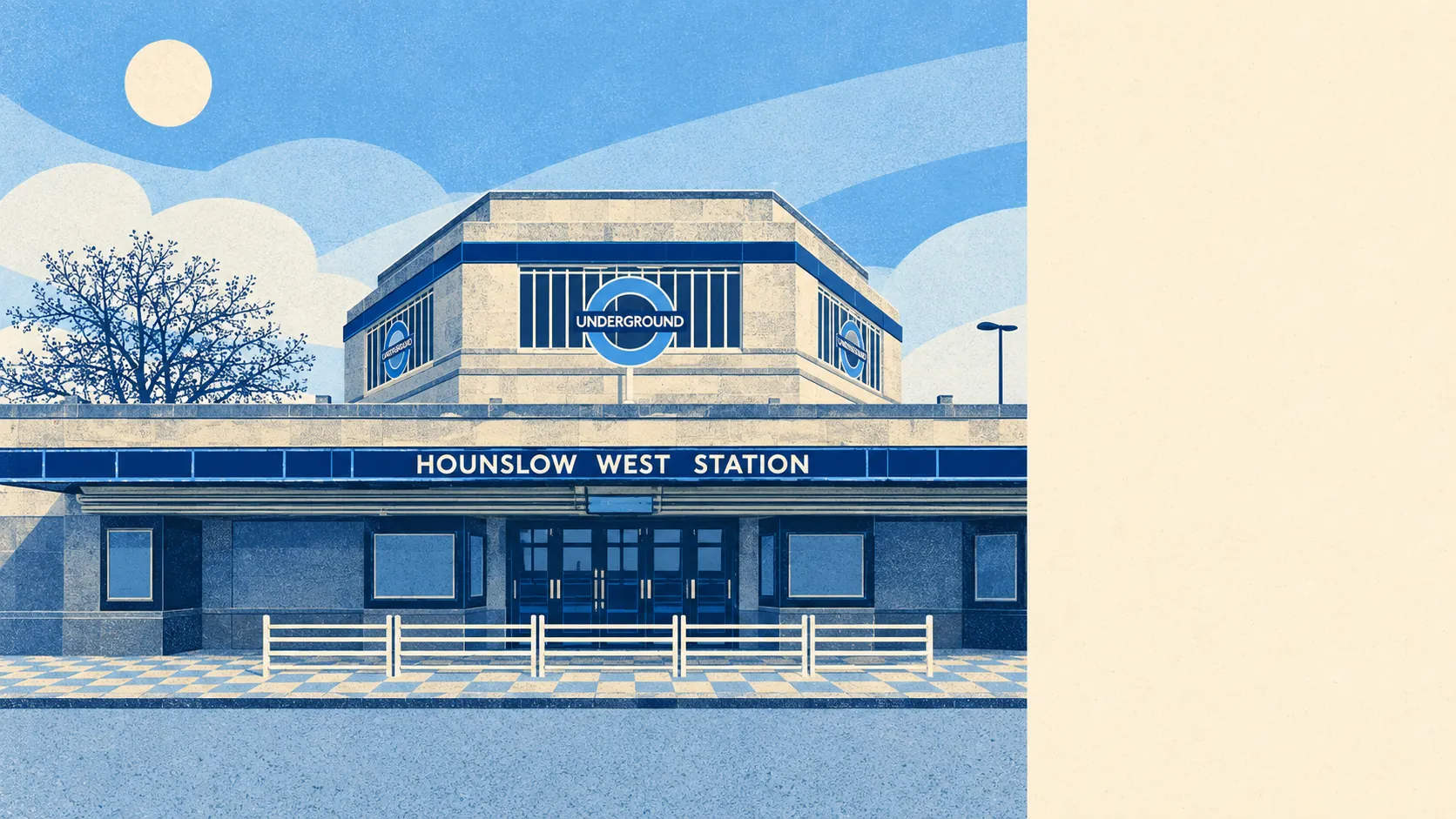
Hounslow West tube station, on the Piccadilly line, is what the area grew up around. Hounslow and Feltham rail stations are within reach, and so are the Heathrow terminal stations. The buses carry more of the load than the trains. There are 180 stops, the average stop gets about 389 departures on a weekday and about 21 in the peak hour, and almost every stop has a weekend service. In the 2021 census about 20% of commuters went by bus, about 33% drove and about 21% worked from home. The Department for Transport's 2019 modelling put Hounslow town centre about 19 minutes away by public transport and the nearest hospital about 37, and the public transport times are the ones to trust least as services change. Gigabit broadband reaches about 89% of premises.
The river-and-sea flood picture is clean. None of the area falls in the Environment Agency's river-and-sea flood zones. Surface water is another matter. About 7% of postcodes carry a high rating on at least one flood indicator, surface water included, and about 19% a medium one. Look up the exact address on the Environment Agency's long-term flood risk service, because surface water floods one street and leaves the next one dry. Green space is the best surprise. The nearest patch is about 136 metres away on average, with about 26 within a kilometre. Road traffic is the trade-off: the government's noise mapping puts every postcode near road noise of 65 decibels or more.
Heritage barely gets in the way. There are 27 listed buildings, all Grade II, and none Grade I or II*. The surrounding area has five conservation areas, including Hounslow Cavalry Barracks, St Stephen's and the Oaklands Estate. Six listed buildings are on Historic England's Heritage at Risk register. For most owners an extension is a normal planning application, and only a few streets come with the stricter rules about windows and front walls. In Hounslow West, the old cavalry have more planning protection than most of the semis.
The neighbourhood is young and working. Only about 39% of households own their home, the typical resident is about 36, and the Office for National Statistics' modelled average household income was about £67,000 a year before tax in the year to March 2023. The government's deprivation ranking for the area slipped between its 2019 and 2025 editions, and about 22% of households count as overcrowded. Hanworth, also covered by this page, shares the same postcode district and much of the same pattern.
It suits a renter who wants good schools, a tube line and somewhere green within a short walk, and a buyer looking for a semi in outer London at an outer-London price. A family that needs to live near a good primary will find the choice wider here than in most of London.
It suits buyers less well if they want a detached house, a big Victorian home, or a street where most of the neighbours have bought and plan to stay. Anyone who needs silence from traffic should spend an evening on the exact street first.
Hounslow West earns a better-than-average verdict. Its real strength is what surrounds it: green space within a couple of minutes' walk and a run of schools without a weak grade among them. The weak spot is the local community, where ownership is low, crowding is high and the deprivation ranking has been going the wrong way. The schools and the parks are already good. Whether the streets improve depends mostly on who owns them.