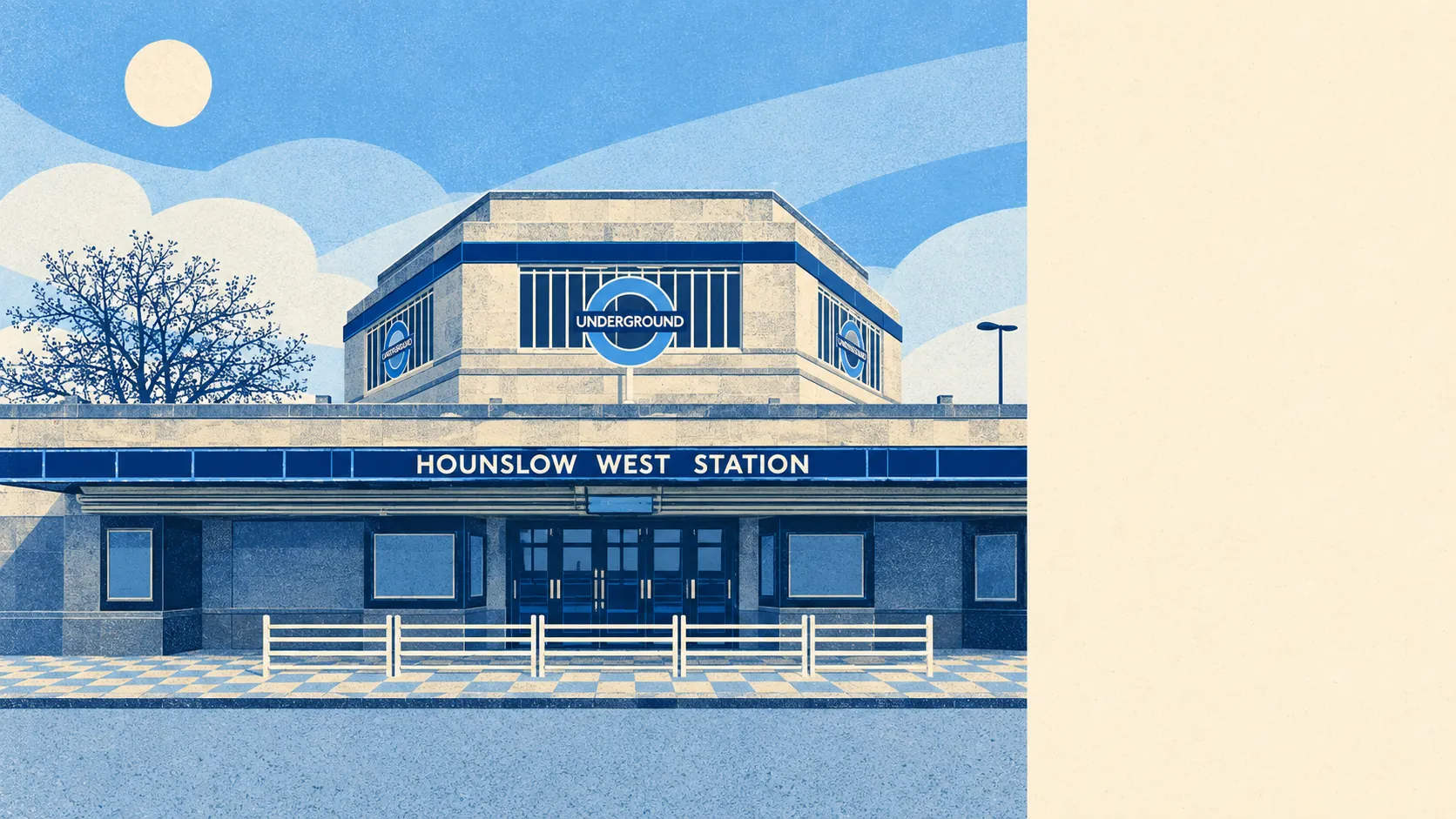
Yes, for most houses in Hounslow West an extension is a routine planning matter. Every listed building is the most common grade. A few conservation areas cover the edges. The neighbours apply for planning permission constantly. The ground is mostly well behaved. The stricter rules apply on a few streets, and the rest of the semis and terraces are left alone.
Historic England lists 27 buildings in Hounslow West, and all 27 are Grade II. None is Grade I and none is Grade II*. Listing means consent is needed for changes inside and out that affect the building's character, on top of any planning permission, and the council takes that seriously even at Grade II. The odds of an ordinary semi being one of the 27 are slim. Hounslow West's heritage is the kind you walk past on the way to the bus stop.
The surrounding area takes in five conservation areas: Feltham Town Centre, Hounslow Cavalry Barracks, the Oaklands Estate, St Paul's Church and St Stephen's. Inside one, the council looks harder at changes to the street-facing side of a house, and some work that would be routine elsewhere needs an application. The council's conservation-area map will settle in a couple of minutes whether a house is inside a boundary, and it is worth looking before the architect starts drawing.
The planning register gives the clearest picture of what local owners actually do. Between April 2024 and July 2026, 482 planning applications were lodged in Hounslow West, 184 of them in the last twelve months. That is a steady stream of rear extensions, loft conversions and porches from people who decided moving was dearer than building. On streets made of semis and terraces, the first sign that a house has changed hands is often a skip.
The British Geological Survey's shrink-swell hazard class, which measures how much clay ground moves as it wets and dries, reaches class 3 at its highest in Hounslow West, and only about 1% of the area reaches that level. For an extension, the class affects how deep the foundations go and whether a structural engineer wants to look at the soil first, especially near large trees. Across most of the area the ground gives no particular reason to worry.
Six of the area's listed buildings are on Historic England's Heritage at Risk register. That register flags buildings in poor condition whose repair may attract grant money and will attract official scrutiny. They are a project for whoever owns them, and the owner of a semi down the road has nothing to inherit from them.
In practice, much of what owners want, from a modest rear extension to a loft dormer, may fall under permitted development, the national rules that let some work go ahead without a full application. The protection falls away on listed buildings, and it narrows inside conservation areas and anywhere the council has withdrawn it. A lawful development certificate from Hounslow Council turns "should be fine" into a document, and a buyer can ask a seller whether one exists for work already done.
Freedom to extend in Hounslow West is middling. Most of the area's semis and terraces can grow under the ordinary rules, but listed buildings, a ring of conservation areas and the odd patch of clay mean a few addresses come with extra rules attached.