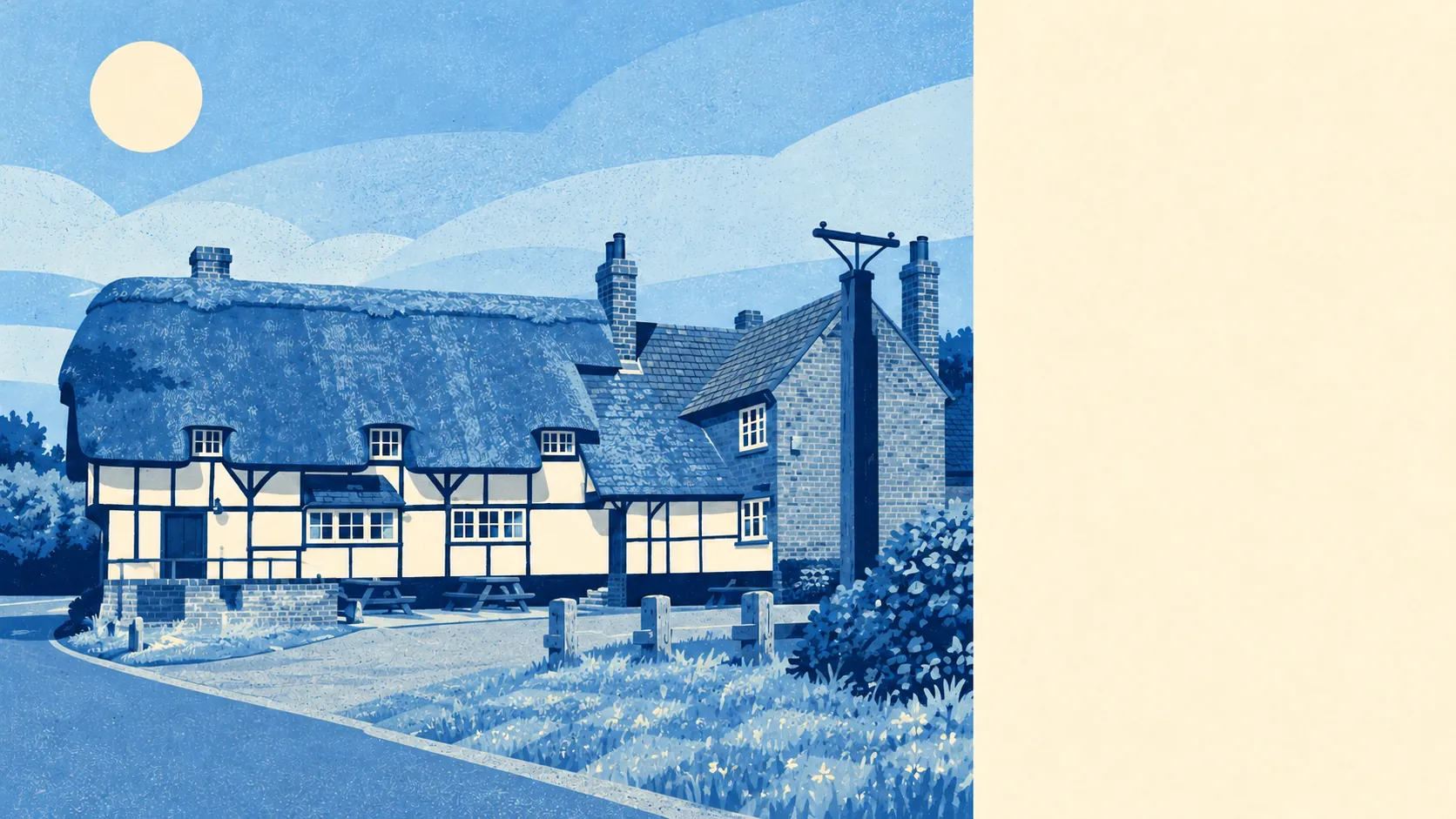
Aston Clinton gets more right than wrong, and most of what it gets right starts where the pavement stops. The Chilterns rise behind the village, the streets are calmer than the county around them, and the houses come with room to spare. Eight in ten own. Aylesbury, Wendover and Tring each have a railway station, and Aston Clinton has the bus stop between them.
The village is right for a household that wants space, a hill to walk up at the weekend and a calm road to come home to. Thames Valley Police recorded about 44 crimes per 1,000 residents across the Aston Clinton area in the year to May 2026, around 32% below the Buckinghamshire average of about 65. The parish's grimmest recorded episode is still a Tudor beheading in 1541, and the king who ordered it was never local.
The catch is the paperwork. Across Aston Clinton and the surrounding villages there are 234 listed buildings, two of them Grade I and 11 Grade II*, and six conservation areas within reach, including Weston Turville, Halton, Wendover and Buckland. Change a window, a roofline or a boundary wall on a listed house and the council wants a say, and inside a conservation area even unlisted homes carry tighter rules on what can go up or come down. Two Roman roads crossed here before anyone had the idea of planning permission, and the village has been filling in forms ever since.
The people match the houses. About 81% of homes across the area, which also takes in Weston Turville, are owner-occupied, the typical resident is 46, and median household income was about £72,000 before tax in the financial year to March 2023, a figure the Office for National Statistics models for the wider area. This is a place people arrive in with a family and a removal van, and then stay put long enough to argue about the parish newsletter.
Getting about mostly means a car or a broadband cable. At the 2021 census, about 46% of working residents in the Aston Clinton area worked from home and 45% drove, while 1% took the train. There are 140 bus stops, each seeing about 30 departures on a typical weekday, and the Department for Transport's 2019 modelling put the nearest town centre about 20 minutes away by public transport and 12 by car. Gigabit broadband reaches about 91% of premises, which explains how the home workers keep their jobs. The station run to Tring, Aylesbury or Wendover is a short drive, and that drive is the commute for anyone who still has one.
Flood risk is modest, though it comes from above more than from the canal. The Environment Agency puts less than 1% of the area in its river-and-sea flood zone 2 and none in zone 3. On the wider postcode measure, which counts any flood indicator including surface water, about 8% of postcodes carry a high rating on at least one and 28% a low one. The Grand Union Canal gets the blame in conversation, while the drains and the rain do most of the work on the map.
Money is where the space gets paid for. The Land Registry's last twelve months, to late May 2026, show a typical sale price of about £525,000 across 121 sales. Detached houses went for around £700,000, semi-detached for £520,000, terraces for £395,000, and the 10 flats that sold for about £221,000. Band D is the most common council tax band, and only about 6% of homes fall in bands A and B, so a cheap tax bill is mostly something that happens to other villages.
Renting is a Buckinghamshire-wide guess. The typical private rent across the Buckinghamshire area was about £1,470 a month in April 2026, and with four in five homes here owned, the local rental market is thin enough that the county figure is the best guide available.
The stock leans heavily towards houses with gardens. Of every dwelling on the council tax list, about 40% are detached, 27% semi-detached, 13% terraced and 12% bungalows, with flats at 7%. Only about 12% were built before 1930, so most buyers will be living in post-war and later homes, not the listed farmhouses that cause the planning headaches. About 62% of certificated homes rate between A and C for energy, and 83% are on mains gas. The bungalow count tells its own story about who stays longest.
The surroundings are the reason to pay the price. The typical home is about 270 metres from public green space and about 230 metres from water, and part of the area falls inside the Chilterns Area of Outstanding Natural Beauty. Aston Hill and the canal towpaths are close enough to reach before the kettle has cooled, and the families who bought here for the countryside are using it.
Aston Clinton is a good choice for a family that drives or works from home, wants a detached house with the hills on its doorstep, and plans to live in the house it buys more or less as it stands. The countryside on the doorstep is the best thing about it, and the dense ring of listed buildings and conservation areas is what to watch for anyone dreaming of a big rebuild. Buyers who need a train every morning, or who want to take a period cottage down to the studs, would do better looking at the stations up the road.