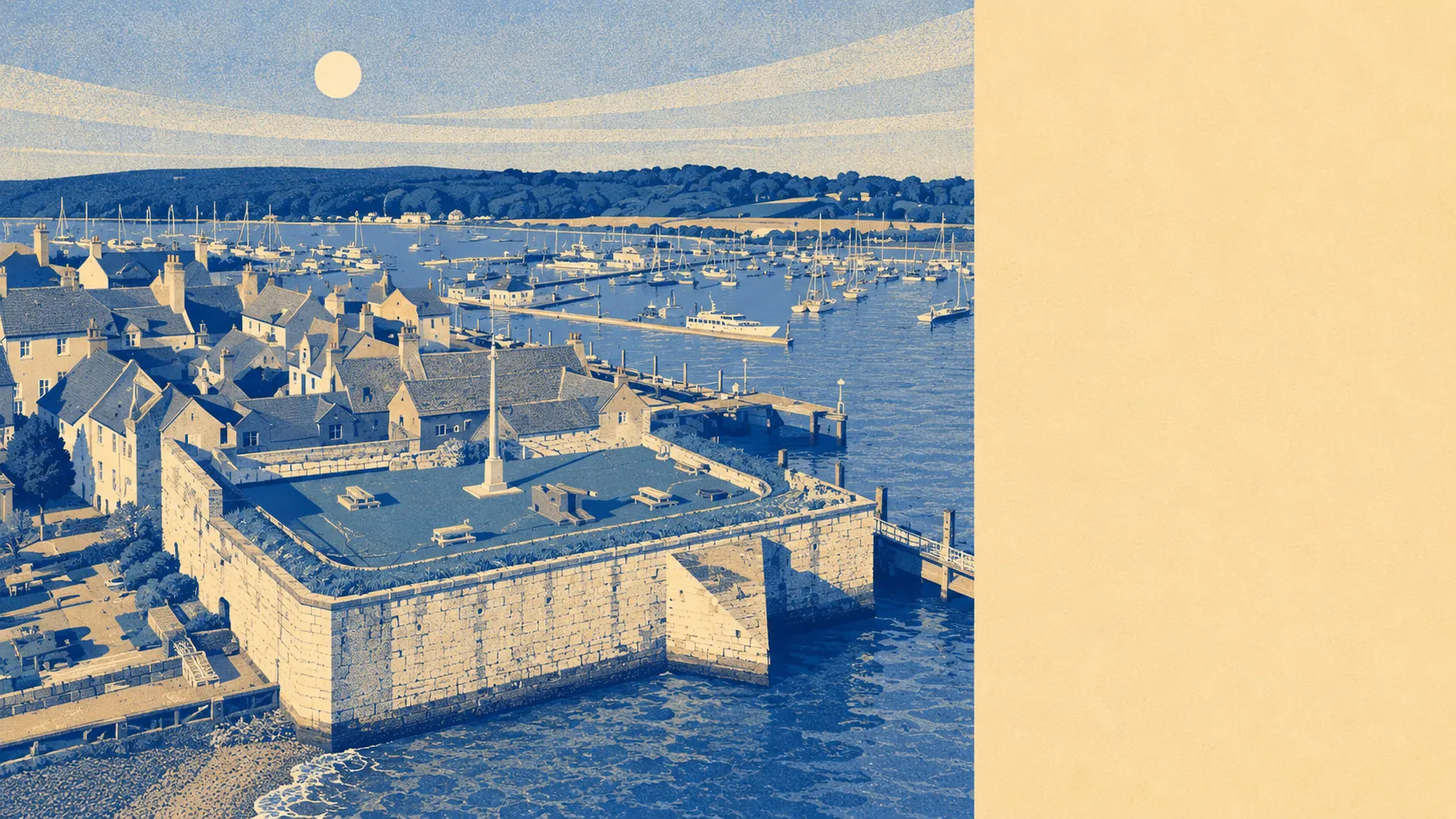
Houses in Yarmouth cost nearly ten years of typical local earnings. The median sale over the last twelve months was about £427,500. Twenty-six homes changed hands. Detached houses cleared around half a million; flats traded at around £195,000. It is not what local wages buy.
The split by property type does most of the work of explaining the headline. Of the twenty-six recorded sales, sixteen were detached houses going for roughly £495,000, and six were flats at around £195,000. The remaining handful fall between the two ends, but the market is thin enough that any single sale moves the headline. The median sits closer to the detached end than the middle because that is where the volume is. A market this small is one good month and one bad month away from a different number entirely.
Council tax bands tell the same story in a different vocabulary. The most common band is D, with about a quarter of dwellings sitting in bands A or B at the cheap end and a meaningful tail running up through E, F and G. The cheap stock exists but is not the easy stock to find; the easy stock sits in band D and above. Anyone arriving from a Midlands market town and expecting band A or B as the default will need to recalibrate fast.
Renting is a different conversation, and the published figure is the typical private rent across the Isle of Wight area, which sits at about £940 a month. By bedroom count, one-beds rent for around £660, two-beds at about £870, three-beds near £1,080, and anything four-bed or larger goes for about £1,500 a month or more. Yarmouth itself sits at the dearer end of the island, but the published rent figure is the island's average rather than the town's. The town's own figure would be higher; the published number is the floor, not the ceiling.
Set against a typical local household income of about £45,500 a year, the median sale price works out at the better part of a decade's earnings before tax. That is a stretch for anyone trying to buy on local wages, and it tells you who actually buys here: retirees moving from somewhere dearer, second-home owners, and remote-working professionals who earned their deposit on a mainland salary. The ferry queue is the filter; what comes through the other side is people who already had the money before they arrived.
What houses cost in Yarmouth is not what the people who already live here could comfortably afford if they had to buy in today. The market is small, the prices are firm, and the ferry-town premium is doing real work. For the money, you could have a bigger house and a railway in Lymington, or a smaller one in Whitstable and a magazine article about how up-and-coming it is. Cheap it isn't.