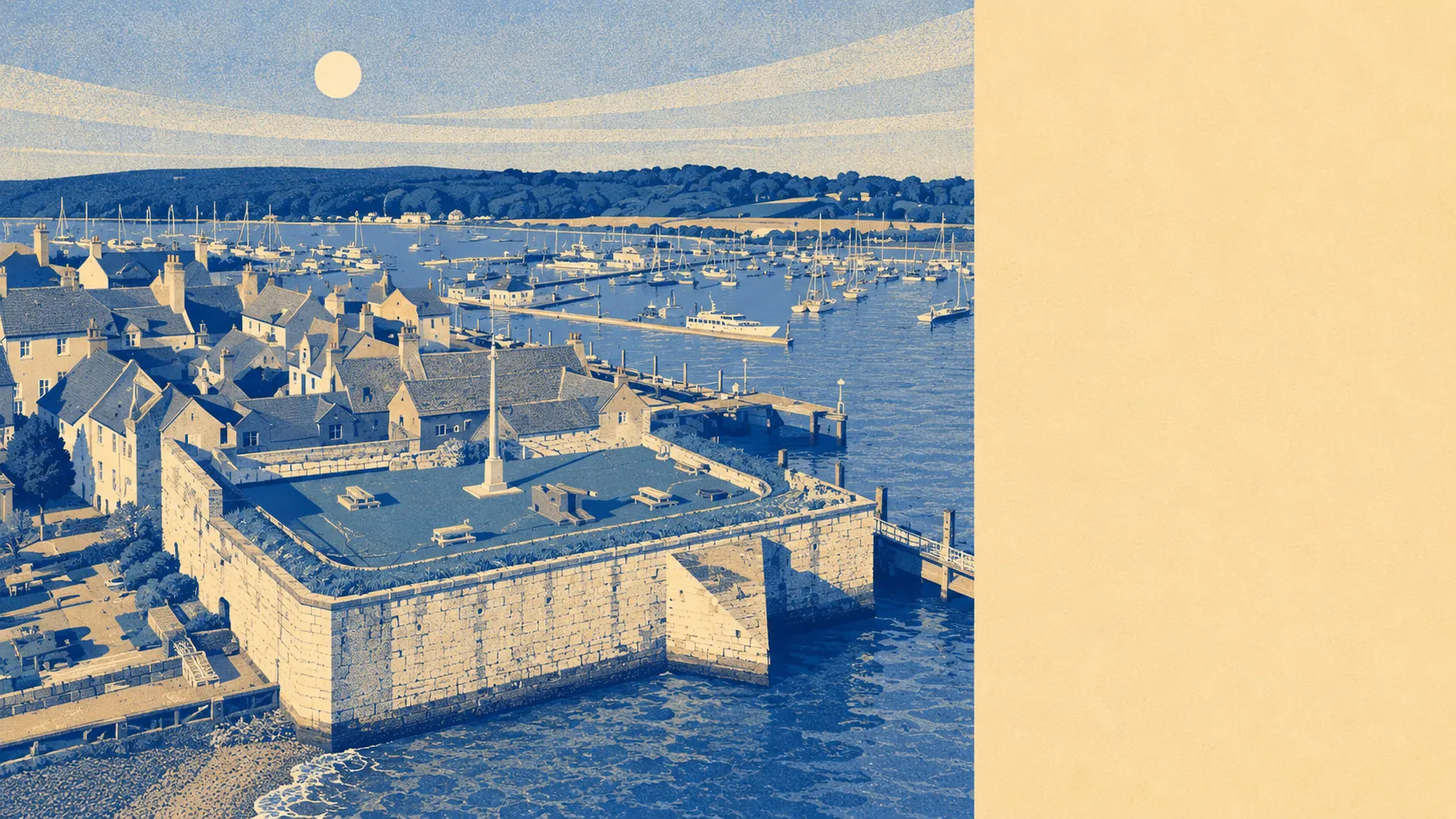
Yarmouth is well connected to the water and badly connected to the railway. Trains account for almost nothing of how people get to work. Around two hundred and fifty bus stops cover the wider area. About six in ten premises can get a gigabit broadband connection. The ferry to Lymington is the actual spine of the network; everything else is what you arrange around it.
The rail picture is the simplest part of the story: Yarmouth does not have its own railway station. The nearest stations are at Lymington Pier and Lymington Town, both on the mainland and reached by ferry. Train travel accounts for essentially none of the local commuting pattern; about three workers in a thousand travel that way, which is what happens when a station requires a sea crossing first. Bus services are the actual local network, with roughly two hundred and fifty stops across the wider area and routes connecting Yarmouth, Newport and the surrounding villages. About three per cent of workers commute by bus, which is below the national norm and what you would expect on an island where the journeys are short and the buses are frequent only on the main routes outside the holiday season.
Broadband is the connection that has aged better than the road network. About six in ten premises can get a gigabit-capable line. Roughly nine in ten can get superfast broadband. Only about one premise in fifty falls below the universal service threshold, which on a small island built largely from older stock is a better record than the geography would suggest. Mobile coverage from at least one operator reaches every premise, and nearly all premises can pick up a signal from all the main operators, which is the version of coverage that survives a dropped call rather than just a marketing map. Together they are the reason nearly a third of working residents do not commute anywhere at all.
The commute pattern that emerges is exactly the one the geography would predict. Nearly three in ten workers do not commute at all, which is the highest single answer in the data, and roughly half drive. Walking and cycling between them cover about one worker in nine. The nearest town centre is about twenty-two minutes by car and pushes thirty-five minutes by public transport, with a walk that runs over an hour and a half and is therefore not a serious commuting option. Anyone whose work is on the mainland needs to add the ferry crossing on top, and that is the calculation that decides whether Yarmouth works for a given household or simply does not.
Yarmouth is well connected for a small island town and not well connected by mainland standards. The buses run, the broadband holds, the ferry sails to Lymington, and the railway is on the wrong side of the Solent. Average is the right score, and average is what it costs you in time.