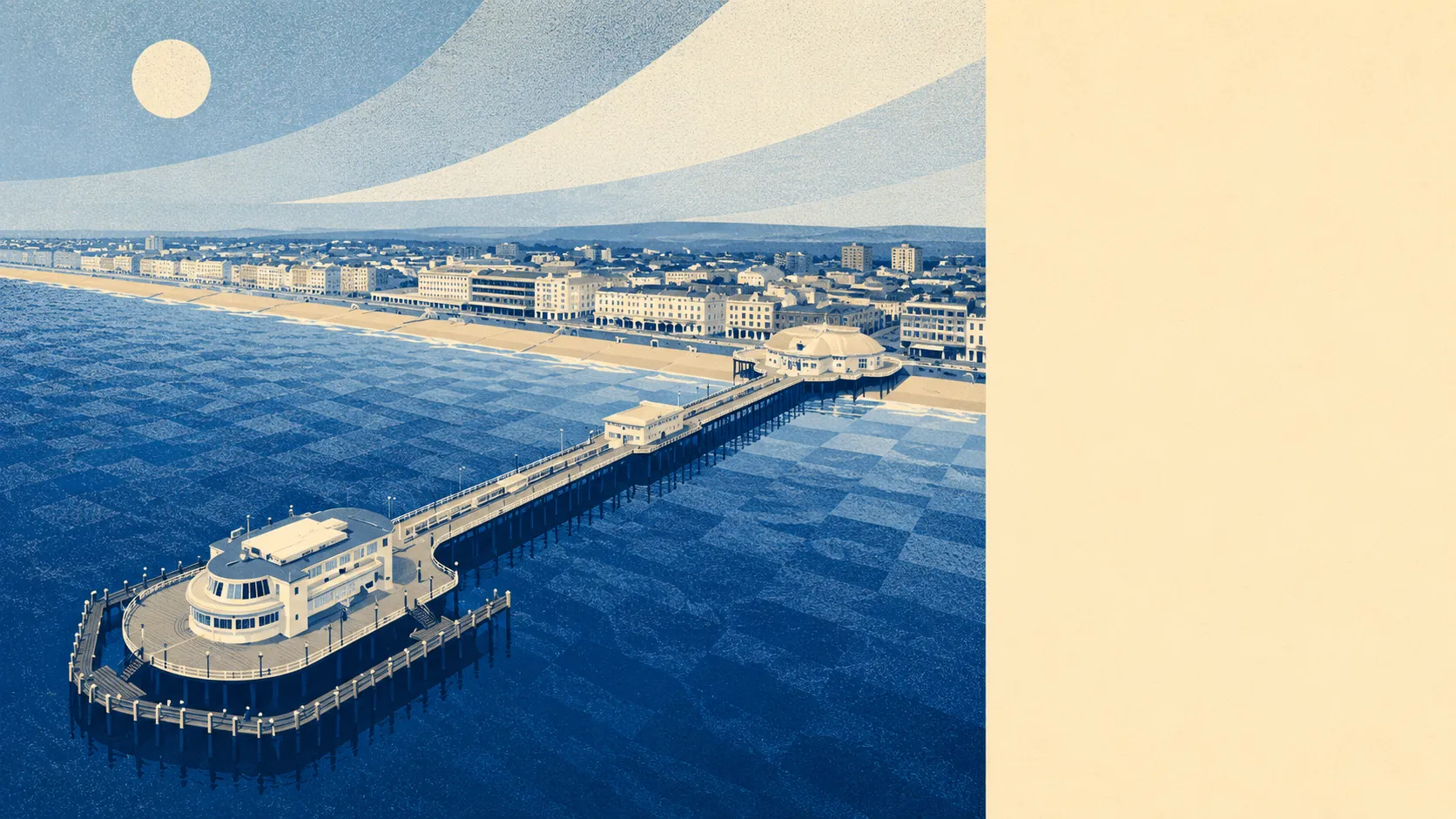
Worthing is a town of owner-occupiers who mostly arrived at some point and stayed. The median resident is forty-five. Two in three own their home. About a third of households are single people. Middle of every distribution the census tracks.
Owner-occupation runs high in Worthing: about sixty-eight percent of households own their home outright or with a mortgage. Private renting sits at about twenty-two percent. Social renting at about ten percent. That's a rental share of roughly a third, which for a coastal town of Worthing's size is neither the high-end resort split nor the London-commuter split. It's a normal town with a normal tenure mix, which is the least glamorous thing that can be said about a coastal borough and one of the more accurate.
The median age of a Worthing resident is forty-five, which is older than a young commuter town and younger than a classic retirement town. Working-age adults between twenty-five and forty-four make up about a quarter of the population. The pattern is familiar: the twenty-somethings tend to leave for university or a bigger city and come back at thirty-something with a mortgage in mind, which is why the middle-aged share is stronger than the young-adult share and why the resident age curve tilts the way it does.
The median Worthing household earns about £54,000 a year. That's the middle of the household income distribution across the borough, and it puts most residents at the workaday end of comfortable. About a third of adults hold a degree; about a sixth hold no formal qualifications. Unemployment sits at about two-and-a-half percent, which is low. Full-time students make up under two percent of the working-age population, which is what happens in a town without a university of its own.
On household make-up, about a third of Worthing households are single-person, which is a substantial share and reflects the mix of older residents who have outlived a partner and younger residents who bought a flat rather than a house. About one in six households is a single pensioner. About one in six is a couple with dependent children. About one in ten is a lone parent with dependent children. Health is generally good across the borough: about eight in ten residents rate their health as good or very good, and only about one in twenty rates it bad or very bad. Overcrowding runs at about three percent of households, which is low for a coastal town with this much flat stock.
Rated average on the summary, three out of five. Which for a town of about 112,000 people sitting at the middle of the age, income, and tenure distributions is the correct answer. A working, comfortable town without a striking demographic edge in any direction. Which is what most towns of this size are underneath, once the estate agent's chorus is stripped out.