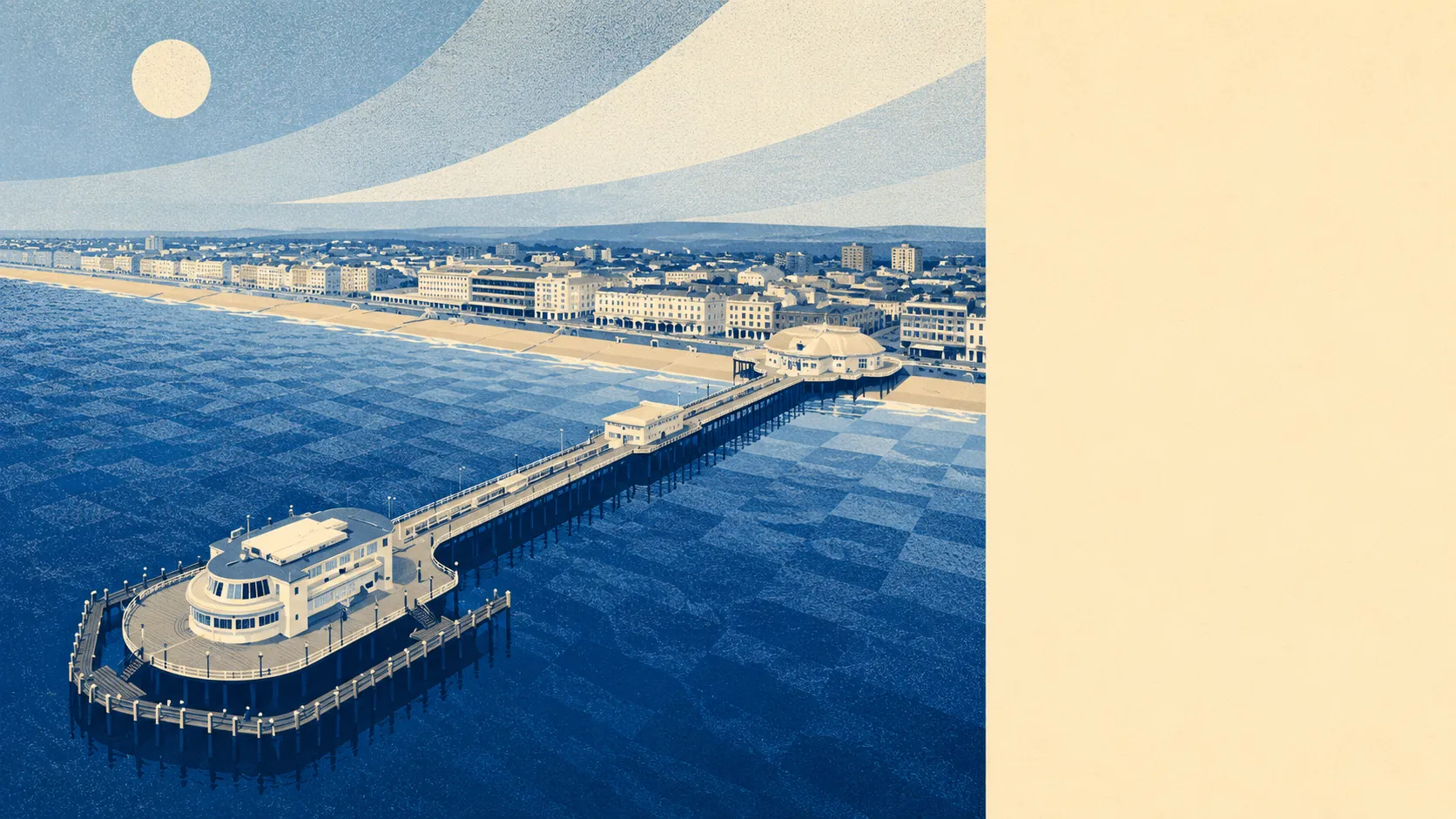
£345,000 buys the middle of Worthing. A flat comes with change to spare. A terrace lands almost to the pound. A detached costs about two hundred thousand more. One number, four different markets.
The typical sale over the last twelve months went for £345,000 across 1,423 transactions, which is a busy market by any south-coast measure. Split by property type, the average conceals four different stories. A flat sold for a median £217,500. A terraced house for £350,000. A semi-detached for £392,750. A detached for £545,000. That's a range wide enough that quoting "the Worthing price" tells a buyer almost nothing on its own; the front door type matters more than the town name. Flats accounted for nearly five hundred of those sales, the largest single slice, while detached made up fewer than three hundred, which is what happens in a town where the seafront is flats and the family houses sit further inland. Over five years the market has grown roughly ten and a half percent, which reads modest against the London-and-south-east averages and confirms the town's status as coastal-not-commuter for the purposes of the price index.
Council tax lands modally at band C, meaning the plurality of Worthing homes fall into that middle bracket. About thirty-eight percent of homes sit in the two cheapest bands, A and B, which is a seaside-town proportion most seaside towns would envy. That comes straight from the post-war stock that dominates the borough: modest three-bed semis, small terraces, and the flats along the coast built when small was normal. A band A home pays about £1,640 a year in council tax, band D about £2,460, and band H about £4,910, so the annual range across the stock runs at roughly three times. The higher bands cluster in the newer detached streets and the older villas out toward Goring-by-Sea and High Salvington, which is where the market's ceiling actually sits.
Rent tells a parallel story. The typical private rent across the Worthing area lands at about £1,310 a month, and it's risen roughly three percent in the last year. That's the local-authority average, not the specific-street figure; your address will land somewhere in the spread. By bedroom count, a one-bed typically rents for around £900, a two-bed for about £1,200, a three-bed for around £1,450, and anything with four or more for roughly £1,950. Studios come in around £650. A room in a shared house runs about £675, which is not far off Brighton money for reasons that will be obvious to anyone who has commuted between the two.
The median Worthing household earns about £54,000 a year. The median Worthing house sells for £345,000. That's a house-price-to-income multiple of about six-and-a-third, against a mortgage lender's traditional four-and-a-half. Two earners on comparable pay push the sum back into the achievable zone; a single-earner household on the local median is looking at a flat, not a house, unless there's a deposit doing serious lifting. Prices have eased over the last year, running down about two-and-a-half percent on the index, which shrinks the multiple slightly and buys first-time buyers a small window. That is why the flat market carries the biggest share of sales: it's the entry point most buyers can actually reach.
Above average, is the verdict. Cheaper than Brighton but not what anyone would call cheap. Deep enough as a market to give buyers real choice, wide enough as a range that the average price figure is worth less than the specific-postcode figure. If someone asks what houses cost in Worthing, the honest answer is a question back: which of the four markets are you actually shopping in.