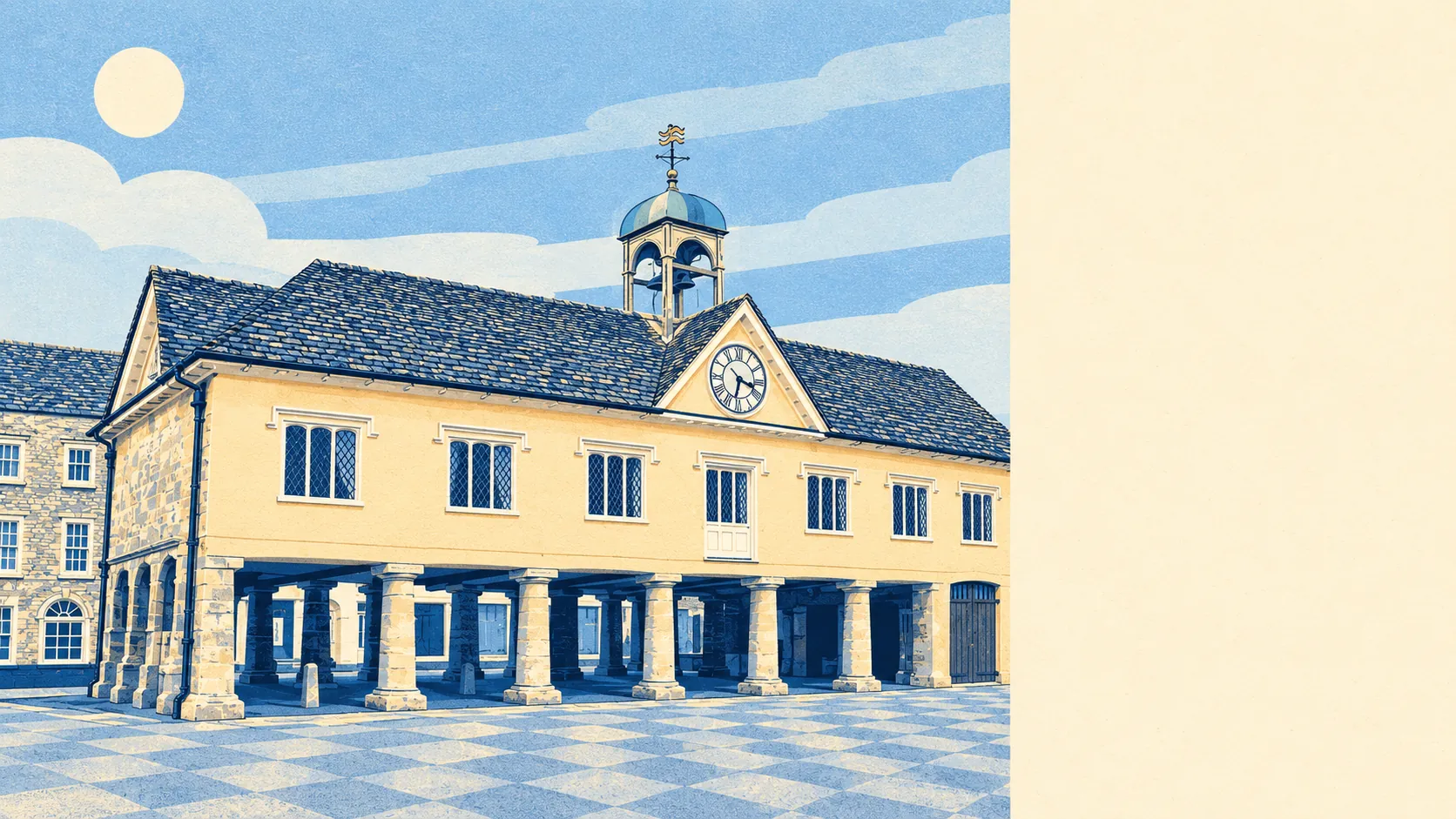
Yes, you can extend a house in Tetbury, but in the old centre you need permission for changes most towns let owners make without asking. Over two hundred buildings here are listed. The historic town is a conservation area. The whole place lies inside a protected landscape. People keep applying anyway, and in large numbers.
Tetbury and its immediate surroundings hold 232 listed buildings: four at Grade I, four at Grade II* and 224 at Grade II. Listing covers the whole building, inside and out, so changes to windows, doors, staircases, roofs or internal walls may need listed building consent on top of any planning permission, and carrying out work without it is a criminal offence. Grade I and II* are the exceptional few. The 224 at Grade II are mostly ordinary-looking houses, and their owners tend to find out about the rules when they try to replace something.
The area has one conservation area, covering Tetbury itself. Inside it, the council takes an interest in how changes affect the look of the street, and some work that would be routine elsewhere, such as demolition, side extensions or changes to the front, needs formal consent. The whole town also lies within the Cotswolds Area of Outstanding Natural Beauty, which narrows what owners can do without permission. Inside the conservation area, an extension has to suit the street as well as the owner.
The area also contains two scheduled monuments, the strictest tier of heritage protection. Tetbury camp, an ancient earthwork, is one of them. This only matters if your land is next to one, but if it is, expect any work nearby to be closely watched.
None of this has stopped people trying. Cotswold District Council received 682 planning applications covering the Tetbury area between April 2024 and June 2026, and 298 of them in the most recent twelve months. That is a town busy with extensions, alterations and arguments over window frames. Whatever the council decided on each one, people here clearly still plan to change their homes.
What you can do depends on where the house is. About a quarter of the town's homes were built before 1930, mostly the stone houses in the centre, where listing, the conservation area and the protected landscape all apply at once. The post-war estates further out have more room and fewer layers of protection, though the protected landscape covers them too, so even routine permitted-development projects come with tighter limits than they would outside it. Ask Cotswold District Council whether the house is listed or inside the conservation area, and if you are relying on permitted development, get a lawful development certificate in writing first. A rear extension that a semi on the edge of town gets with one application can take a whole file of letters about stone and lime mortar behind Long Street.
Tetbury gives owners limited freedom to change their homes, and the closer the house is to the centre, the less freedom there is. Out on the estates it is easier, but anyone buying an old house in the centre should assume the council will have a say in every major change.