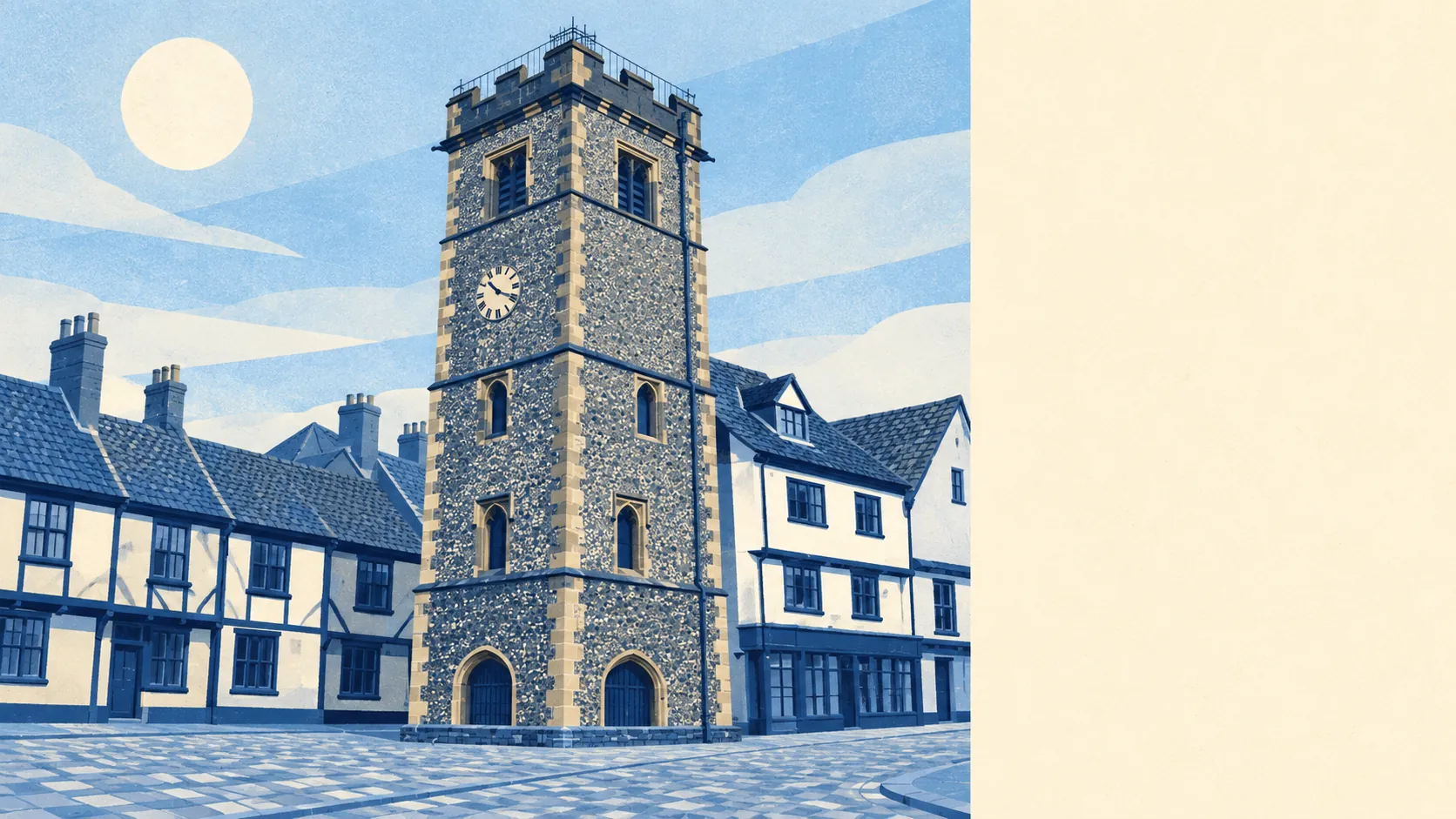
You can extend a house in St Albans, though the city's history gets a vote on the design. Hundreds of buildings are listed. The old centre is a conservation area. The Romans left a wall that still has better legal protection than your garden wall. And the neighbours file plans at a rate that suggests half the city is mid-build.
Historic England lists 322 buildings across the area: five at Grade I, 17 at Grade II* and 300 at Grade II. Listing covers the whole building, inside and out, so changing windows, removing walls, adding a rear extension or even replacing a staircase needs listed building consent on top of any planning permission. Grade II is the common tier, and still strict enough that a new kitchen in the wrong place becomes a conversation with the council's conservation officer.
There are four conservation areas in the area: St Albans itself, Sopwell, Cunningham Avenue and Shafford Mill. Inside them, some of the extensions and alterations that would be permitted development elsewhere need full planning permission, and front-facing changes such as windows, doors, roof materials and boundary walls draw particular attention. The council's own conservation area maps are the place to check whether a house falls inside one, along with its planning history on the planning portal, and both are free to look at well ahead of a survey. A house just outside the St Albans boundary line and one just inside it can look identical and sit under quite different rules.
The area also has nine scheduled monuments, the strictest tier of protection, from the Roman walls of Verulamium to Beech Bottom Dyke. They matter mainly to anyone whose land touches one, and anyone who finds a Roman wall at the end of the garden should expect it to win.
People alter their homes here constantly regardless. The council received 7,046 planning applications in the area between April 2024 and June 2026, and 3,169 in the latest twelve months. In St Albans the extension is a local sport, and the planning portal is where everyone keeps score on their neighbours.
The ground adds a practical question. The British Geological Survey rates shrink-swell clay up to class 3 here, its moderate hazard band, and about 59% of the area reaches that class or above. Clay that swells when wet and shrinks when dry moves foundations, so extensions on that ground often need deeper footings and an engineer's view on nearby trees. It adds cost and design time to a project. It is rarely a reason to drop one.
What that adds up to is simple. A rear extension on a post-war semi in Marshalswick or Jersey Farm, outside any conservation area and not listed, can often go ahead under permitted development or with an ordinary application. The same idea on a Georgian frontage in the city centre means listed building consent, conservation area scrutiny and a longer timetable.
Freedom to extend in St Albans is limited, and depends almost entirely on where your house sits on the city's heritage map. Out on the estates it is manageable, and near the cathedral it is a long negotiation.