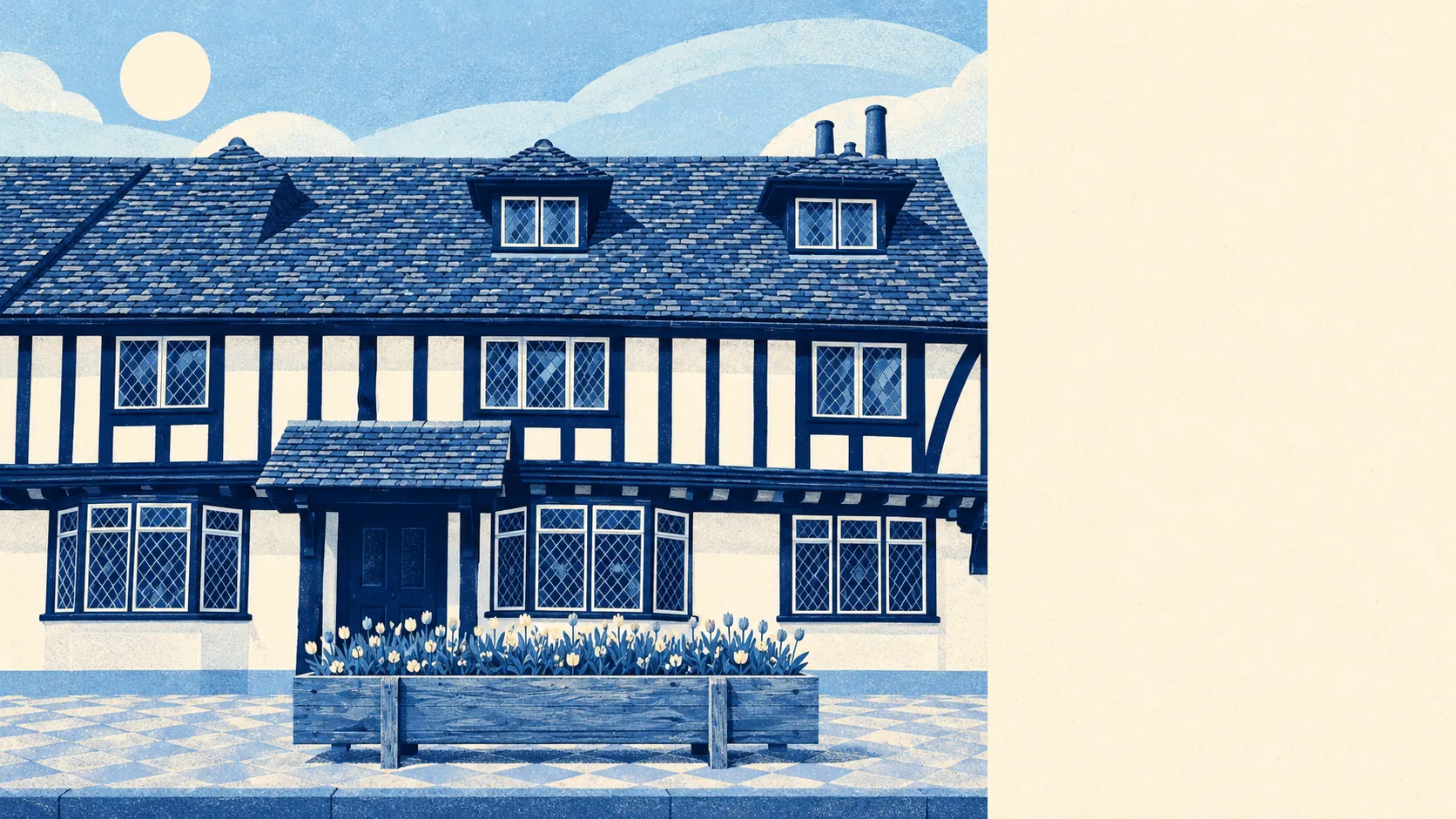
Yes, most Pinner homes can be extended, but the past and the clay both get a say. There are well over a hundred listed buildings. Conservation areas cover parts of the village and its edges. The ground everywhere shrinks and swells with the weather. Neighbours apply for planning permission constantly, so the paperwork is very much part of the deal.
There are 119 listed buildings across Pinner and its surroundings. None is Grade I, 5 are Grade II* and 114 are Grade II. Listing covers the inside of a building as well as the outside, so changes to a listed home generally need listed building consent on top of any planning permission. Changes made without it can be an offence. For a 119-building heritage list, Pinner has managed without a single Grade I.
The surrounding area has seven conservation areas, including Eastcote Village, Eastcote Park Estate and Frith Wood. Pinner also has its own Pinnerwood estate conservation area, one of the garden estates built between the wars. Inside a conservation area the council has more control over demolition, trees and changes to the outside of a house, and the usual permitted development rights are narrower. A homeowner in the Pinnerwood estate is living in someone else's design, and the council wants that to stay obvious from the street.
There are also six scheduled monuments in the wider area, the strictest level of protection, among them Pinner deer park at Pinner Park Farm and the Pinner Hill ice house near the golf club. These matter mainly to someone whose land borders one. A former deer park now has stronger protection than any garage extension in the borough.
Pinner's homeowners are not scared off. Between March 2024 and June 2026 there were 1,590 planning applications across the area, 653 of them in the last twelve months. That is the sound of a suburb full of interwar semis adding side extensions, rear extensions and lofts, one street at a time.
The ground needs as much care as the paperwork. The geological survey puts all of Pinner in shrink-swell class 3, its moderate band for clay that expands when wet and shrinks when dry. In practice that means deeper foundations for an extension, care with nearby trees, and a structural engineer's view early on, ideally with a soil report. Your builder's word that the old foundations will do isn't enough. It isn't a reason to give up on an extension. It is a line in the budget that a flat-ground suburb wouldn't need.
One listed building in the area is on Historic England's Heritage at Risk register. That means a building in poor condition whose repair may qualify for grant funding and will certainly draw scrutiny. It is a concern for whoever owns that building, not for the buyer of an ordinary semi down the road.
In practice, an unlisted house outside a conservation area can often use permitted development rights for a modest rear extension or loft. A listed house, or anything in a conservation area, should expect to need consent for most of what an owner would want to do. Look up the specific house on Harrow Council's planning map and conservation area list, and check whether the title or the street carries any extra restrictions. The answer can change from one side of a road to the other.
Freedom to extend in Pinner is below average. The protected history and the clay both add steps, cost and time, though the volume of applications shows plenty of people get there.