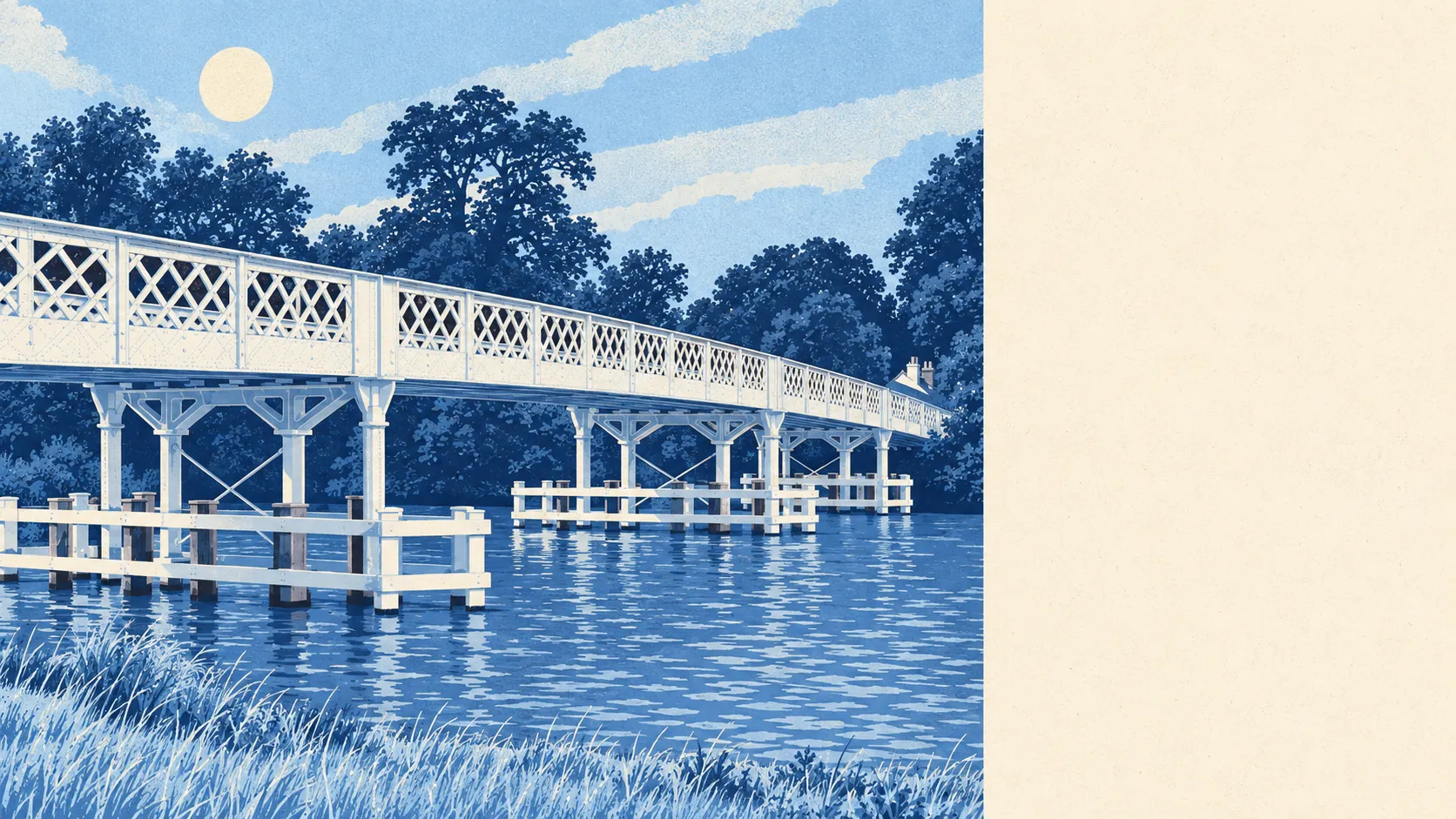
Pangbourne is a railway village where hardly anyone takes the train. Half the working residents work from home. Only a few in a hundred commute by rail. Seven in ten own the house they sit in all day. The station is for visitors, and the residents commute to the spare room.
Across every home on the council-tax list, about 31% are detached, 24% semi-detached, 18% terraced, 16% flats and 9% bungalows. About 31% were built before 1930, and that older slice is the riverside postcard. Among homes with an energy certificate, the post-war stock is the biggest single age group. Buyers come for the old house by the river and end up viewing the post-war semi behind it, which is the honest shape of the stock. On energy ratings, about half of certificated homes rate A to C, 37% sit in band D and 14% are E or worse. Most homes, about 73%, heat with mains gas. About 11% rely on electric-only heating, and in an older house that is a line in the listing to read before the first winter bill, not after it.
The Land Registry recorded 35 sales in the twelve months to May 2026, at a median of £460,000. That median averages two different villages. Detached houses sold for a median of about £1,210,000 across 11 sales, semis for about £620,000, terraces for about £370,000 and flats for about £296,000. The river view has a price, and it sits in the detached column. Anyone told the median is the going rate should ask which Pangbourne the agent means. Council tax falls most often in band D, about £2,505 a year, and only about 8% of homes sit in the cheapest bands, A and B.
There is no rent figure at village level. The typical private rent across the West Berkshire area was about £1,280 a month in April 2026, up 3% on a year earlier, and a three-bedroom home across the district was typically around £1,450. Those are district averages. A river-facing house in Pangbourne is not a district average, and the landlord will know it.
Pangbourne is a quiet place, and the crime figures agree. The published rate was about 54 crimes per 1,000 residents in the twelve months to May 2026, roughly 19% below the West Berkshire average of about 67. Anti-social behaviour made up about 19% of recorded incidents against 16% nationally, but the totals are small enough that a handful of incidents moves the shares by several points. Thames Valley Police, which covers the area, charged in about 9% of cases over the same period against a national rate of about 12%. That is a figure for the whole force, not for the village. The most dramatic arrest in local history is still Hugh Cook Faringdon, the last abbot of Reading Abbey, taken at Bere Court in 1539. Things have calmed down since.
Primary schooling holds up. The four primary schools in the district averaged a maths score of about 105 at the end of primary. Across West Berkshire, Ofsted has graded 21 of 23 rated settings good or better, two of them outstanding. Pangbourne Primary School is in the village, and Whitchurch Primary School is over the bridge. Pangbourne College, the independent school, sits outside the built-up area. Secondary school is where the geography starts to matter. The typical journey is about 13 minutes by car and 43 by public transport, and on foot it takes the best part of an hour. About 47% of households run two or more cars, and secondary school is usually when the second car stops being optional.
Pangbourne station is on the Great Western Main Line, with stopping services to London Paddington via Reading and to Oxford via Didcot Parkway. At the last census, about 3% of working residents took the train to work, 35% drove and half worked from home. There are 24 bus stops in and around the village, and fewer than one worker in a hundred used a bus to get to work. Broadband is where the village earns its keep: about 95% of premises can get superfast and 66% can get gigabit, which counts for a lot when the commute is a staircase. Every postcode has mobile data from at least one operator.
The surroundings are the reason to live here. The whole village sits inside protected landscape, touching both the North Wessex Downs and the Chilterns Areas of Outstanding Natural Beauty. The average home is roughly 170 metres from green space and about 220 metres from water. The River Pang runs through the middle and joins the Thames by Whitchurch Lock, and the hay meadows on either side were traditionally used as flood meadows. That is the other half of the deal. About 12% of postcodes fall in the Environment Agency's river-and-sea flood zone 2 and about 6% in flood zone 3. Separately, about 13% of postcodes are at high risk on at least one flood indicator, surface water included. The Environment Agency has recorded 33 flood events, the most recent in July 2007, when a main river overtopped its channel. The British Geological Survey puts about 95% of postcodes in class 3 for shrink-swell clay, which is one for the surveyor to look at. Anyone buying near the water should check the exact address before falling for the view.
There are 62 listed buildings in and around the village: one grade I, five grade II* and 56 grade II, among them the Church of St James the Less and Bere Court. The Whitchurch conservation area is over the bridge in Whitchurch-on-Thames, which this page also covers. Listed status means asking permission for most changes, and the protected landscape adds its own caution to anything large. Owners of the old houses by the river buy the view and get a planning officer with it.
About 70% of households own their home, and the typical resident is 45. Modelled gross household income averaged about £76,000 in the financial year to March 2023, and nearly half of adults hold a degree. Jimmy Page kept a riverside cottage here from 1967 to 1973, and Led Zeppelin rehearsed their first album in the village. The noise complaints have been quieter since.
Pangbourne suits people who work from home, or can get to Reading when they have to, and who want the river on the doorstep more than a bus timetable. Families with primary-age children and a car do well here. So do people who have already made their money and want a station to wave at on the way to the towpath.
It does not suit a first-time buyer on a tight deposit, because the cheapest way in is a flat at close to £300,000. Anyone without a car and with a child about to start secondary school should work out the journey before the viewing. Anyone looking at a house near the Pang should read the flood map before the brochure.
Pangbourne is a good place to live for anyone whose budget stretches that far. Its real strength is the surroundings: protected countryside all round, two rivers and green space a short walk from nearly every door. The weak spot is value. The detached market prices the river in full, and there is barely a starter market at all. Pangbourne charges full price for the river, and the river keeps being worth it.