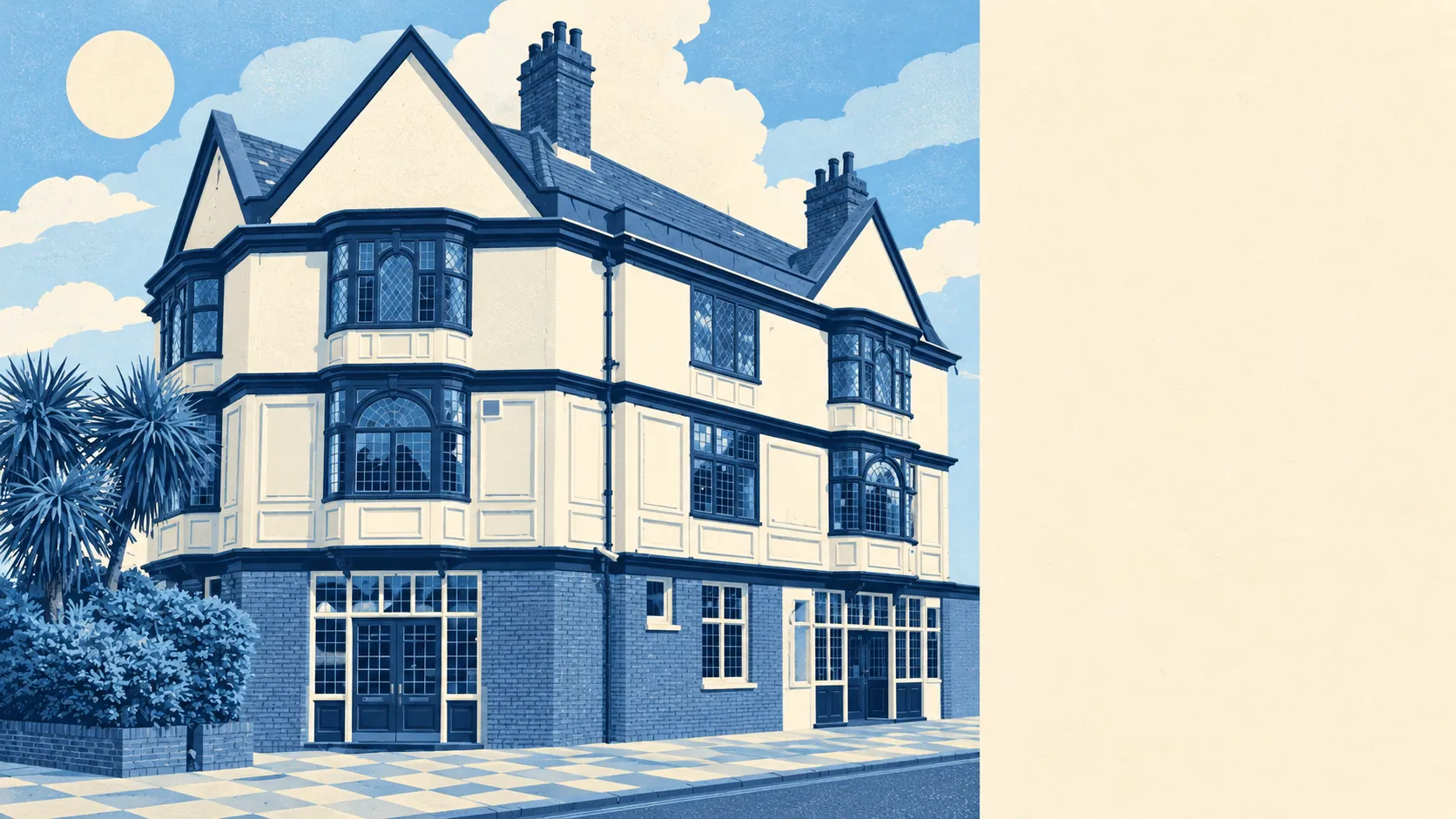
North Finchley is a strong place to live and a harder place to buy, because the parks and schools around it are better than the prices make them feel. Most homes are flats strung along the roads out of Tally Ho Corner, and the houses on the side streets behind them are where the money goes. Nearly half the working residents stay at home on a weekday. The rest take a bus that turns up before they've found their card.
The people who get the most from it are the ones who want north London green space and good school results, and who are happy to live in a flat or stretch a long way for a house. Getting around starts with the bus. There are 142 stops in and around the area. The national stop data has each one served by about 290 departures on a weekday and about 16 an hour at peak, and almost every stop has a weekend service. The High Barnet branch of the Northern line covers the Tube, though under 2% of commuters gave the train as their main way to work in the 2021 Census, against 8% by bus and 23% by car. Around 46% worked from home. The Department for Transport's 2019 modelling put the nearest town centre about 12 minutes away by public transport. Gigabit broadband reaches about 80% of premises and superfast about 97%, so the people working from the kitchen table have the connection for it.
Flood risk depends on which map you read. On the Environment Agency's river-and-sea flood zones, under 1% of postcodes fall in the higher-risk zone. Surface water changes the picture: about 13% of postcodes carry a high rating on at least one flood indicator, and about 23% a low one. Rivers barely trouble North Finchley, and the drains decide the rest.
The schools are a large part of the reason people come. Ofsted has graded 57 of the 59 rated settings across Barnet good or better, 12 of them outstanding, and that count covers the whole borough. Closer in, the seven primaries in the postcode district average about 108 in Year 6 maths, and the four secondaries average an Attainment 8 score of about 62. Names in reach include Moss Hall Infant School, Woodridge Primary School and Wren Academy Finchley, with Finchley Catholic High School and Woodhouse College for older children. Families pay for those results in house prices, and they will tell you it was worth it.
Police.uk records put crime in North Finchley at about 89 incidents per 1,000 residents in the year to May 2026, about 8% below the Barnet average. Vehicle crime makes up about 13% of the total, compared with 5% across England and Wales. A car on the street is the thing most likely to come to harm here.
Heritage rules are light. There are 26 listed buildings, two of them grade II*, and four conservation areas nearby: Finchley Church End, Finchley Garden Village, Glenhill Close and Moss Hall Crescent. Outside those streets you can extend a semi without asking anyone's opinion of your windows.
Prices are where North Finchley hurts. The Land Registry recorded 159 sales in the year to May 2026, at a typical price of about £528,000. That figure blends very different homes: flats went for about £375,000, terraced houses about £695,000, semis about £900,000 and the ten detached houses sold about £1,055,000. The official house price index has the area's average down about 4% over the same year, so the market is giving ground, slowly. Band D is the most common council-tax band, and only about 7% of homes are in bands A or B. The jump from a flat to a semi is bigger than most pay rises.
Renting costs about £1,930 a month for a typical private let in April 2026, and that figure covers the whole of Barnet. It's a borough-wide mean from the Office for National Statistics, so a two-bed above a shop on the High Road and a family house in Woodside Park are both inside it.
The council-tax list shows about half of all homes are flats, with semis at a quarter, terraces at about 17% and detached houses at 6%. About 35% were built before 1930. The energy picture is middling: about 52% of certificated homes are rated A to C, about 12% E or worse. About 74% of households heat with mains gas and about 13% with electricity alone. In a modern flat, electric heating is normal. In an older conversion it's the bill to ask about at the viewing.
The people here own about 54% of their homes, the typical resident is about 40, and the Office for National Statistics models gross household income at about £78,000 a year for the year to March 2023. That reads as a professional crowd with mortgages, a fair share of renters and a lot of laptops. Friern Barnet to the east and Woodside Park to the north are covered by the same numbers, and the semis that drag the price averages upwards are mostly in places like those.
The surroundings are what North Finchley does best. The average home is about 160 metres from green space, with roughly 26 parks and open spaces within a kilometre, and water of some kind about 490 metres away. A dog owner here needs nothing more than shoes. That much green this close to a major junction is rare in London.
North Finchley is a good choice for flat buyers, renters and families who want parks on the doorstep and schools worth the walk, and who will live on the bus and the Northern line. It's a poor choice for anyone hoping their flat budget will stretch to a house with a garden, because the price gap between the two is the widest thing in the postcode. Come for the green space and budget for the gap.