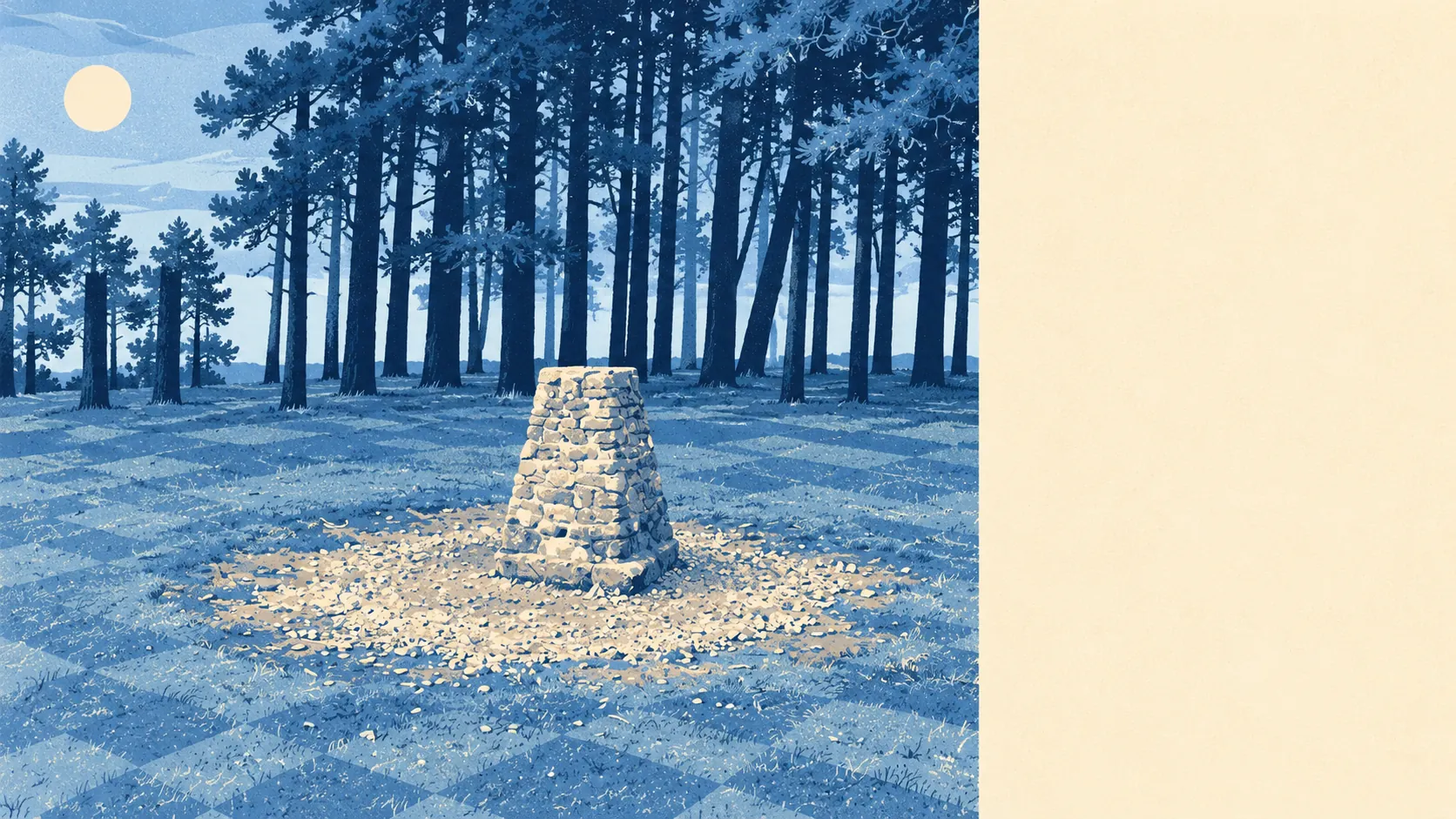
Huntley is surrounded by working countryside, and the fields come right up to the back gardens. A public green space is a short walk from most front doors. Water is a little further on. None of it carries a protected-landscape label. The land here is used for farming, which is why it all looks lived in.
The nearest public green space is about 150 metres from the average home in Huntley, and there are around five sites within a kilometre. For most households, walking the dog needs no car journey and very little planning.
Water is not far either. The nearest river, stream or pond is about 500 metres from the average home, with around four such places within a kilometre. None of them is big enough to give the village a waterfront, but there are plenty of streams.
The National Cycle Network is about 7.7 kilometres away on average, and no postcode in Huntley counts as close to it. Cycling here means country lanes.
Among the food and drink premises in and around the village, the ratings data counts six shops, 15 pubs and no restaurants. The Red Lion is the one in Huntley itself, alongside a traditional butcher. If you want to eat out, you will be going to a pub.
The Department for Environment, Food and Rural Affairs puts fine-particle pollution across the Forest of Dean at about 5.7 micrograms per cubic metre in 2024.
Huntley is in the north of the Forest of Dean, on the edge of a scatter of small villages: Taynton, Tibberton, Birdwood, Churcham and May Hill Village among them. Farmland, horticulture and woodland still cover much of the land, even though fruit growing has declined. The earthworks of Taynton Castle, a ring motte from the eleventh or twelfth century, lie to the north-west. The Forest of Dean chronicler Winifred Foley lived in the village until the mid-1970s.
Private gardens are generous. Huntley has about 431,000 square metres of private garden for every 1,000 residents, measured across the one small statistical area that covers the village. In a place built mainly of bungalows and detached houses on post-war plots, that is enough room for a vegetable patch, a shed and a dispute over a hedge.
The council's rating list holds 23 business premises in Huntley, with the largest single category accounting for six of them. Those are premises on the valuation list, and the list does not tell you which are trading today. Huntley lost its post office in 2010, and its golf course and riding school had both closed by 2016, so check what is actually open, not what used to be.
All five food premises inspected for hygiene in Huntley hold the top rating, and none is rated low. With only five, that is a small sample, though a clean one.
No area of outstanding natural beauty, site of special scientific interest or ancient woodland overlaps Huntley. That means the countryside here is unprotected, with no designation behind it. It also means no landscape authority checks what you build and no visitors crowd the lanes at weekends.
Huntley's surroundings are one of its real strengths, with green space and water within walking distance of most homes and room in most gardens to enjoy them.