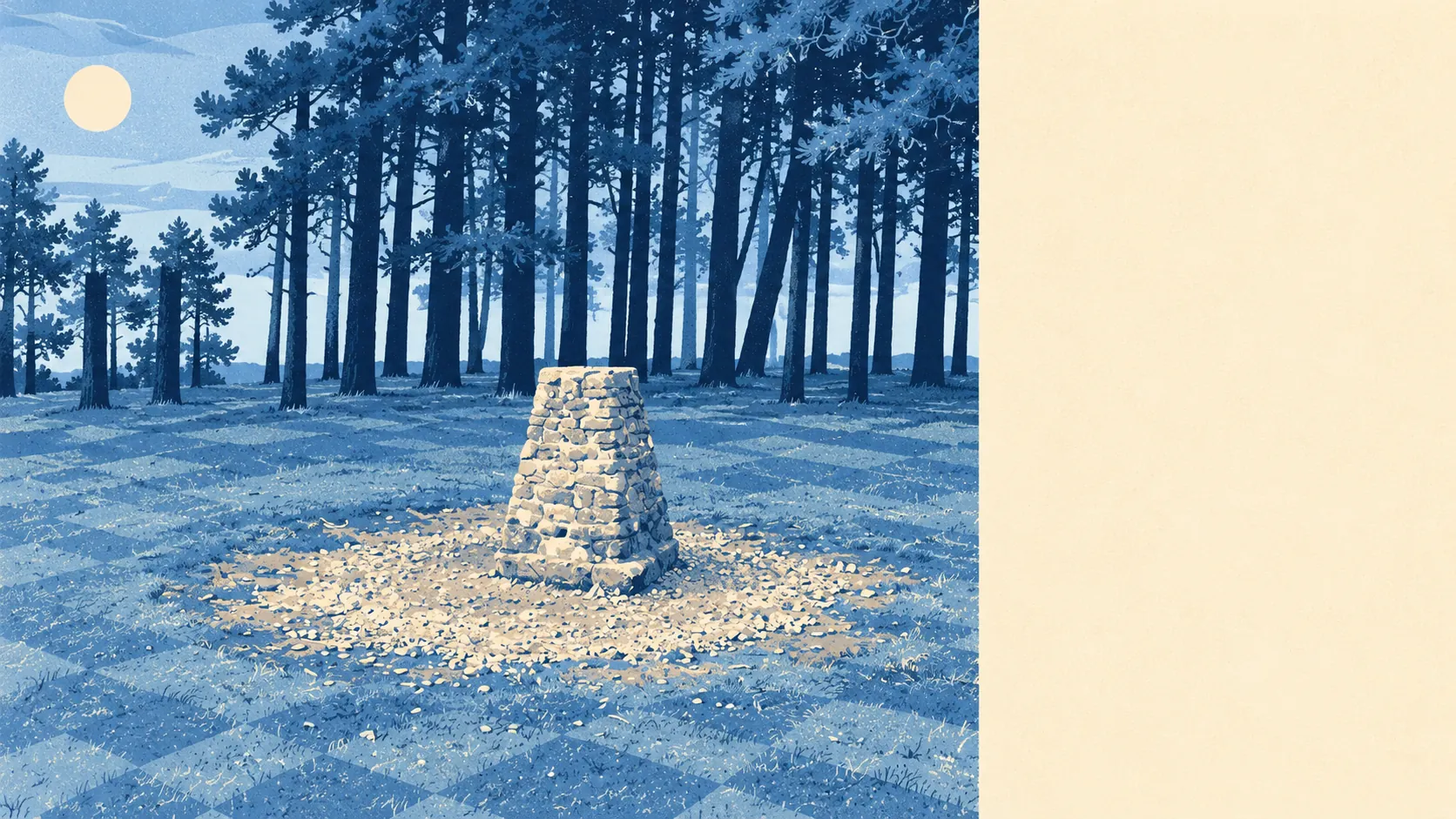
In Huntley, the house you buy is a first draft. The whole village has eleven listed buildings and no conservation area, and most homes are post-war bungalows and detached houses on plots laid out before anyone had heard of a loft conversion. The heritage officer has very little to say about your plans here, which leaves ordinary planning and your budget as the only arguments left. For a buyer who wants to change a home, that freedom is most of the case for Huntley, and it is a decent case.
All eleven of Historic England's listed buildings here are Grade II. There is no Grade I or Grade II* among them, no conservation area and no scheduled monument inside the village. Most of Huntley was built between 1951 and 1980, around the pub and the old toll house, and a 1960s bungalow rarely gets listed. The nearest conservation areas belong to Longhope and Blaisdon, where buyers who want sash windows and the paperwork that comes with them can find both.
Crime is low. Gloucestershire Constabulary recorded about 20 crimes per 1,000 people in Huntley in the year to May 2026, roughly 53% below the Forest of Dean average. The force itself charged about 9% of crimes over that period, against about 12% nationally, and ranks 39th of 42 forces on that measure. Huntley stays safe because little happens here, not because the force clears much up.
Getting anywhere means driving. At the 2021 Census, no working resident took the train to work, about 59% drove, about 2% took the bus and about a third worked from home. There are 18 bus stops. The eight with timetable data average 22 weekday departures and about one bus in the peak hour, and all eight have a weekend service. The Department for Transport's modelled times from 2019 put the nearest town centre 18 minutes away by car and 29 by public transport, and the bus figure has probably got worse since. Superfast broadband reaches every postcode and gigabit reaches about 79%. Mobile coverage from at least one operator is close to universal, and from all of them about 93%. The third who work from home have the better end of that deal.
Flood is Huntley's weak spot, and the usual reassurance misses it. None of the village is in the Environment Agency's river-and-sea flood zones, and there is no recorded historic flooding. Even so, about 23% of postcodes are rated high on at least one flood indicator, surface water included, with another 3% medium and about 39% low. A seller who says the house is nowhere near a river is telling the truth and answering the wrong question.
People here own their homes and stay. About 83% of households own, the median resident is 52, and median gross household income was about £55,600 in the financial year to March 2023, an Office for National Statistics model for the wider surrounding area. The cricket club was founded in 1874, and it and the residents both look settled for the long haul.
Over the Land Registry's twelve months to April 2026, the typical Huntley sale was about £322,500. Detached houses went for a median of £385,000 and semis for £300,000, with seven sales of each. Band D is the most common council tax band, and about 20% of homes are in bands A or B. Fourteen sales in a year makes that median a small sample of houses and a lot of hope.
About 12% of households rent privately, so the closest guide to rent is the wider area: typical private rent across the Forest of Dean was about £820 a month in April 2026, a figure for the whole council area.
The council-tax valuation list gives the housing mix. About 43% of homes are detached and 29% are bungalows, with about 17% semis, 5% terraced and 2% flats. About 31% were built before 1930. Only about 5% of homes are on mains gas and about 16% are heated by electricity alone. Among homes with an energy certificate, about 41% are rated E or worse and only about 26% reach A to C. In an electrically heated bungalow rated E, the extension money and the insulation money often turn out to be the same money.
Outdoors is close. The nearest green space is about 150 metres from the average home, with around five sites within a kilometre, and water about 500 metres away. Fruit growing has declined, but the farmland, horticulture and woodland are still there.
Huntley is right for a buyer who looks at a post-war bungalow and sees drawings for it, who drives or works from home, and who wants about half the district's crime rate at a mid-market price. Anyone who needs a train, a bus they can plan a meeting around, or an address with no surface-water rating should look elsewhere.
Huntley gives you a house you are allowed to change, and in a village made of post-war plots that permission is a large part of what you pay for. The water comes off the fields and the roads, not out of a river, so check the drains as closely as you check the drawings. Huntley is a better-than-average place to live for anyone who wants room to build and can live with surface water.