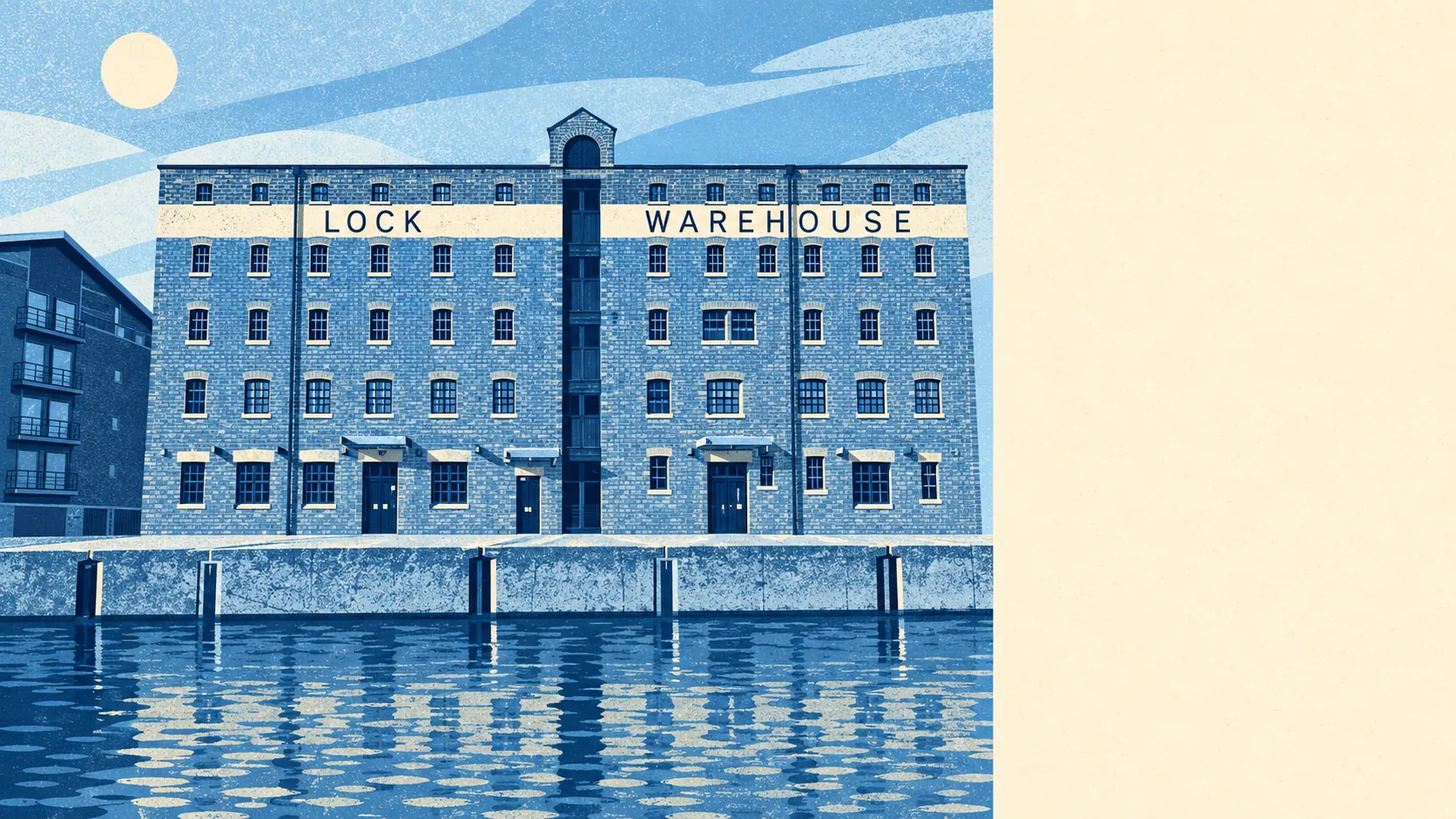
The area around Gloucester is greener and wetter than the city's reputation suggests. Most homes have a park round the corner. Water is a short walk away. The Cotswolds rise on one side and the Forest of Dean on the other. The city itself is the built-up part in the middle.
The average home is about 140 metres from the nearest public green space, with about 26 green spaces within a kilometre. That is park-at-the-end-of-the-road distance for most of the city, from the recreation grounds in the suburbs to Robinswood Hill above Tuffley and Matson.
Water is about 300 metres from the average front door, and there are about 45 bodies of water within a kilometre. Most of that is the Severn, the Gloucester and Sharpness Canal and the docks. The river gave Gloucester its bridge, its port and its reason to exist, and today it mostly gives residents somewhere to walk.
The National Cycle Network is about 1.4 kilometres from the average home, and about 29% of postcodes are close to it. There is no ancient woodland inside the area. The older trees are out on the Cotswold edge and in the Forest of Dean, so seeing them means leaving the city.
The valuation list counts 1,021 shops, 91 pubs and 84 restaurants across Gloucester. For a cathedral city, the high street is still made up mostly of shops, with the pubs and restaurants spread among them.
Fine-particle air pollution across the Gloucester council area measured about 7 micrograms per cubic metre in 2024.
Gloucester's character comes from the gap between the old core and everything around it. Inside the old core are the cathedral, the docks with their warehouses turned into flats and museums, and conservation areas from Kingsholm to The Spa. Around it are the suburbs: Barnwood and Hucclecote to the east, Quedgeley and Kingsway Village to the south, and Longford and Hempsted at the edges. Beyond those are villages like Maisemore, Highnam and Upton St Leonards, where the city gives way to fields. Cooper's Hill and Upton St Leonards are within reach of a weekend walk, and the Malvern Hills are visible to the north.
Private gardens add about 84,000 square metres of outdoor space per thousand residents across the city's neighbourhoods. A post-war semi in Tuffley usually comes with a lawn, and a flat near the docks does not, so the amount of garden depends heavily on the type of house.
The business rates list holds 3,489 premises, and after shops the biggest categories are offices and warehouses. These are premises on the valuation list, which is not the same as businesses currently trading, so some are empty. Gloucester is a county town with as much office and warehouse space as shop space.
Of 756 rated food premises, about 80% hold the top hygiene score and about 2% sit at the bottom.
No protected landscape designation overlaps the area: there is no area of outstanding natural beauty, no site of special scientific interest and no ancient woodland. That reflects where the boundary was drawn, around a working city, while the protected countryside lies just beyond it to the east and west.
The area around Gloucester is one of its real strengths. Green space and water are within a few minutes' walk of most homes, and the Cotswolds and the Forest of Dean are close enough to make the city a good base for getting out.