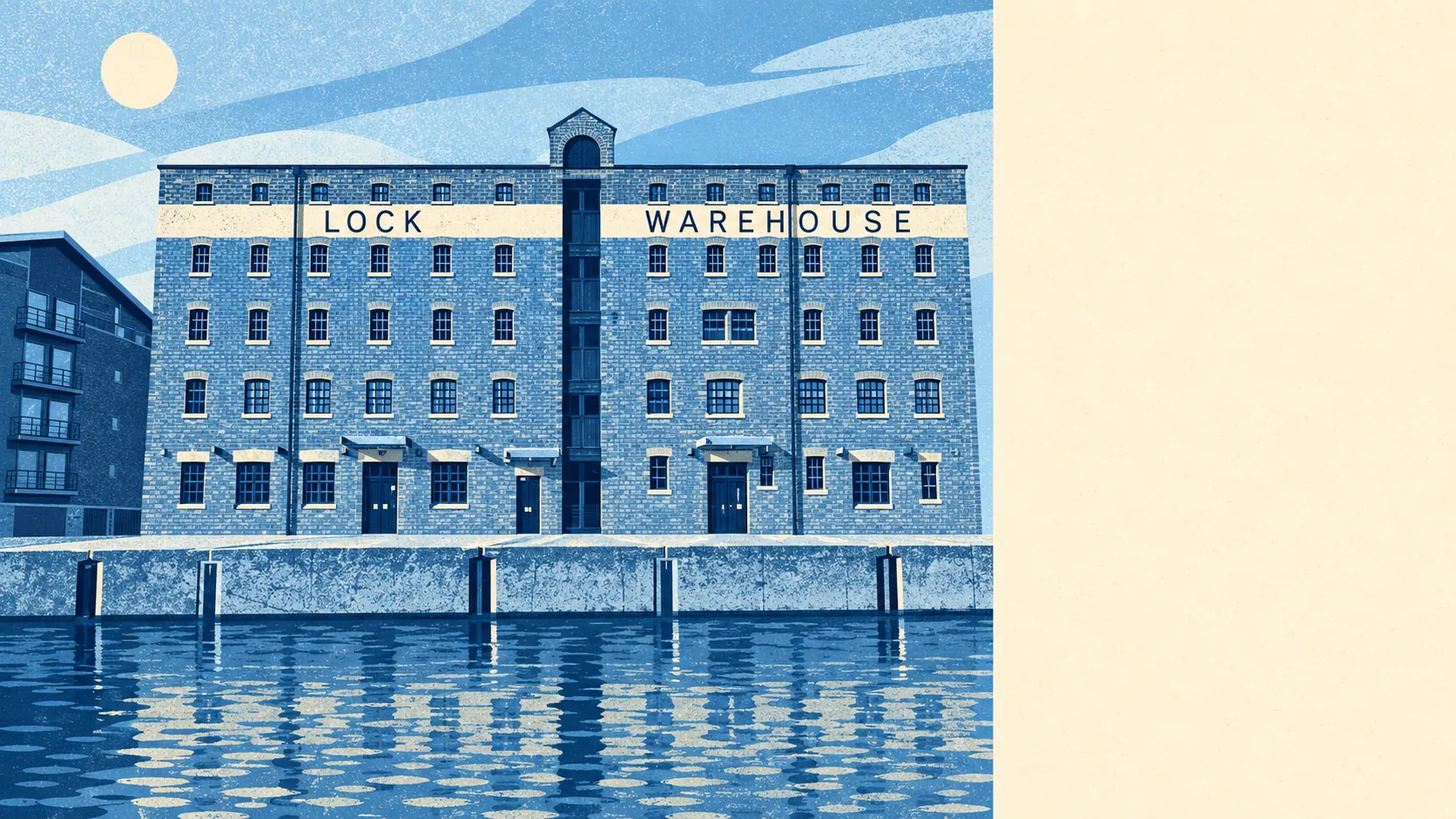
You can extend a house in Gloucester, but anywhere near the old city the council and Historic England will both have a say. More than five hundred buildings are listed. Fourteen conservation areas cover the historic core and older suburbs. More than twenty scheduled monuments protect the ground itself. The further a house is from the cathedral, the fewer people need to approve the plans.
Historic England lists 528 buildings in and around Gloucester. Of those, 36 are Grade I, 55 are Grade II* and 437 are Grade II. Listing covers the whole building, inside and out, so any change that affects its character needs listed building consent on top of any planning permission, and that includes windows, internal walls and some repairs. The cathedral is one of 36 Grade I buildings in and around the city, so most of the top-grade heritage here is not the cathedral at all.
There are 14 conservation areas in and around the city: Barbican, Barton Street, Cathedral Precincts, City Centre, Denmark Road, Eastgate and St Michael's, Hempsted, Hucclecote Green, Kingsholm, London Road, Southgate Street, The Docks, The Spa and Worcester Street. Inside them, demolition and changes that face the street come under tighter control, and the council looks at whether a proposal fits the character of the area as well as whether it suits the owner. The city council's conservation-area maps show exactly where each boundary runs, and a house on one side of a road can face different rules from the house opposite.
Gloucester also has 22 scheduled monuments in and around the city, the strictest tier of protection, which mainly matters for land next to one. The list includes the Glevum Roman colonia, Llanthony Secunda Priory and Over Bridge. Even the site of Kingsholm Palace is scheduled, though the palace itself is gone.
Gloucester's neighbours do extend their homes. The planning register holds 3,094 applications between April 2024 and June 2026, and 1,369 of them came in the last twelve months of that period. People here clearly do build extensions, and in some streets they have more forms to fill in first.
Nine of the listed buildings in and around Gloucester are on Historic England's Heritage at Risk register. That means they are in poor condition, and their repair may qualify for grant support while also getting close attention from the council and Historic England. For the owner of an ordinary house a few doors away, the effect is that the heritage officers are already paying attention to that street.
The city is not all heritage. Only about 22% of homes on the council-tax list were built before 1930, and most of Gloucester is post-war semis and newer estates. Outside the listed buildings and conservation areas, a typical house usually has the normal permitted development rights for modest rear extensions and loft work. Inside them, assume nothing is automatic and check with the council before drawing up plans.
The freedom to extend or alter a home is Gloucester's weakest point. The historic city has so many protections that an old house usually needs consent for almost any change, and only the newer suburbs get anything close to a free hand.