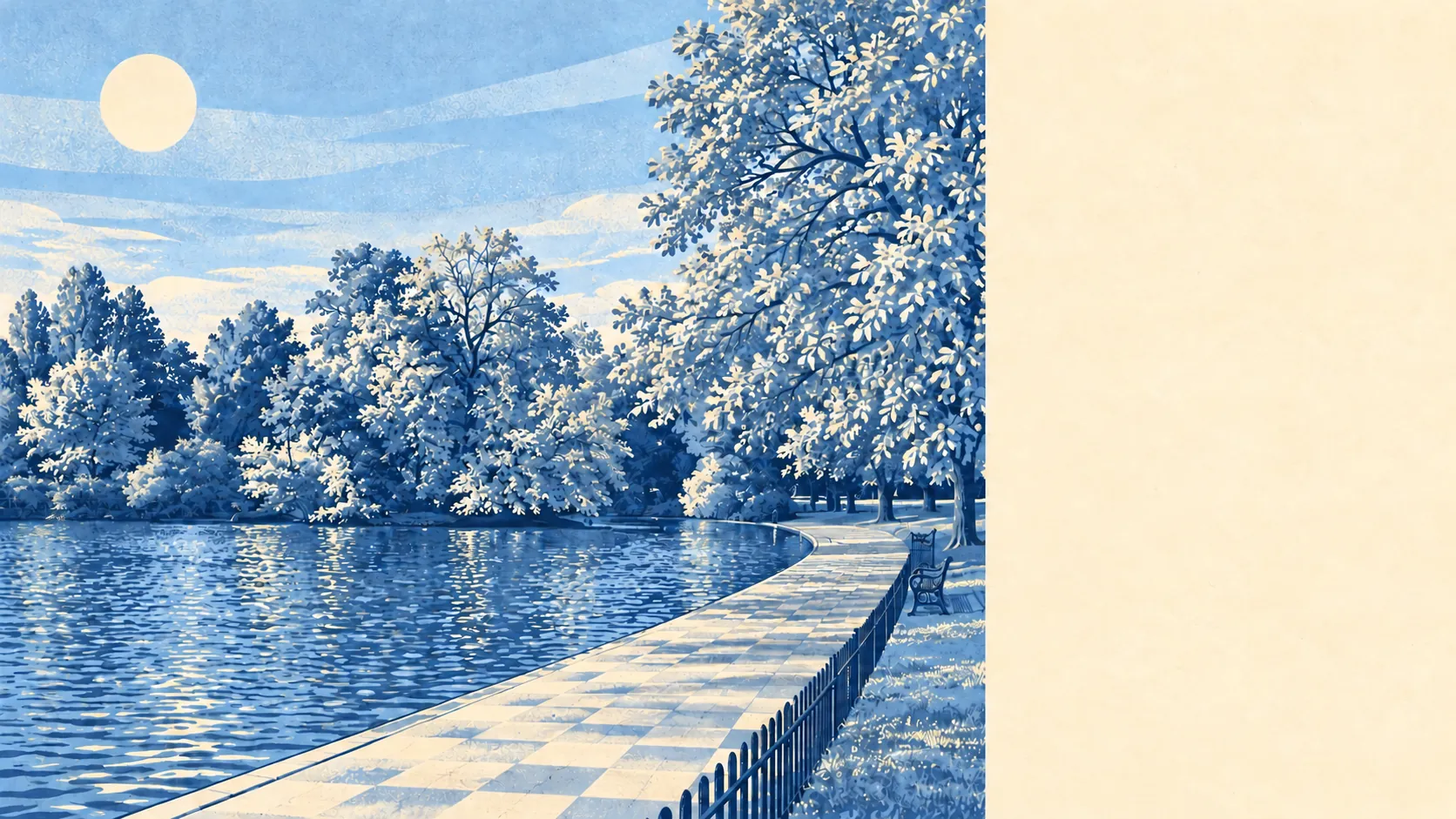
The area around Gidea Park is green, built up, and a short walk from water. Most front doors are a short stroll from a park or open space. Water is not much further. The local shops are mainly for daytime errands, with only a few places to eat or drink. Most of the green space was put there on purpose, as part of a garden suburb.
The average home in the area is about 170 metres from public green space and has around 19 green spaces within a kilometre. People here can choose which park to walk the dog in.
Water is about 390 metres away on average, with around 16 ponds, lakes or streams within a kilometre of the typical home. It is easy to reach for a walk, and nearly all of it is the small, still kind.
The National Cycle Network is about 2.7 kilometres from the average home, and no postcode in the area is close to it. Getting onto a long-distance cycle route takes a deliberate ride first. There is no ancient woodland in the area.
The valuation list has 222 business premises in the area. Among them are 128 shops, 19 offices, 5 pubs and 4 restaurants. These are premises on the rating list, and some of them may not be trading today. The mix tells you what the suburb was built for: shopping and errands by day, with only a handful of places for an evening out. Gidea Park sends most of its money to the till and very little of it over the bar.
Fine-particle air pollution across Havering averaged about 8 micrograms per cubic metre in 2024. That is a council-wide figure, and the suburb's busy roads mean some streets will differ from it.
The suburb is defined by its planning. The Gidea Park conservation area covers the Edwardian exhibition streets, and the Romford, and Langtons, Hornchurch conservation areas reach into the wider area. Romford's shops are to the west, and Ardleigh Green, Emerson Park and Hornchurch are to the south. To the north-east is Gallows Corner, a big road junction that most people know as a traffic queue. The houses in between are mostly interwar, and they are as near a big junction as they are a park.
Private gardens add about 92,000 square metres of space for every 1,000 residents across the area, and that is green space people do not have to share. The suburb was named for its gardens, and they are still there.
Food hygiene ratings cover 76 premises in the area, and about 67% of them have the top score of five. About 5% sit at the bottom of the scale. Most places pass easily, and a few don't.
No protected-landscape designation reaches into the area. There is no area of outstanding natural beauty and no site of special scientific interest, and there is no ancient woodland. That is not a fault. Every green space here was designed by people, and none of it is wild countryside.
The area around Gidea Park is one of its best features, with a park, some water and a garden of your own all within a short walk of home.