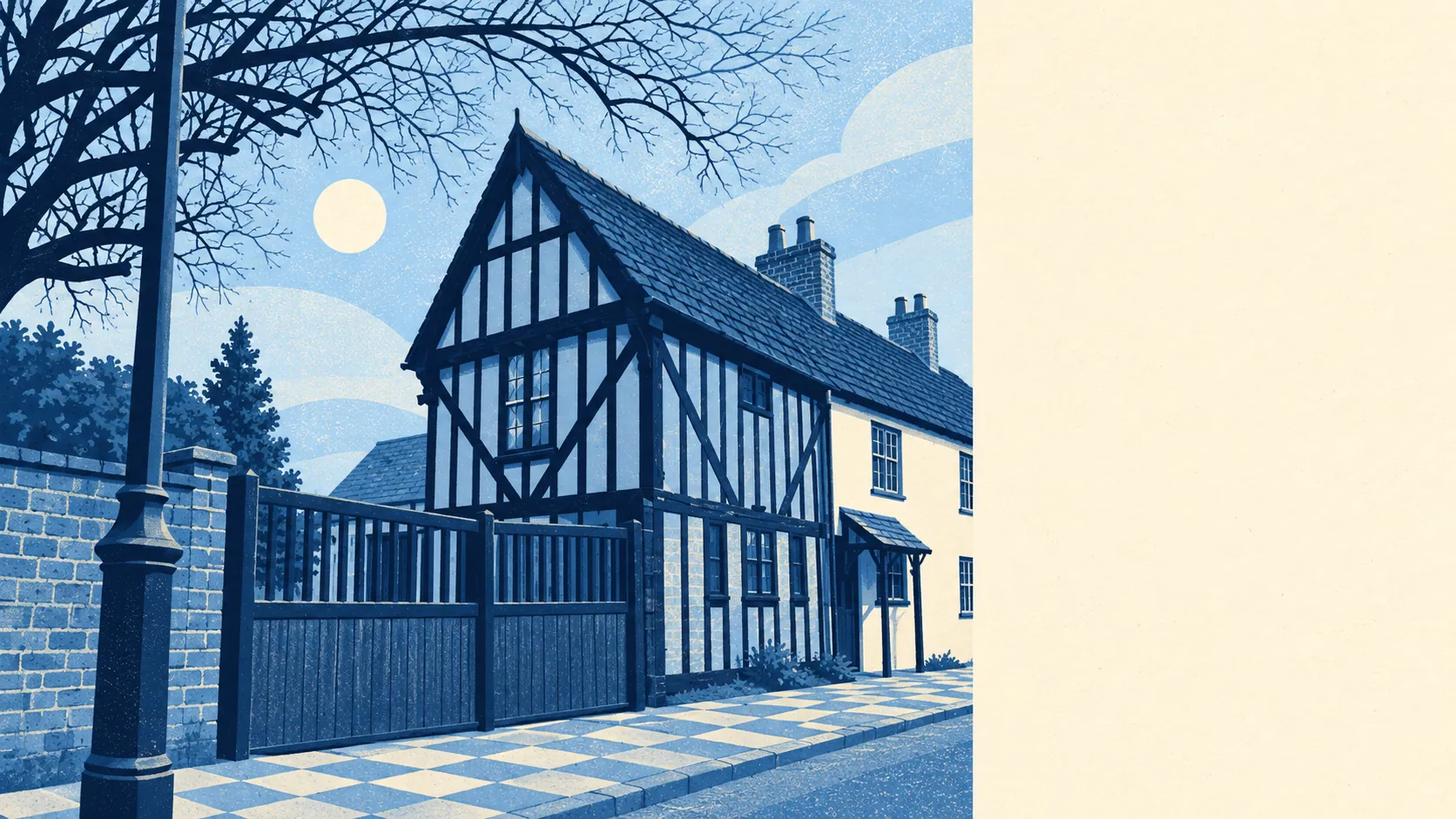
Clifton is a village with fields, water and parkland close to almost every house. Most homes are a couple of minutes' walk from green space. Water is even closer than the village pub for most people. The bigger landscapes, Southill Park among them, are a short drive away. None of it carries an official designation, which makes it ordinary countryside that happens to be very good.
On average, a home in Clifton is about 165 metres from the nearest green space and has roughly 13 green spaces within a kilometre. That makes thirteen chances to change the dog walk before anyone gets bored of it.
Water is about 260 metres from the average home, with roughly 28 bodies of water within a kilometre, including ponds, streams and lakes as well as the River Ivel, which runs through the valley the village sits in. For a village so far inland, there is a surprising amount of water to fall into.
The nearest stretch of the National Cycle Network is about 1.6 kilometres from the average home, and no Clifton postcode is right next to it. Getting on the bike for a proper ride means riding to the route first. Ancient woodland covers none of the village.
The rated-premises records for the area list 29 shops, 11 pubs and 5 restaurants. With twice as many pubs as restaurants, eating out round here mostly means a pub.
Central Bedfordshire as a whole recorded fine-particle pollution of about 7.1 micrograms per cubic metre in 2024.
The country around Clifton is a cluster of villages and small towns a few miles apart. Shefford is the post town next door, and Henlow, Campton, Meppershall, Langford and Upper Stondon are all close by. The bigger estate land lies around Southill, where Southill Park is a registered historic park. The scheduled monuments in the wider neighbourhood include the earthworks known as 'The Hills' motte and baileys and St Thomas's Chapel. This is farmland and villages where each place has its own church and its own feuds with the next village.
Private gardens are generous. The area has about 156,000 square metres of garden for every 1,000 residents, which is far more outdoor space per household than a town offers. Most of Clifton's green space is behind its own back fences.
The business rates valuation list records 29 rateable premises in Clifton. Industrial premises such as workshops and warehouses are the largest group, at 6, followed by offices, at 5. The list includes a small number of shops and clubs, and a premises being on the list does not mean it is trading today. Clifton is a place people live in more than a place they shop in.
Of the 9 food premises with a hygiene rating, about 78% hold the top score of five, and none has a low rating. For a handful of kitchens, that is a clean record.
No area of outstanding natural beauty, site of special scientific interest or ancient woodland overlaps Clifton. Every one of these protects somewhere special, and Clifton has none of them. The fields, the water and the parkland are simply what the area is like, without anyone having had to declare them worth saving.
The surroundings are one of Clifton's real strengths. Green space, water, parkland and a large back garden are all within easy reach of most front doors.