Clifton rewards buyers who want to change the house they buy, because the village has no conservation area and only 15 listed buildings to work around. That makes the plain post-war semi a starting point you are allowed to finish. Three in four households own their home, so the people extending are planning to stay. The river and the fields are a few minutes' walk from most doors. The trains run from other towns, and no builder can fix that.
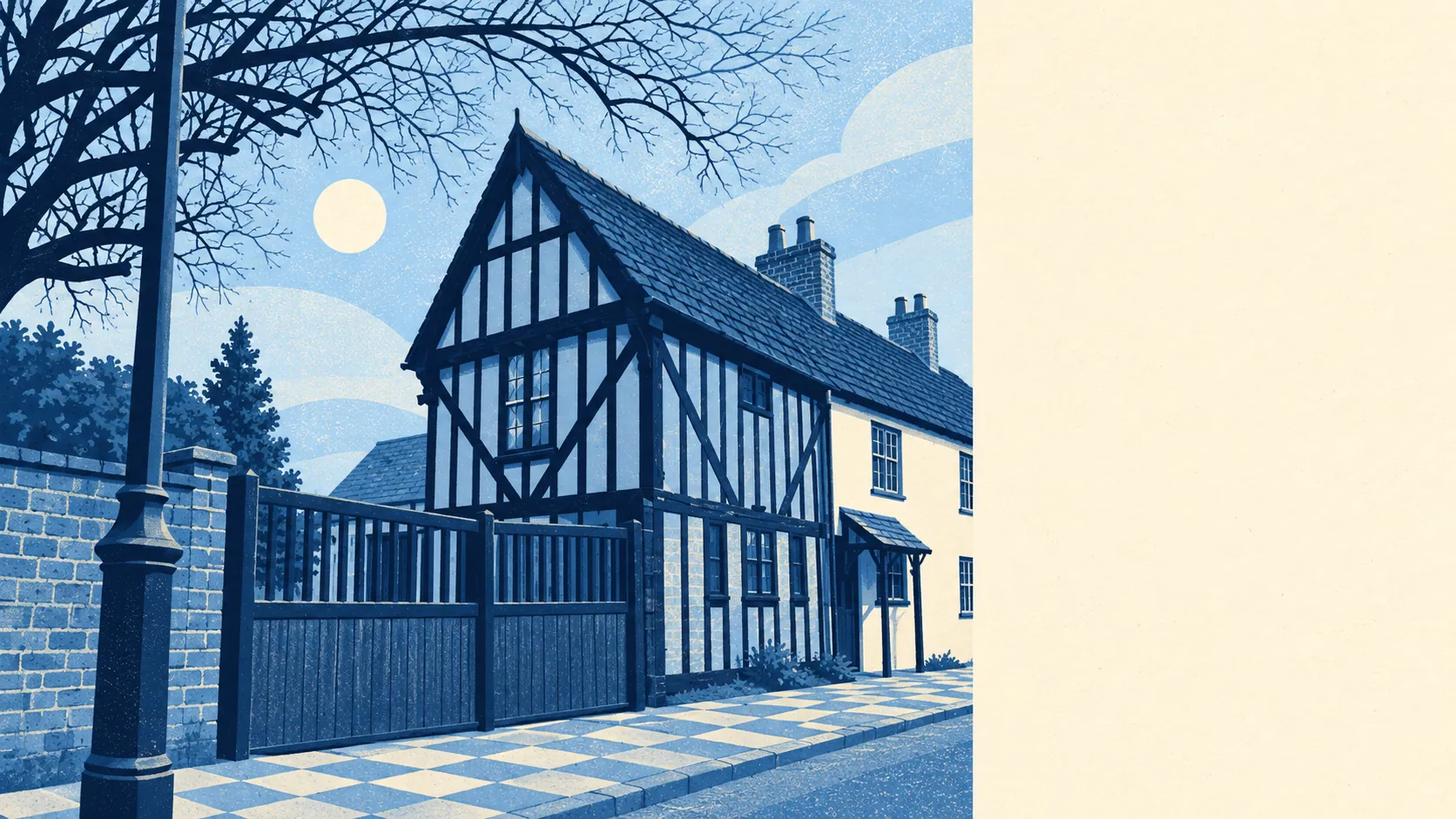
Of those 15 listed buildings, one is Grade II* and 14 are Grade II. None is Grade I, and the village boundary holds no conservation area and no scheduled monument. For an ordinary house, that leaves ordinary planning rules applied by Central Bedfordshire Council, with no extra heritage layer on top. Buyers who arrive with plans for a rear extension and a loft will find the main negotiation is with the neighbours, who probably went through the same process a few years earlier.
About 77% of households own their home, and the median resident is 44. The Office for National Statistics modelled average gross household income for this part of Central Bedfordshire at about £66,000 in the financial year to March 2023. Taken together, those three figures describe people who bought in their thirties and stayed. A household with that income and a house it is allowed to enlarge tends to enlarge it.
Clifton grew up in the valley of the River Ivel, which boats could once navigate right through the village. On the Environment Agency's river-and-sea mapping, none of Clifton falls in Flood Zone 2 or Flood Zone 3. The broader postcode measure counts at least one flood indicator, including surface water. On it, about 7% of Clifton's postcodes carry a high rating, 14% a medium one and 34% a low one. The river zones are clear, so those flags come from the other sources of water, and surface water is among them. For a village built beside an old navigation, the river is better behaved than its history would suggest.
Transport is the price of everything above. The village has no station of its own. The nearest are Arlesey and Biggleswade, and about 2% of working residents took the train to work at the 2021 census. Around 52% drove and 38% worked from home. Clifton's 14 bus stops each average about ten departures on a weekday and fewer than one an hour at peak. The Department for Transport's 2019 model put the nearest town centre about 28 minutes away by public transport and 17 by car, and its public transport times age badly whenever services are cut. Broadband runs the other way: gigabit-capable connections reach 99% of premises, and mobile coverage from at least one operator is complete. In Clifton the cable is quicker than the bus by some distance.
The Land Registry recorded 38 sales in the year to mid-May 2026, at a typical price of about £375,000. Detached houses went for around £565,000, semis for about £345,000 and terraces for about £330,000. Band C is the most common council-tax band, and only 17% of homes are in bands A or B. The step from a terrace up to a semi costs very little here. The step from a semi to a house with space down both sides costs a great deal, and that gap is the one extensions are built to close.
Across Central Bedfordshire, private rents averaged about £1,240 a month in April 2026, on the Office for National Statistics' measure for the council area as a whole. Only about 7% of Clifton's households rent privately. That is too few for the village to have a rent of its own worth quoting, so the council-wide figure is the best available guide.
The council-tax valuation list counts every home in Clifton. About 32% are detached, 28% terraced, 24% semi-detached, 6% flats and 5% bungalows. Only about 10% were built before 1930, and most of the energy-certificated stock dates from the post-war decades. Among homes with an energy certificate, 67% are rated C or better, 27% D and about 6% E or worse. Mains gas heats 85% of homes. The houses were built late enough to be reasonably cheap to heat and early enough to have room for a bigger kitchen.
Bedfordshire Police recorded crime in Clifton at about 60 offences per 1,000 residents in the twelve months to May 2026. That is around 8% below the Central Bedfordshire average. On this measure a village is allowed to be uneventful, and Clifton takes full advantage.
The average home is about 165 metres from green space, with roughly 13 green spaces within a kilometre, and water lies about 260 metres away. In the Ivel valley, that water is never far from the back fence.
Clifton is right for a household that buys an ordinary house intending to make it bigger, drives to work or stays home for it, and wants fields and river on the doorstep. Anyone who needs a train at the end of the road, or a bus more often than once an hour, should look at Arlesey or Biggleswade, where the stations are.
What Clifton gives a buyer is permission. The house you can afford here can become the house you wanted, with ordinary planning consent and nothing heavier, and that is rarer than the plain streets suggest. Getting out of the village is what it costs, and no amount of building work shortens that drive. Clifton is a better place to live than it first looks, as long as most of your life happens at home or behind a wheel, and plenty of the households here have already decided it does.