Yes, provided you own two cars and no train timetable. Eight in ten households own their home. Nearly half the houses are detached. Almost nobody gets the train to work. It's comfortable, well-kept suburbia that still gets to call itself a village.
Detached houses dominate. On the council-tax valuation list, about 46% of homes are detached, 25% semi-detached, 12% terraced, 9% flats and 6% bungalows. Only about 8% were built before 1930, so the thatched-cottage fantasy lives on a handful of streets around the old village. Most of the rest arrived with a show home and a snagging list. That age profile pays off in running costs. Of the homes with an energy certificate, about 79% sit in bands A to C and only about 3% are at E or worse, and around 86% heat with mains gas. The draughty-farmhouse heating bill belongs to some other village.
In the Land Registry's twelve months to April 2026, 98 homes sold here at a median of about £390,000. Detached houses went for a median of £465,000 across 57 sales, semi-detached for £324,000 across 22, and terraces for £295,000 across 18. Most of the market is detached houses, and the prices follow. The most common council-tax band is E, and only about 11% of homes are in bands A or B. Band D costs £2,438 a year. Band E is the valuation office's polite way of noting that the house has a utility room.
Renting is a minority habit here. The typical private rent across the Swindon area was about £1,080 a month in April 2026, up about 3% on a year earlier. That's a Swindon-wide figure and not Broad Blunsdon's own. The Swindon-wide typical rent for four bedrooms or more was about £1,640, and that's closer to what most homes here would actually rent for.
Police-recorded crime ran at about 80 per 1,000 residents in the year to May 2026, roughly 9% below the Swindon average of about 88. Shoplifting made up about 15% of recorded crime, against about 8% nationally. That points to tills rather than front doors. Violence and anti-social behaviour sit at close to the national shares. For a place whose loudest local dispute is probably about wheelie-bin placement, the numbers are unremarkable, which is what you want from a crime table.
Transport is the weak spot, and residents have long since stopped waiting for it to improve. Fewer than 1% of working residents commute by train and about 1% by bus. A little under half drive, and about 42% work from home. The 33 bus stops average about 23 weekday departures each, which works out to roughly one bus an hour at peak. The bus exists in the same way a fire extinguisher exists. The Department for Transport's 2019 modelling put Swindon town centre about 30 minutes away by public transport and about 16 by car, and Swindon Rail Station is the way out for anyone heading further. The home-working half of the village is well served: gigabit broadband reaches about 77% of premises, superfast about 95%, and every mobile operator covers the whole area with 4G or 5G.
The countryside is the real selling point. None of Broad Blunsdon sits in the Environment Agency's river-and-sea flood zones. Of postcodes, on at least one flood indicator including surface water, about 5% are rated high, 10% medium and 22% low, so a heavy downpour is worth checking against the exact address. The average home is about 93 metres from green space, with around 30 green spaces within a kilometre and water about 570 metres away. You'd have to try hard to live out of sight of a field.
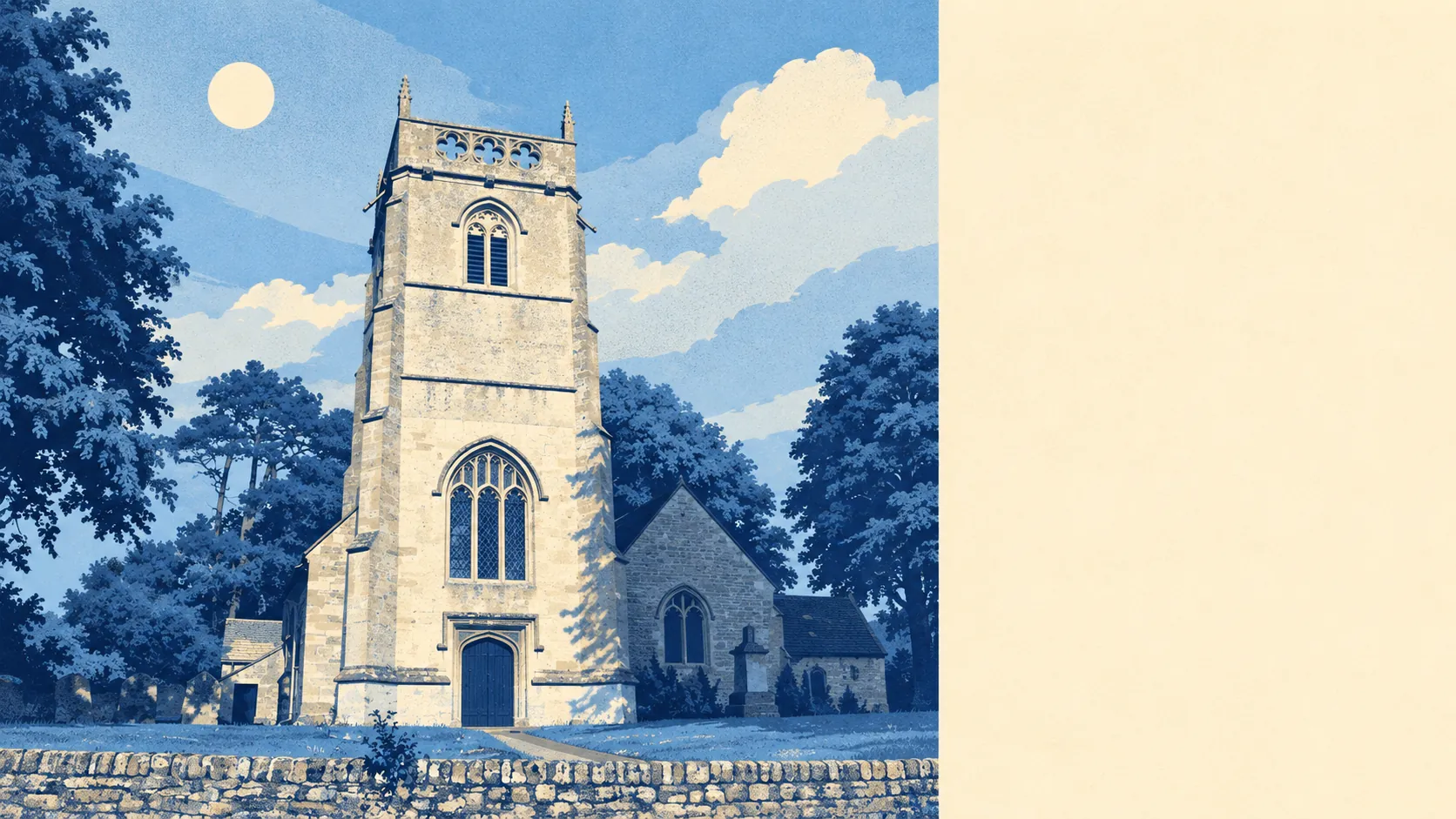
The old village comes with rules. There are 27 listed buildings: three at Grade II*, 24 at Grade II and none at Grade I. There are three conservation areas: Broad Blunsdon, Blunsdon St Andrew and Lower Blunsdon. Two scheduled monuments sit nearby, including the hillfort and lynchets on Castle Hill. In the conservation areas, new windows, extensions and even some front walls need the planning department's blessing. The new-build closes carry none of that baggage and can add a conservatory without a heritage statement.
This is settled, prosperous family territory. About 82% of households own their home, the median resident is 39, and modelled gross household income averaged about £72,000 in the financial year to March 2023. Couples with children make up about 31% of households, and about 45% of homes have four bedrooms or more. Trampolines outnumber people who have ever caught the bus.
It suits families who drive, work partly from home, and want a detached house with a garden and a field at the end of the road for the price of a London garage. It suits buyers who find a band E house and a quiet crime table more reassuring than a lively high street.
It doesn't suit anyone who needs a train on the doorstep, anyone who can't or won't drive, or anyone hoping to rent something small and cheap. There's barely any of that stock, and the bus won't rescue you on a Tuesday evening.
Broad Blunsdon is a good place to live for people who've accepted the car as a family member. Its real strength is the surrounding countryside: green space in every direction and no river-flood zone. The weak spot is transport, where the timetable reads like a rumour. Buy the house, keep both cars, and treat the bus stop as scenery.