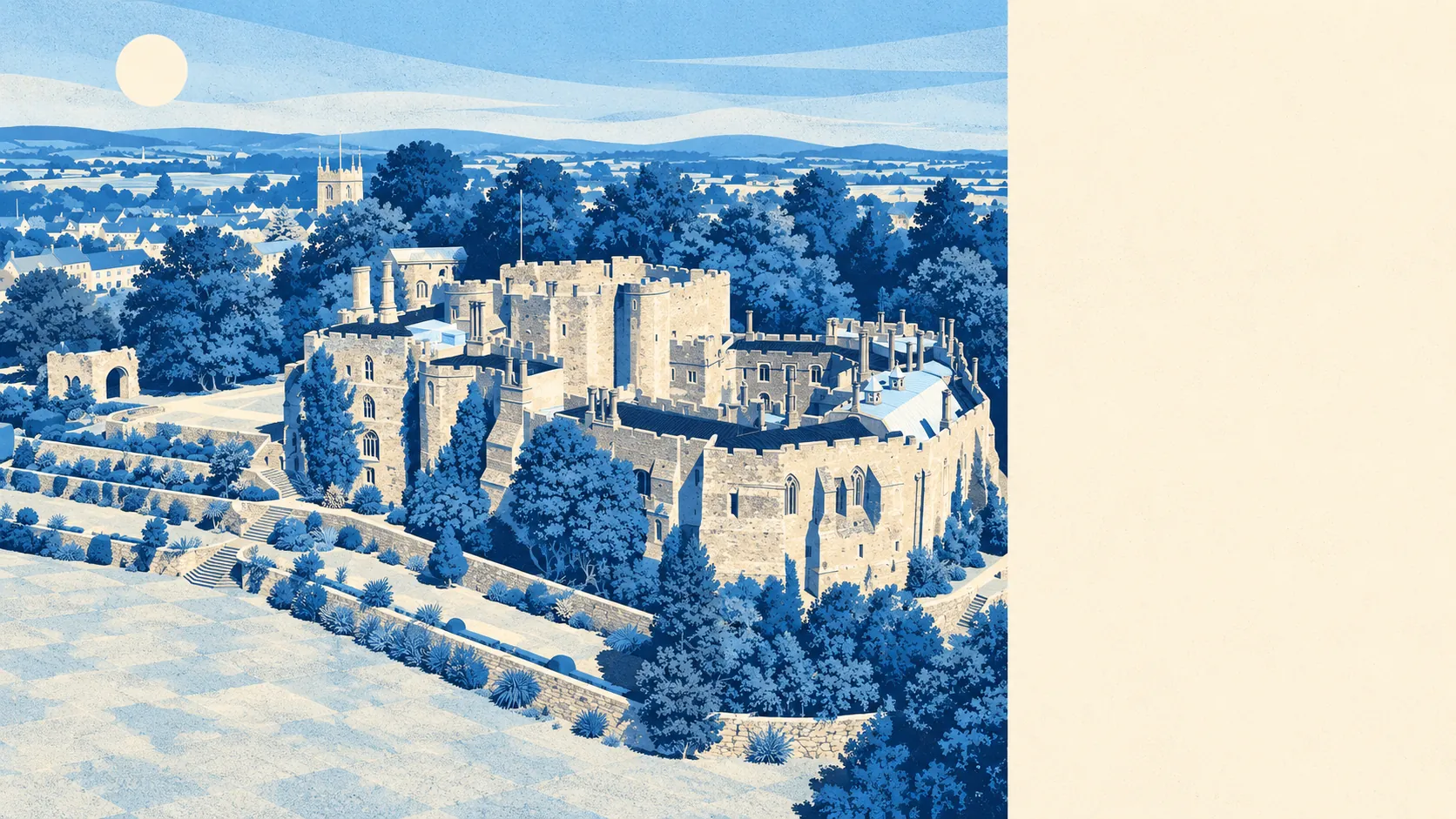
The area around Berkeley is flat, green and wet in the best sense, a town on a small hill in a vale of farmland with the Severn on one side. Green space is a couple of minutes from most doors. Water is closer than most people expect. The cycle network runs almost past the gate, and the countryside asks very little of anyone who wants to walk into it.
Green space is about 130 metres from the typical Berkeley home, with about eight green spaces within a kilometre. That is near enough that a walk to the park needs no planning.
Water is about 240 metres from the typical home, with around 35 separate bodies of water within a kilometre. The Little Avon runs past the town to the Severn at Berkeley Pill, the Gloucester and Sharpness Canal starts nearby, and the ditches and rhines of the low ground account for the rest. Thirty-five patches of water within a kilometre is a lot of reflection for a town that rarely gets described as a waterside one.
The National Cycle Network is about 180 metres away on average, and about 93% of postcodes are close to it. Ancient woodland does not feature at all, which fits a vale cleared for farming centuries ago.
The rated-premises data counts 32 shops, seven pubs and no restaurants in the area. Seven pubs and no restaurants is a high street with clear priorities.
Fine-particle air pollution across the Stroud district averaged about 6 micrograms per cubic metre in 2024.
The character is old market town at the centre and working countryside beyond it. Around Berkeley sit hamlets and villages such as Wanswell, Ham, Newport, Breadstone and Sharpness, plus the farms of Hamfallow, and the land between them carries the marks of older estates: a moat and fishpond at Wanswell Court and a moated site in Whitcliff Deer Park are both scheduled monuments. A thousand years of landowners digging ditches around their houses has left the vale looking well drained and slightly defensive.
Private outdoor space is generous: there are about 187,000 square metres of garden for every 1,000 residents. Houses here have actual gardens, which in a town of terraces and post-war semis is the bit of the countryside people own outright.
The valuation list holds 62 rateable premises in the area, 28 of them in the shops category and four offices, with a handful each of other commercial uses. These are premises on the list and some may be empty at any given time, so the count describes the town's commercial bones and not a register of what is trading this week.
The Food Standards Agency has rated 18 food premises in the area, and about 67% hold the top hygiene score, with about 11% at the low end. With only 18 places in the count, a single inspection moves those shares noticeably.
No protected-landscape designation overlaps the area. There is no area of outstanding natural beauty, no site of special scientific interest and no ancient woodland on the books. The Vale of Berkeley is farmland and estuary that nobody has felt the need to frame, which leaves it free to get on with being useful.
The surroundings are one of Berkeley's real strengths: green space, water and a cycle route within a few minutes of almost every front door, and gardens big enough to use.