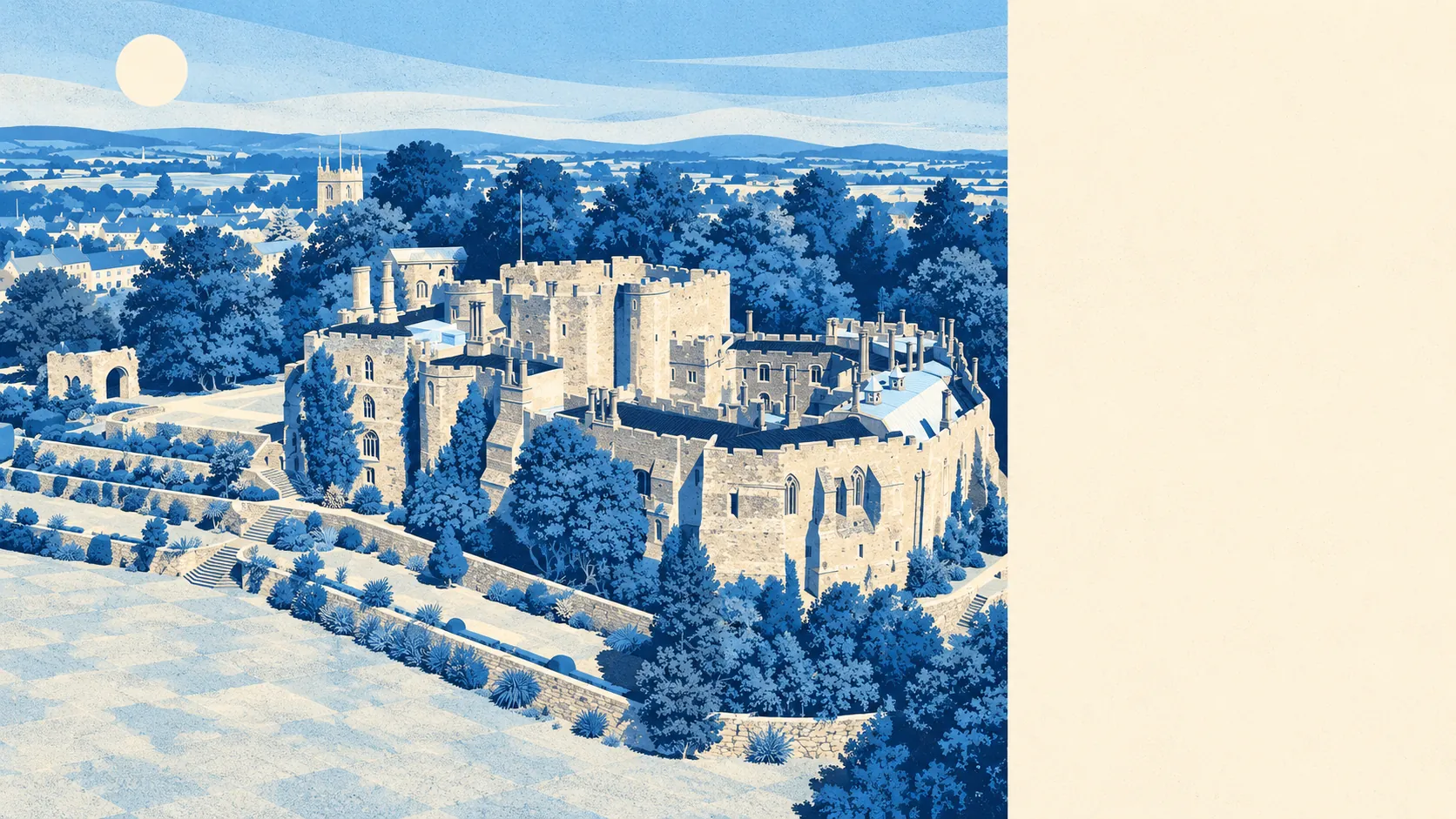
In Berkeley, about a quarter of a million pounds still buys a whole house in a medieval market town with a castle down the road, and for a buyer that sum is most of the argument. Seven in ten households own their home. The homes are mostly ordinary and mostly warm enough. The railway left in the sixties and took the timetable with it, so the bargain comes with car keys attached.
The Land Registry recorded 30 sales in Berkeley in the year to May 2026, at a typical price of about £260,000. Terraces went for around £240,000 and semis for about £300,000. The four detached houses that changed hands came in at a typical £340,000, a sample small enough that one big garden could move it. Council tax is mostly Band B, with about 45% of homes in the two lowest bands, so the bill that lands after the mortgage is usually the gentle one. Thirty sales in twelve months is a market where the neighbours know what a house fetched before the removal van has parked.
Renting gets measured at district level, so the figure to hand is Stroud's: typical private rent across the Stroud area was about £1,040 a month as of April 2026, up about 7% on a year earlier. About a quarter of Berkeley's households rent, so a tenant hunting here is fishing in a small pond.
The council-tax list counts every home, and in Berkeley it leans towards the terrace. About 36% are terraced, 24% detached, 15% semi-detached, 9% flats and 8% bungalows. Roughly a quarter were built before 1930, which in a town first recorded in 824 makes the old stock the minority. Of the homes with an energy certificate, about 52% reach band C or better, 36% are at D and around 12% fall to E or worse. Mains gas heats about 72% of homes.
About 71% of households own their home, the typical resident is 48, and the Office for National Statistics models gross household income for the area at about £60,000 in the financial year to March 2023. That adds up to a town of homeowners in their middle years, the sort who know where the stopcock is and have firm views on hedges.
Flooding is a real but modest question, and two measures describe it. On the Environment Agency's river-and-sea flood zones, about 1% of postcodes fall in Zone 3 and 3% in Zone 2. A broader count, of postcodes on at least one flood indicator including surface water, puts about 12% at high risk and 13% at medium. Around 7% of postcodes fall within an area that has flooded before, and the most recent event the Environment Agency has on record was in November 2000, when a main river exceeded its channel with no raised defences in place. Anyone who quotes only the smaller of those two numbers is describing half the map.
Transport is where Berkeley comes unstuck. The town's station closed in 1964, and the 2021 Census found fewer than 1% of working residents commuting by train and fewer than 1% by bus, against 61% who drive and 28% who work from home. There are 17 bus stops, averaging about 12 weekday departures each and fewer than two an hour at peak. The Department for Transport's modelled times, which date from 2019 and age faster for buses than for cars, put the nearest town centre 18 minutes away by car or 31 by public transport. Broadband is the good news: gigabit connections reach about 86% of premises and superfast about 99%. The hospital is a 38-minute drive or a 99-minute trip by public transport, and most households only test the second option once.
Police figures put recorded crime at about 43 per 1,000 residents in the year to May 2026, roughly 6% below the Stroud average. For a town whose best-known violent episode is the death of a deposed king inside its own castle, the modern record is mild.
Heritage is everywhere, and it comes with paperwork. Berkeley has 132 listed buildings, four of them Grade I and two Grade II*, and the Berkeley conservation area covers the old town. Owning one of those buildings means asking permission for windows, doors and anything a planning officer considers character, and with Berkeley Castle, The Chantry and the Church of St Mary the Virgin setting the standard, the officer's idea of character is ambitious. Two entries are on Historic England's Heritage at Risk register. Edward Jenner tried out his smallpox idea on his gardener's son without filling in a single form, which is more freedom than anyone on a listed street here gets for a replacement sash.
The outdoors starts close. Green space is roughly 130 metres from the typical front door, with about eight green spaces within a kilometre, and water is around 240 metres away. The national cycle network is within about 180 metres of most homes, and the Gloucester and Sharpness Canal starts nearby, which gives the dog walkers a flat route.
This page also covers the farms and hamlets of Hamfallow, the village of Wanswell just north of town, Hinton, Stone on the main road between Bristol and Gloucester, and Rockhampton, which lies over the line in South Gloucestershire.
Jenner was born in Berkeley, trained in London and came home to be the local doctor. In 1796 he inoculated James Phipps with cowpox and founded vaccination, and both men are buried at the Church of St Mary. Berkeley later hosted the first commercial British nuclear reactor. Its own secondary school, the Vale of Berkeley College, closed in 2011, and since 2017 SGS Berkeley Green, a technical college teaching engineering and cyber security, has occupied the old power station site. A town that gave the world vaccination now trains hackers next to a pair of sealed reactors, which is not a career path any planner drew up.
Berkeley is right for buyers who drive, work from home or have stopped commuting altogether, and who want a house with nine centuries of history on the doorstep for about £260,000. Anyone who needs a train every morning, or a hospital within easy reach without a car, should look elsewhere, because the bus timetable will make that decision for them.
The price is the reason to come. A whole house, a castle down the road and a council-tax bill that rarely climbs past Band B is a strong offer for anyone with a car on the drive, and Berkeley is a better place to live than its bus stops suggest.