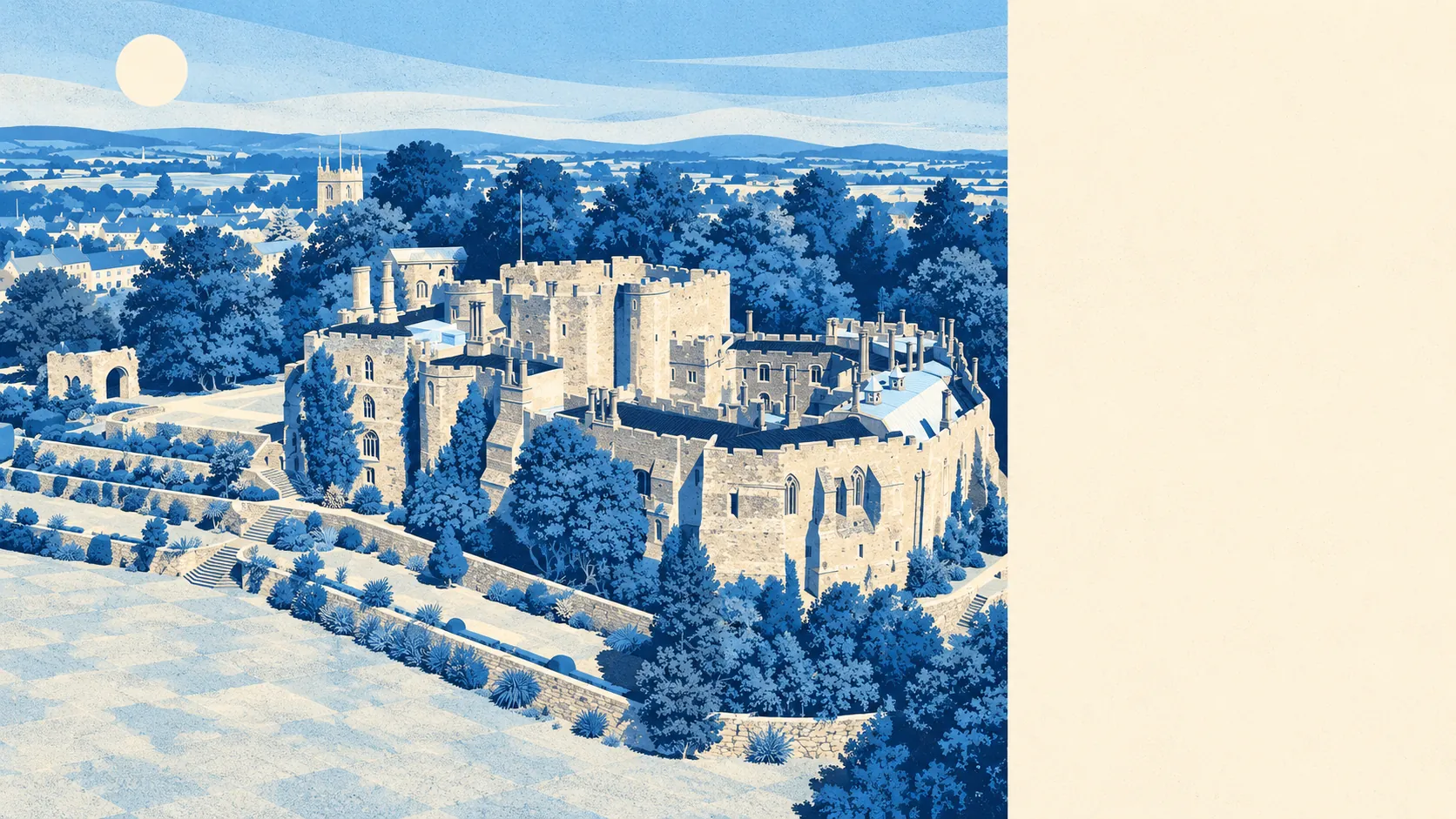
You can extend most houses in Berkeley, and the ones you can't extend freely are easy to identify. The town has a lot of listed buildings for its size. Its old centre is a conservation area. The post-war estates around it carry far fewer strings, and the neighbours have been busy proving it with planning applications.
Berkeley has 132 listed buildings: four at Grade I, two at Grade II* and 126 at Grade II. Listing covers the whole building, inside and out, so changing one needs listed building consent on top of any planning permission, and that applies to work a planner would never notice on an ordinary house, such as replacement windows, internal walls or a new kitchen layout in an old room. Four Grade I buildings in a town this size means the national heritage register takes a close interest in the middle of it.
The area has one conservation area, covering Berkeley's historic centre. Inside it, some of the work an ordinary house could do without asking needs planning permission, and the council weighs anything visible from the street against the character of the area. A house that is neither listed nor in the conservation area is a different proposition from its neighbour across the boundary line, and the boundary can run between two houses that look identical from the pavement.
Stroud District Council's planning records show 225 applications in the area between April 2024 and June 2026, with 101 of them in the last twelve months. That is a steady stream of people asking to build, change and add, and it is the clearest evidence that altering a home here is a normal thing to do.
Two of the area's listed buildings are on Historic England's Heritage at Risk register. That register lists buildings in poor condition, and repairing one can attract grant support and will certainly attract scrutiny. It describes the condition of those two buildings and has no bearing on the ordinary house next door.
In practice, a post-war semi on the edge of town usually has a much freer hand: many extensions there can fall under the permitted development rules that let homeowners build within set limits without a full application. A listed cottage in the old centre needs consent for almost anything, and a house inside the conservation area falls between the two. Stroud District Council can confirm whether a particular house is listed or inside the conservation area, and its planning register will show what has been applied for on the street. Both are worth checking while the sale is still at the offer stage. A rear extension that goes through without fuss on a 1970s close can turn into a long correspondence about lime mortar three streets closer to the church.
Berkeley gives a middling amount of freedom to extend: plenty on the newer estates, and very little on the historic streets that make the town worth photographing.