Ampthill is a town where people buy and then stop moving, and for a buyer that is most of what's on offer. About three in four households own their home. Turnover is low, so the neighbours you meet on completion day will probably still be there for your leaving do. What it costs to join them is decided by everyone else who has worked this out.
Owner-occupiers make up 76% of households, so most people on any given street have a long-term stake in it. The typical resident is 43. Average gross household income, as modelled by the Office for National Statistics for the financial year to March 2023, comes to about £74,000. Henry III granted the town its Thursday market in 1219, and the people buying in now are mostly the sort who would have asked to see the charter before committing.
The police.uk published rate for the year to May 2026 puts recorded crime at about 41 per 1,000 residents, roughly 38% below the Central Bedfordshire average. Disputes here mostly go through the planning system instead. The council logged 532 applications in its most recent twelve months on record, so the town's appetite for conflict seems to go mainly on side returns and loft conversions.
On flooding, the river is not the issue. In the Environment Agency's river-and-sea flood zones, the share of Ampthill's postcodes comes to zero, and no historic flooding is on record. The surface-water picture is different. Counting postcodes on at least one flood indicator, surface water included, about 10% are high risk, 14% medium and 42% low. The rivers stay out of it, but on some streets the rain does not.
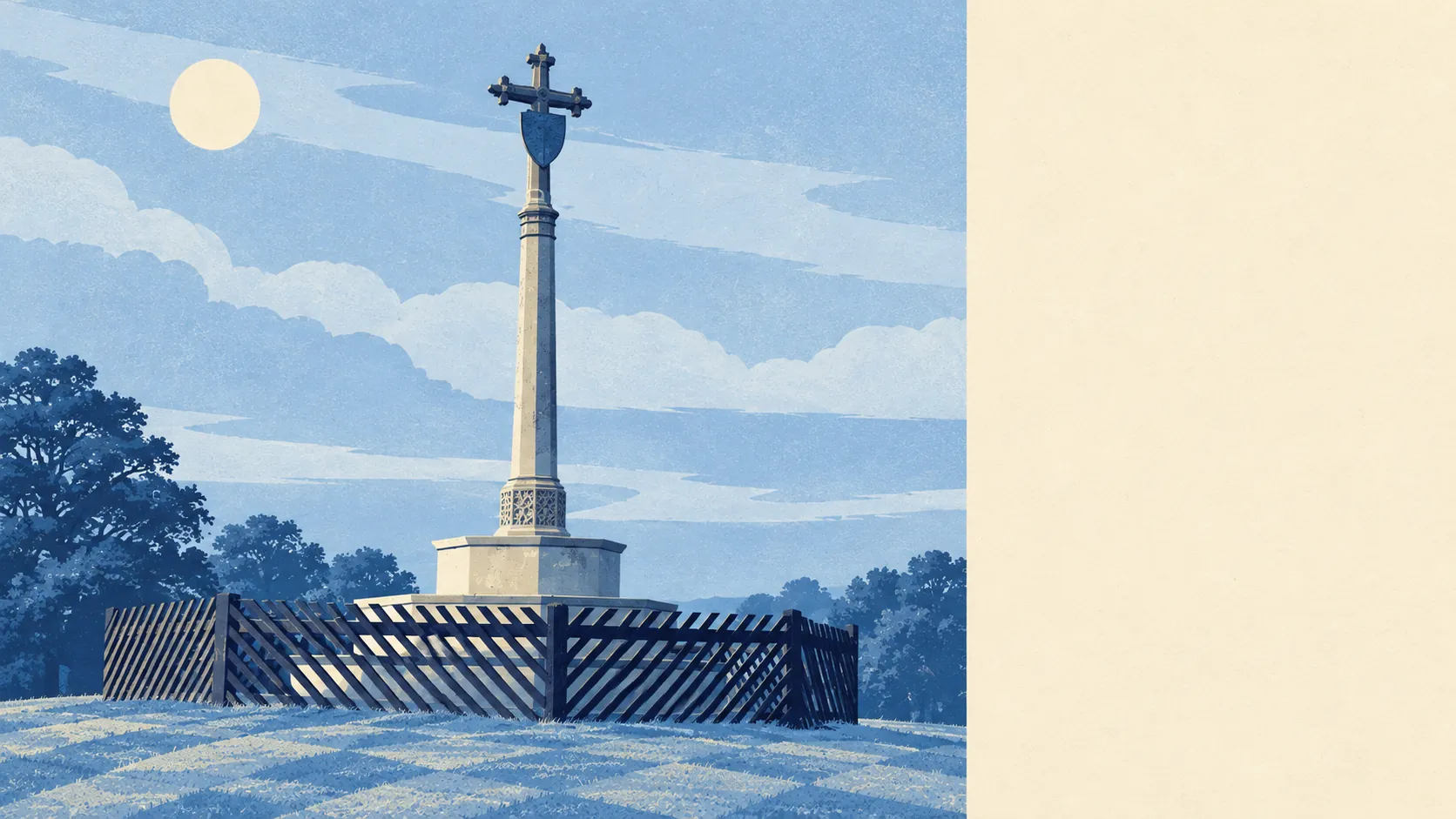
There are 132 listed buildings: one at Grade I, three at Grade II* and 128 at Grade II. Even the pump in the Market Place is a scheduled monument, put up by the Earl of Upper Ossory in the mid-1780s when he rebuilt the town centre. No conservation area is recorded inside the boundary this page uses, so the main brake on alterations is listed-building consent, which falls on the listed homes themselves. A town that protects its water pump will have views about your windows.
Prices are where the welcome gets expensive. The Land Registry's twelve months to May 2026 show 104 sales at a typical price of £425,000. A detached house went for about £599,000, a semi for £450,000, a terrace for £365,000 and a flat for £275,000. So getting in under £300,000 means a flat, and only just. Band C is the most common council-tax band, with bands A and B together covering about a fifth of homes. The valuation list calls the houses ordinary. The sale prices don't.
Few people rent, with only about 12% of households in private lets. Across Central Bedfordshire as a whole, the Office for National Statistics put typical private rent at about £1,240 a month in April 2026, up roughly 6% on the year. With so few lets in town, the flat you want will have had a queue before you've found somewhere to park.
The housing is suburban, though the history shows through in places. On the council-tax valuation list, which covers every home, 33% are detached, 24% semis, 23% terraces, 12% flats and 8% bungalows. About 17% were built before 1930. Among homes with an energy certificate, 57% are rated A to C, a third are D and about 10% are E or worse. Most homes, about 82%, heat with mains gas. Lord Upper Ossory built a row of thatched cottages for his estate workers between 1812 and 1816, and today an estate worker would have to save for quite a while to buy one back.
The town has no station of its own. Flitwick Rail Station is the nearest. At the 2021 Census about 42% of working residents worked from home and 45% drove, and only 2% went by train. For a town within reach of a main line, very few people use it, mostly because a lot of them have arranged their lives so they don't have to go anywhere. Gigabit broadband reaches 83% of premises and superfast nearly all of them, and all four mobile operators cover about 99%. On the Department for Transport's 2019 modelling, the nearest hospital is about 24 minutes by car and 43 by public transport. Bus services have been cut back since 2019, so the public-transport time is the one to trust least.
Green space is about 170 metres from the average front door, and water about 330 metres. Ampthill Park is a Capability Brown landscape north of the centre, where Henry VIII used to hunt. Lady Holland planted the Alameda walk because she liked the one in Madrid, which is about the most Ampthill reason anyone has given for planting trees. The page also covers Millbrook, a small village with its own church, where the countryside starts even closer.
Sir Anthony Wingfield, High Sheriff of Bedfordshire, lived at Ampthill House and kept a private zoo there: cheetahs, sloth bears, llamas, ostriches and camels. War broke out in 1939 and the animals went to Whipsnade, which he had helped set up. The house was demolished in 1953 and the site built over with housing, so somewhere in Ampthill there is a cul-de-sac where the ostriches used to be.
Ampthill is right for buyers who plan to stay a long time, can work from home or drive, and want the park, the market and neighbours who show up to things. It is wrong for anyone who needs a train from their own town, a cheap first rung or a house that pays for itself on a short hold. Buyers in that position will find more for their money elsewhere in Central Bedfordshire.
The community is the best thing you get here. People settle and stay, and the street keeps its memory. You pay up front for it, and the prices take a long time to justify themselves. Ampthill is a good town to live in and a dear one to get into, and the people who manage both rarely leave.