Yes, you can extend a house in Ampthill, as long as it is not one of the listed ones. The town has well over a hundred listed buildings. Most houses are post-war or newer, and for those the usual rules apply. The clay ground matters more than the heritage for most extensions. Your neighbours are putting in planning applications all the time.
Historic England lists 132 buildings across the area: one at Grade I, three at Grade II* and 128 at Grade II. If you own one of them, almost any change that affects its character needs listed-building consent, inside and out, and that includes windows, doors, internal walls and rear additions. Works done without consent can be a criminal offence, and the duty to put them right passes to whoever buys the house next. The listed buildings are mostly in the historic core. Most of the town's homes were built after the war and were never candidates for listing.
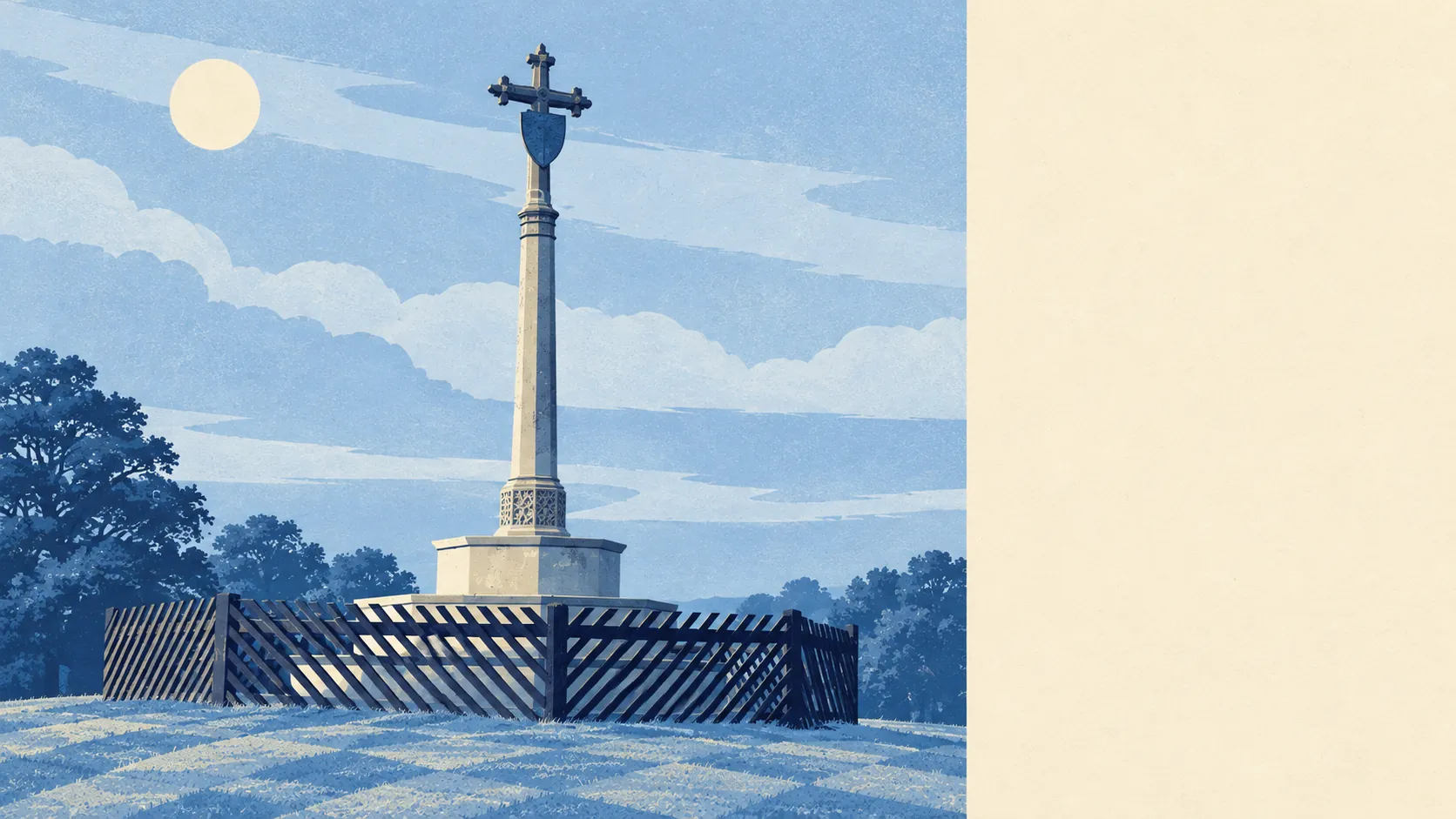
Two scheduled monuments sit within the mapped area, and scheduling is the strictest level of heritage protection. It mainly matters for land next to one. One of them is the site of Ampthill Castle, where Henry VIII used to stay. The castle is long gone, and today a cross marks where it stood.
The council's planning register shows 1,196 applications from April 2024 to June 2026, 532 of them in the most recent twelve months. Ampthill is a town where people rarely move, and when a family outgrows the house it builds on rather than selling up. Look up the planning history of the address you are considering on the council's portal. It shows what has already been approved there and any extension that was built without being recorded.
The British Geological Survey puts all of Ampthill in Class 3 for shrink-swell, the clay hazard. That means the clay expands when wet and shrinks when dry, and the effect is strongest near trees. In practice, an extension here usually needs deeper foundations than the minimum, and a structural engineer should see the plans before they go to building control. The ground under Ampthill swells and shrinks with the weather, which makes it the only thing in town that regularly changes its mind.
For a house that is not listed, many single-storey rear extensions, loft conversions and outbuildings come under permitted development and need no planning application. No conservation area is recorded inside the boundary used for this page, which leaves those rights wider than in many historic towns. Anything larger, anything at the front and anything on a listed building goes to the council. The planning rules alone do not tell you everything, since some estates had permitted development rights removed when they were built. Ask the council for a lawful development certificate if you are unsure.
Your freedom to extend in Ampthill is middling. Ordinary post-war houses have plenty of room to grow, while the listed buildings in the old centre and the clay under the whole town make any project slower and more expensive to plan.