The area around Winchmore Hill is green to a degree most of London can only envy, and it is built for walking out of the front door. A park is barely a street away from most homes. There is water within a short walk. The gardens are big. The high street does the everyday shopping and leaves the excitement to somewhere else.
The typical home is about 160 metres from the nearest public green space, and there are around 23 green spaces within a kilometre. Grovelands Park borders the north-west of the district and is a registered historic park, and Trent Park and the grounds of Broomfield House are within reach for a longer outing. Owning a dog here involves almost no planning.
Water is close as well, about 260 metres from the typical home, with around 37 ponds, streams and other bodies of water within a kilometre. For a suburb on a hill, it has a surprising amount of water lying about.
The National Cycle Network is further off, about 3.4 kilometres from the typical home, and no postcodes count as close to it. The cycling here is mostly round the park and back.
The rated-premises count gives the shape of the local high street: 162 shops, 9 pubs and 20 restaurants. That is a high street for errands and a meal out, without the late-night trade that keeps a neighbourhood up past midnight. The Green Dragon, the district's oldest pub, has a long history of moving and changing trade, and the area as a whole has never treated drinking as its main industry.
The Enfield Council area recorded fine-particle pollution of about 8.5 micrograms per cubic metre in 2024, a borough-wide figure for the year.
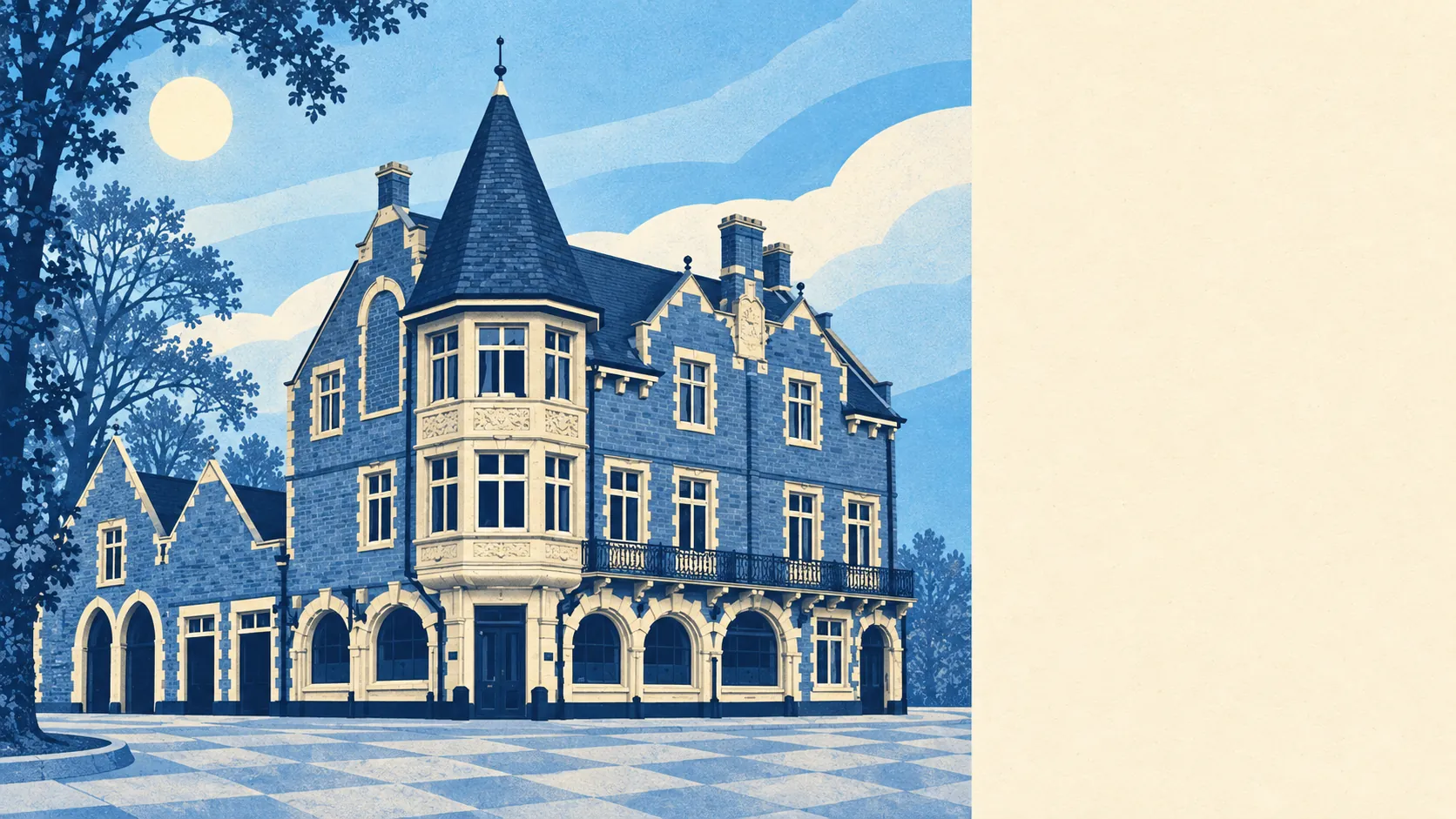
The character is interwar suburb wrapped round an older village core. The Green and the clapboard cottages on Wades Hill are what is left of the old hamlet, the Quaker Meeting House dates back to 1688 and was rebuilt in 1790, and around them run streets of semis heading towards Palmers Green, Southgate and Grange Park. Thomas Hood, the poet, is among the area's former residents, and on the evidence of the parks he would still recognise the light.
Private gardens are generous. The area has about 84,000 square metres of private garden for every 1,000 residents, real outdoor space for most households on top of the parks. People here own a lot of lawn, and most of them also walk to someone else's.
Enfield Council's rating list has 356 rateable business premises in the district. Shops are the biggest group at 161, followed by 35 offices and 20 restaurants. These are premises on the valuation list, and some will be empty or changing hands at any one time, so the count is the shape of the commercial streets and leaves out who is trading this month.
Of the 129 food premises with a hygiene rating, about 61% hold the top score of five, and about 9% fall into the lowest bands. Most places are in good order, and the small minority is the reason to look at the sticker in the window.
No area of outstanding natural beauty, site of special scientific interest or ancient woodland overlaps the district. The green space here is the urban kind, parks, playing fields and private gardens, and it does all the work without any national designation to help.
The surroundings are one of Winchmore Hill's real strengths, with green space at the end of nearly every road and a garden behind most front doors.