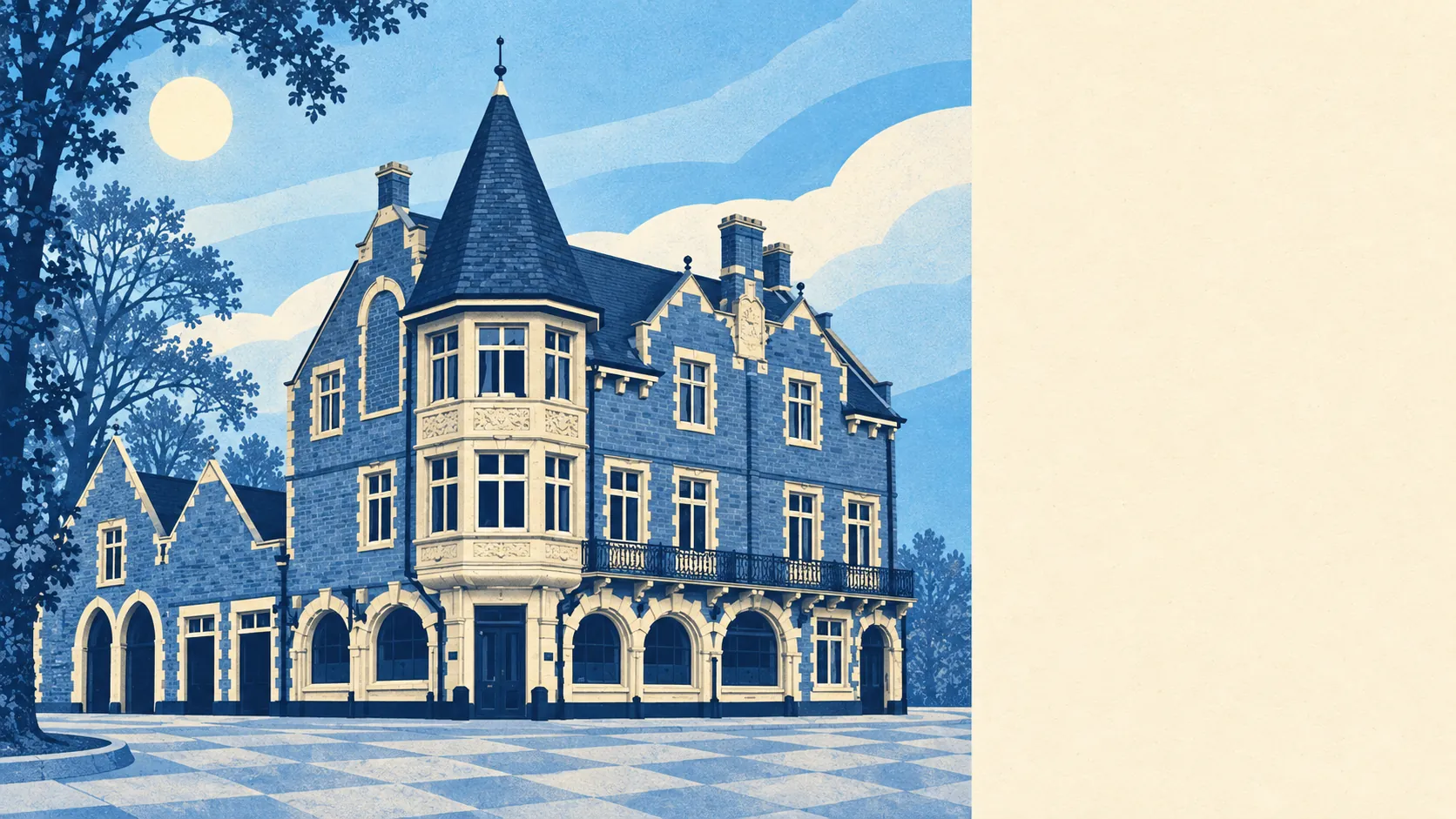
Winchmore Hill wants around £700,000 for a typical home, and that cheque mostly buys a semi, a garden and a very large park at the end of the road. Everything else here is good enough to make the price feel like the only argument against. Crime runs well under the borough's level. Seven in ten own. The money is the hurdle, and plenty of people clear it on purpose.
The Land Registry recorded 194 sales in the year to May 2026, at a middle price of £700,000. That headline covers a wide spread. Flats went for around £370,000, terraces for about £717,000 and semi-detached houses for roughly £905,000, while the 22 detached houses that changed hands had a median of about £1,210,000. Band E is the most common council-tax band, and only about 3% of homes are in bands A or B. The step from a flat to a house with its own front door is where most first-time plans here run out of road.
For renters, Enfield Council's area as a whole has a typical private rent of about £1,780 a month as of April 2026, up 4% on the year before. Across the same borough, a one-bed averages about £1,380, a two-bed around £1,710 and a three-bed about £2,030. Those are borough averages, so a family house on a good street near the park will ask more than Enfield's middle.
The council-tax list shows what the place is made of. Semi-detached houses are the biggest group at about 35%, ahead of flats at 30%, terraces at 23% and detached homes at 10%, and about 30% of everything was built before 1930. The energy certificates are middling. Around 38% of rated homes reach band C or better, 44% are band D and 17% are E or worse. About 83% of homes heat with mains gas, the usual arrangement for interwar semis built for families who thought of a vest as part of the heating system.
On the Metropolitan Police's recorded figures, crime runs at about 64 per 1,000 residents in the year to May 2026, roughly 43% below the Enfield average. The mix is the interesting part. Vehicle crime makes up about 15% of incidents against 5% nationally, and burglary about 8% against 4%. Violence is a smaller share here than across England and Wales. The thieves who do come have the same priorities as the people who live here. They want the car on the drive and the things inside the house.
About 73% of households own their home, and the typical resident is 43. The Office for National Statistics models gross household income at about £84,000 for the financial year to March 2023, averaged across the area. At the 2021 census, about 46% of working residents worked from home. The people who moved here for the garden mostly stayed in to enjoy it.
Winchmore Hill and Grange Park stations both run trains into the City, though only about 4% of working residents used the train to get to work at the census, against 30% who drove. There are 92 bus stops, and the stops with timetable data average about 274 departures each on a weekday, with around 15 in the peak hour. Gigabit broadband reaches about 91% of premises, and given how many people never leave for the office, that probably matters more than the timetable.
Flood risk depends on which measure you read. Counted by postcode, about 18% of postcodes are at high risk on at least one flood indicator, surface water included, and another 21% at medium. In the Environment Agency's river-and-sea flood zones the shares are small, about 1% in zone 3 and 1% in zone 2. The Environment Agency has seven recorded flood events here, the latest in December 2000, when a main river burst its banks. The difference between the two measures points mainly at rainwater with nowhere to go.
Of the 42 settings Ofsted has graded locally, all are good or better and two are outstanding. The four primaries in N21 with published results average a maths score of about 108 at the end of primary school, and the two secondaries average an Attainment 8 score of about 51. Local schools include Eversley Primary, Highfield Primary, Grange Park Primary and St Paul's CofE Primary, with Highlands School and Winchmore School at secondary age. St Paul's moved into a 1960s building on Ringwood Way, and its original wooden clapboard schoolhouse still stands further down Church Hill. Very little here gets thrown away.
Historic England lists 28 buildings here: one at grade I, one at grade II* and 26 at grade II. There is also a conservation area around The Green, so changes to a listed house need consent, and work on a frontage inside the conservation area gets a closer look than it would elsewhere. St Paul's Church once had the largest unsupported plaster ceiling in Europe, until a 1960s renovation quietly slipped hidden supports behind it. Even the church needed help holding up its reputation.
The outdoors is where Winchmore Hill wins. The nearest green space is about 160 metres from the typical front door, there are around 23 within a kilometre, and water is about 260 metres away on average. Grovelands Park borders the north-west, and the streets round Grange Park have more of the same. The Catuvellauni are believed to have built a hill fort on the mound now under Bush Hill Park Golf Club, so paying to guard a nice view has a long history round here.
The former residents cover a wide range. Alfredo Campoli lived at 48 Eversley Park Road and practised the violin there. Keith Moon also lived here, and so did Cliff Richard, Emma Bunton and Myleene Klass. Between a concert violinist and The Who's drummer, the neighbours have had the full range of noise.
Winchmore Hill is right for families and home workers who want a proper house, a big park within reach and streets where the main worry is the car. It is wrong for anyone who needs a cheap first step onto the ladder, or who wants nightlife closer than a train ride away.
The price is the cost of entry. A buyer here pays a semi-detached premium for the park, the low crime and the schools, and nothing about the place will knock that bill down. For anyone who can find the money, Winchmore Hill is better than most of what London charges this much for, and the walk to Grovelands is where it pays you back.