Winchcombe is surrounded by some of the best countryside in England, and most homes are a short walk from it. Green space starts within a couple of minutes of most front doors. There is water nearby. Most of the parish lies inside a national landscape designation. The one thing missing is a cycle route, which is a long way off.
On average, a Winchcombe home is about 140 metres from public green space, with around 15 green spaces within a kilometre. Cleeve Hill rises above the town, with the Belas Knap long barrow on top. Neolithic farmers picked this ridge to bury their dead, and nobody local has found reason to argue with the view since.
Water is close as well. The nearest river, stream or pond is about 310 metres away on average, and there are around 25 bodies of water within a kilometre of a typical home. The Isbourne valley has more running water than the town's size suggests, which is pleasant on a walk and worth remembering in a wet winter.
The National Cycle Network is about 8.4 kilometres from the average home, and no postcode in the area is close to it. There is no ancient woodland inside the area either. Exploring here means walking boots and hill paths. A road bike won't find a signed route without a drive first.
Across the wider area, the ratings records list 261 shops, 38 pubs and nine restaurants, along with 177 offices and 376 holiday lets. The holiday lets outnumber the shops, and those figures account for most of the visitors you'll meet on a summer afternoon.
Tewkesbury borough's average fine-particle pollution was about 6 micrograms per cubic metre in 2024. That figure covers the whole borough, and Winchcombe has no main road heavy enough to stand out from it.
About 77% of the area falls inside the Cotswolds Area of Outstanding Natural Beauty. That designation shapes what gets built and keeps the fields around the town looking the way they do in photographs.
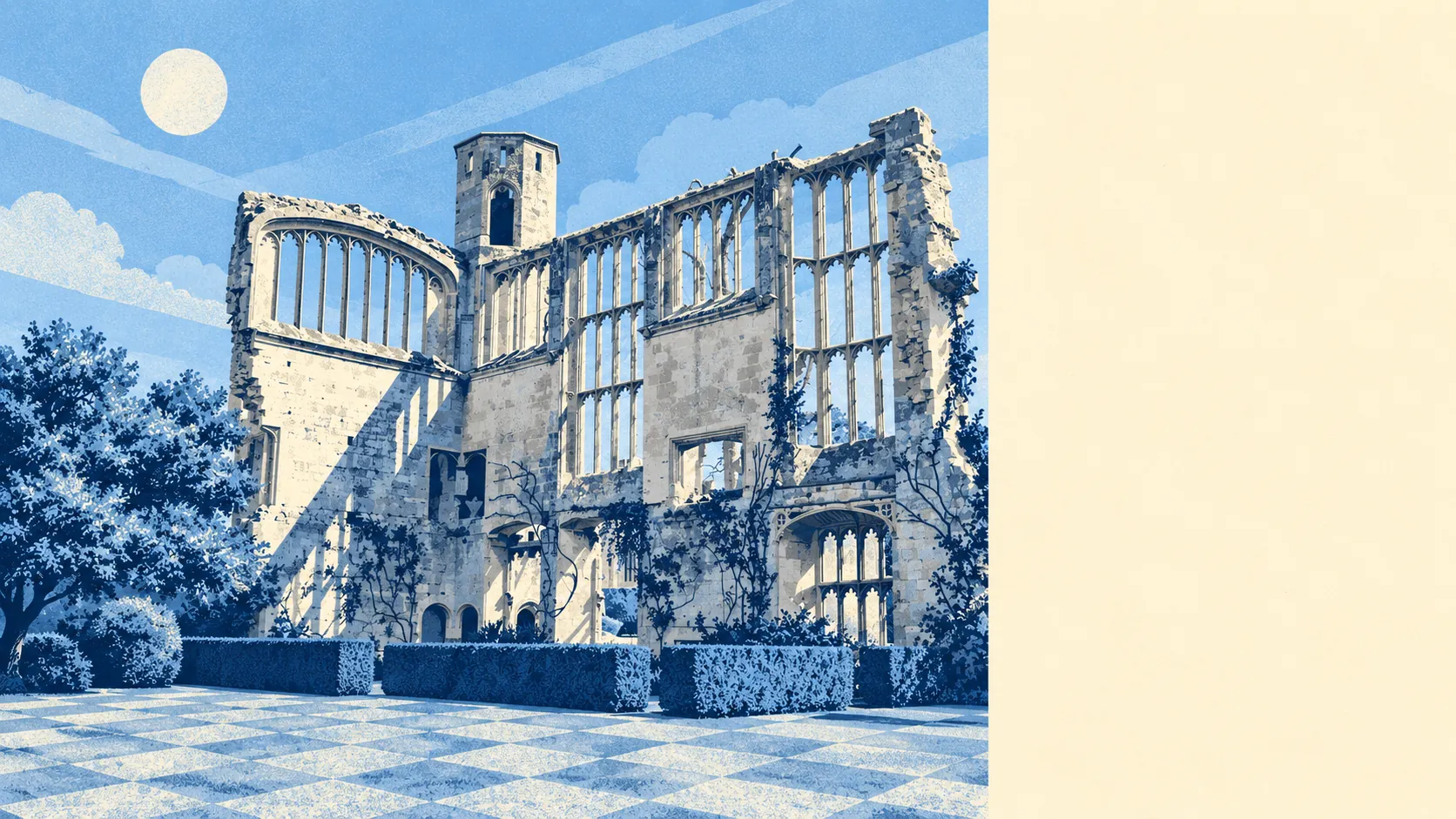
Around the town, the landmarks are spread across the fields: Sudeley Castle and its tithe barn, the ruins of Hailes Abbey near the village of Hailes, Postlip Hall, and the Roman villa site at Wadfield. Stanway, Didbrook, Toddington and Alderton are a short drive away, and the Gloucestershire Warwickshire Railway runs along the escarpment at Stanley Pontlarge. A day out here mostly means walking between buildings older than anything most towns can show.
Private gardens are generous. Across Winchcombe's four neighbourhood areas there are about 238,000 square metres of private garden for every 1,000 residents. Homes here have proper gardens as well as the hills behind them, and most residents have their own lawn to mow before they reach any public footpath.
On the business rates valuation list, Winchcombe has 139 rateable premises. The largest groups are 51 shops and 38 self-catering holiday units, followed by 16 offices. These are premises on the list and not necessarily businesses trading today, but the mix is clear: a market town that works part-time as a holiday base.
Of the 25 food premises given a hygiene rating, about 68% hold the top score of five, and none sits at the low end. The cafés and pubs that serve the walkers keep their kitchens in good order.
Most of the area is inside the Cotswolds Area of Outstanding Natural Beauty, but no site of special scientific interest and no ancient woodland fall within it. The protection here covers the landscape as a whole. No single wood or meadow has its own designation.
The countryside around Winchcombe is one of its real strengths. Green space and hill paths start almost at the back door, and the hardest part of a walk is choosing which hill.