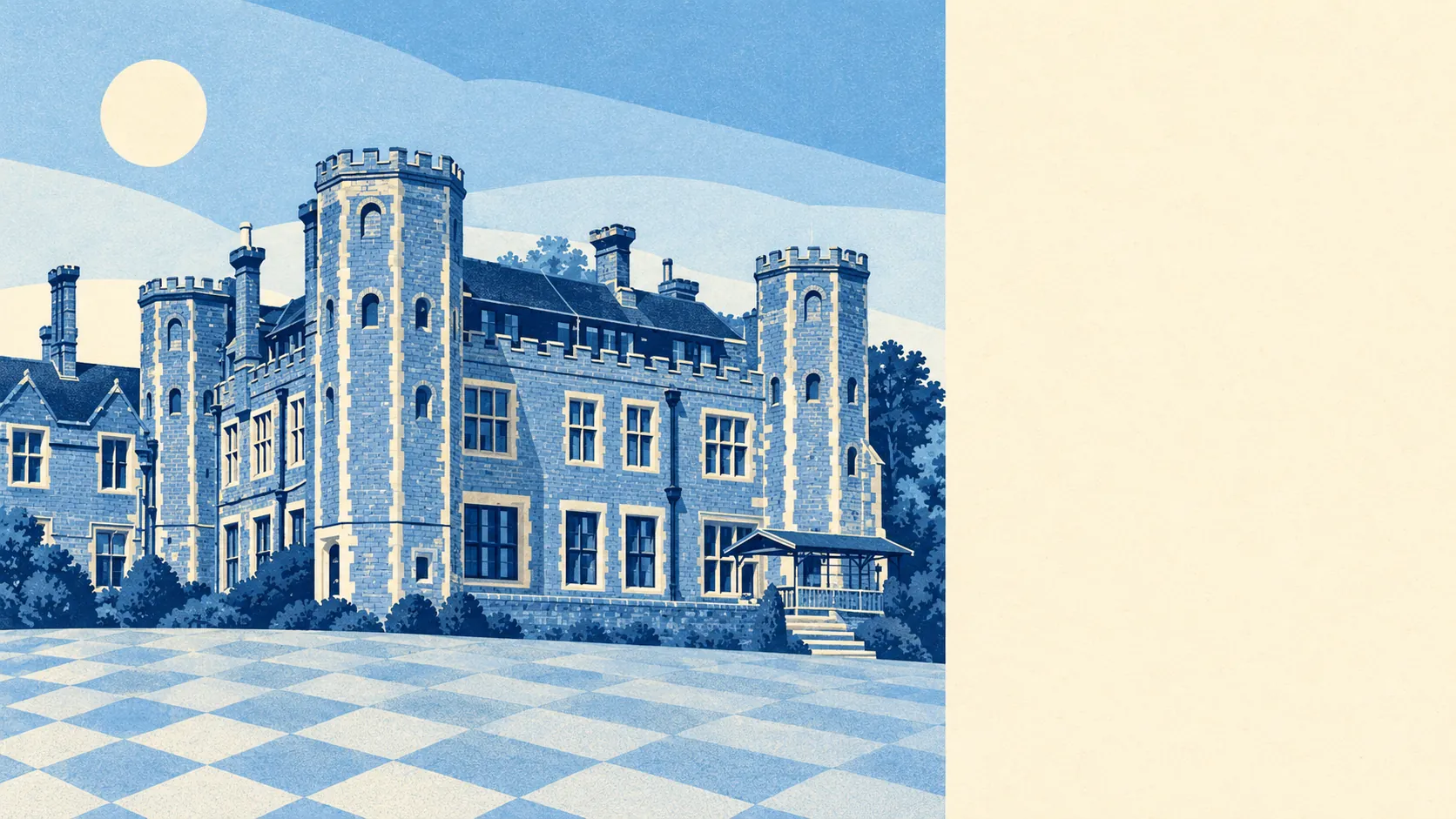
West Wickham is a good place to live, comfortably above average, as long as you can afford to get in. Close to nine in ten households own their home, and almost nobody here is struggling. Getting in is the problem. A typical house goes for well over half a million, and the bargain end of the market is a flat.
The neighbourhood is made of owners. About 86% of households own their home, the typical resident is 46, and the Office for National Statistics models gross household income across the area at about £100,000 a year for the financial year to March 2023. Unemployment at the 2021 census was 2%. In Tudor times the Boleyn family expanded Wickham Court and came out here to hunt deer. The hunt now is for a semi that someone is willing to sell.
Prices are where it hurts. The Land Registry's last twelve months, to May 2026, show a median sale of about £670,000 across 175 sales. Semis, the bulk of the market, went for around £700,000, and detached houses for about £920,000. Terraces came in at about £640,000. Flats, at around £234,000, are the only part of the market priced like the rest of south London. Band E is the most common council tax band, and bands A and B together cover about 3% of homes, so a cheap council tax bill is about as easy to find as a cheap house.
Renting is a sideline here. Typical private rent across the Bromley area was about £1,670 a month in April 2026. That figure is a borough-wide mean from the Office for National Statistics index, so it says little about a three-bed semi in this postcode. With about 10% of households renting privately, the hard part is finding something to let at all.
The housing stock is the inter-war suburb that went up once the railway had opened the fields to London. On the council tax valuation list, semis make up about 47% of homes, detached houses 17%, flats 19%, terraces 14% and bungalows 3%. Only about 6% were built before 1930. On energy certificates about 47% rate band D, 28% reach C or better and 25% are E or worse. About 86% of homes are on mains gas and around 6% heat on electricity alone. The semis were built for coal fires and families who wore jumpers indoors, and the certificates still show it.
Crime is low. The Metropolitan Police recorded a rate of about 52 crimes per 1,000 residents in the year to May 2026, roughly 42% below the Bromley average. Violent and sexual offences make up 23% of the total, against 35% across England and Wales. Vehicle crime is the odd one out at about 17% of recorded crime, against 5% nationally. Around 44% of households run two or more cars, and thieves come for the cars.
West Wickham station has trains to Charing Cross and Hayes, and Eden Park and Elmers End are further up the same line. Only about 8% of working residents commuted by train at the 2021 census, while 32% drove and 47% worked from home. That census was taken during the pandemic, so the home-working share is high, but gigabit broadband reaches about 94% of premises and the home office held up. There are 104 bus stops with timetable data, averaging about 147 departures each on a weekday, and every one has a weekend service.
Flood risk depends on which map you read. About 22% of postcodes carry a high rating on at least one Environment Agency flood indicator, and surface water counts towards that. In the river-and-sea flood zones the picture is much smaller: about 2% of postcodes are in zone 2 and under 1% in zone 3. The last recorded flood was in 1968, when a main river overtopped its channel. Put the exact address into the Environment Agency's surface water map, because surface water is where most of that 22% comes from.
There are four state primaries: Oak Lodge Primary School, Wickham Common Primary School, Pickhurst Academy and Hawes Down Primary School. Across the four schools in the district, the average key stage two maths score was 107. Ofsted's figures cover the whole borough. Across Bromley, 40 of the 41 graded settings are good or better and 15 are outstanding. There are no secondary schools in West Wickham itself, so at eleven every child takes the bus or the car somewhere else.
Heritage rules matter less here than in older villages. The wider area holds 28 listed buildings. One is Grade I: Wickham Court, built in 1469. Two are Grade II* and the other 25 are Grade II. Six conservation areas fall inside the surrounding box, including Hayes Village and Bromley, Hayes and Keston Commons. Most of the housing went up in the 1930s, so for a typical semi the planning problem is the neighbours' loft conversion, not the conservation officer. Check Bromley council's conservation area map before planning anything ambitious, because the boundaries follow history, not house type.
Green space is close by. The nearest park or green space is about 200 metres from the average home, with around 22 within a kilometre. The nearest water is roughly 730 metres away. Most of the old West Wickham Common was built over between the wars, but the Corporation of London bought a tract and saved it in 1892. Add Wickham Park and Blake Recreation Ground, and almost every street has somewhere to walk the dog.
The famous names are older than the semis. Thomas Carew, one of the Cavalier poets, was born here in 1595. The mathematician William Burnside is buried in the parish church. Andy Roe, a former London Fire Commissioner, took his title as Baron Roe of West Wickham, so the place has made it into the House of Lords even if most of its residents prefer the Charing Cross line.
West Wickham is right for owners who want a settled street, a house with a garden and neighbours who will still be there in ten years. Buyers who need a cheap way in, a lively night out or a postcode that will move fast should look elsewhere.
It is a better-than-average place to live, built on people who bought, stayed and kept it orderly. What those neighbours paid to get in is now the asking price for you, so buy here if long-term stability is worth more to you than whatever else that money could do.