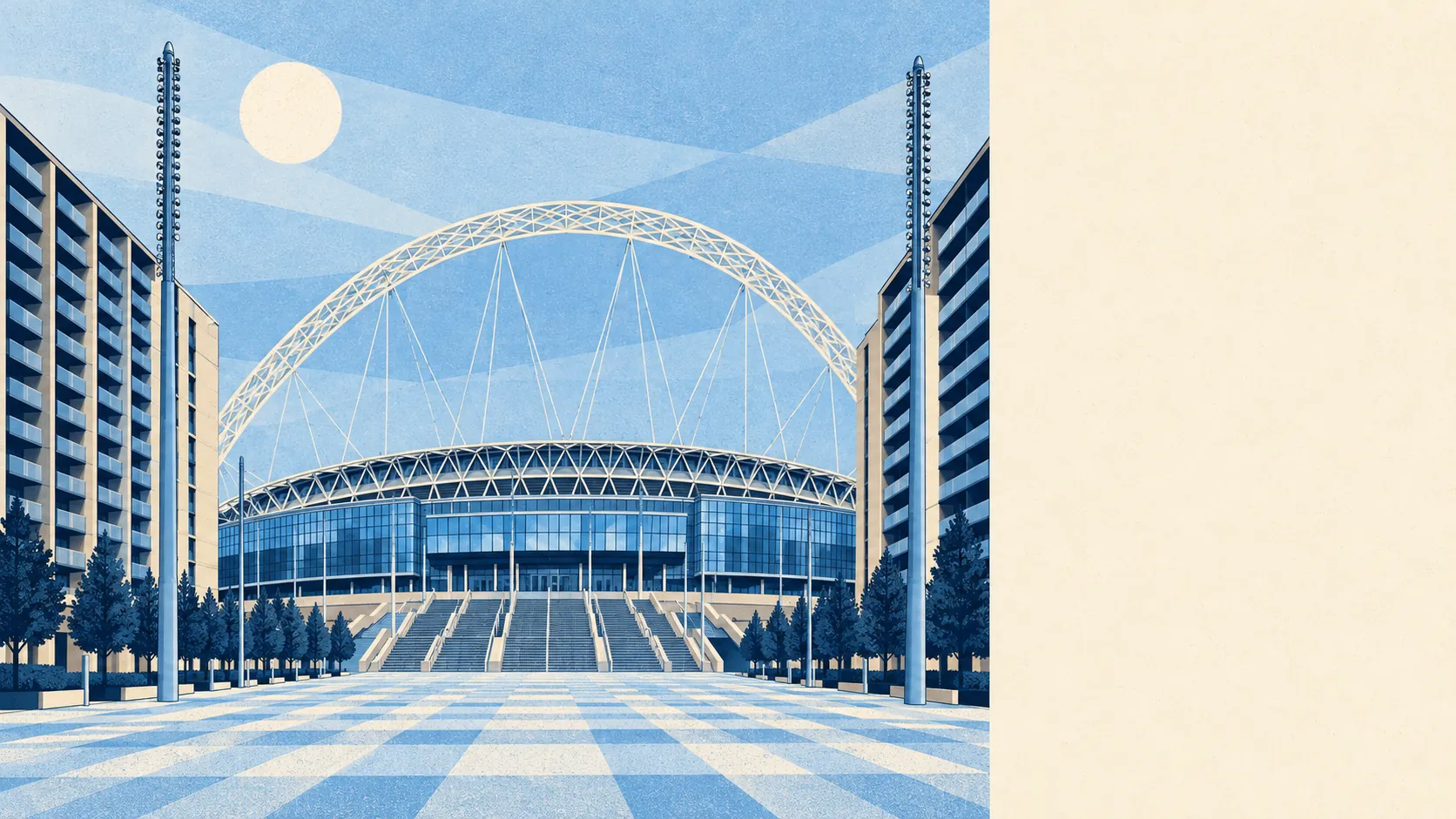
Wembley Park is an easy, well-connected place to live, but most of its residents are tenants, and a buyer is joining a neighbourhood that mostly hasn't bought in. About four in ten households own their home. About six in ten rent, many of them from companies that own whole blocks. Plenty of the people next door will have moved on before the paint in your hallway is dry.
That tenure split is the main thing a buyer needs to understand about Wembley Park. Census 2021 found 39% of households owning, 41% renting privately and 18% in social housing. The median resident is 35. The Office for National Statistics models median gross household income at about £61,000 for the financial year to March 2023, averaged across the area. About 19% of households are overcrowded, and the area slid further towards the deprived end of the government's index of multiple deprivation between the 2019 and 2025 editions. Companies hold about 2,700 property titles across the postcode district. For an owner, that means a street of landlords who don't live there and tenants who won't stay. Humphry Repton landscaped this ground in the 1790s for one family who planned to stay for generations. The current arrangement runs on twelve-month tenancies.
The Metropolitan Police records about 141 crimes per 1,000 residents here over the year to May 2026, roughly 9% above the Brent average. The mix is unusual. Theft from the person makes up about 9% of recorded crime, against about 2% across England and Wales, and drugs offences about 8% against about 4%. Violence and sexual offences are a smaller share than the national figure. The pickpocketing is the predictable cost of regularly inviting the whole country round to watch the football.
Getting about is where Wembley Park earns its money. Its 191 bus stops average about 423 scheduled departures each on a weekday and about 23 buses in the peak hour, and almost all of them run at weekends too. Preston Road station is on the Metropolitan line, and Wembley Central, Wembley Stadium and North Wembley stations are all close by. About four in ten households have no car. Gigabit broadband reaches about 88% of premises and every postcode gets a 4G or 5G signal. The Department for Transport modelled the trip to the nearest town centre at about 16 minutes by public transport, but that figure dates from 2019, and services have changed since. At the 2021 census about 28% of workers were working from home, which is a lot of very good transport going unused on weekdays.
Flood risk splits in two depending on which measure you look at. About 23% of postcodes are rated high on at least one flood indicator, and that count includes surface water. The Environment Agency's river-and-sea flood zones are much smaller: about 3% of the area is in Zone 3 and about 4% in Zone 2. The Wealdstone Brook runs between Bridge Road and Wembley Park Drive, and the one recorded flood, in December 1977, happened when it overflowed its channel. Bridge Road is named after the bridge over the brook, so the clue has been in the street name for a while.
Schools are a real strength. Across the nine primary schools in the district, pupils average about 107 on the end-of-primary maths test. The four secondaries average an Attainment 8 score of about 52. Ofsted has graded 39 of Brent's 42 graded settings good or better, 10 of them outstanding, though that count covers the whole borough. Local names include Michaela Community School, Preston Manor School, Ark Elvin Academy, Chalkhill Primary School and Oakington Manor Primary School.
Heritage rules are light. The area has 29 listed buildings, one of them grade I and two grade II*, along with a single conservation area, and two entries on Historic England's Heritage at Risk register. Most homeowners can extend or alter without a heritage officer getting involved. Wembley Park has a long record of abandoned grand plans: Repton's gothic tower on Barn Hill was never finished and became known as Page's folly, and Sir Edward Watkin later had a tower of his own that went the same way.
The Land Registry's median sale price over the twelve months to May 2026 was about £528,000, across 266 sales. Flats made up most of those sales, 166 of them at a median of £450,000. The 65 semi-detached houses fetched about £645,000, the 29 terraces about £520,000 and the 6 detached houses about £800,000. The Land Registry's house price index puts average values about 3% lower than a year earlier. Band C is the most common council tax band, and only about 18% of homes are in bands A or B.
Renters in Brent pay about £1,990 a month on average, according to the Office for National Statistics' private rent index for April 2026. That is a borough-wide average, and it was about 4% lower than a year before.
The valuation list for council tax shows the housing stock is about 65% flats, 19% semi-detached houses, 11% terraced houses and 3% detached houses. Only about 19% of homes were built before 1930. Because so much is new, about 74% of certificated homes are rated A to C for energy efficiency. About 65% of homes are heated by mains gas, and about 17% rely on electric heating alone, a share a buyer should look at before assuming a new-build flat is cheap to run.
Green space is what Wembley Park does best. The average home is about 170 metres from public green space, with around 20 green spaces within a kilometre and water about 400 metres away. Barn Hill and Fryent Country Park stretch north towards Kingsbury, and Preston to the north and Tokyngton to the south-east are on the same easy terms. Repton picked this ground for its seclusion, and the open land he worked on still gives the area some of that.
The district's list of notable people starts with Repton and later includes John Tavener, Harry Shearer, Lady Sovereign and Keith Moon of The Who. It began as a landscaped retreat and ended up with a famous drummer on the list of residents.
Wembley Park is right for buyers who travel by Tube and bus, want good schools close by and like having a park a few minutes away. Buyers who want to know their neighbours, sit on the residents' committee and see the same faces at the bus stop for a decade should look at streets where more people own.
Above all, the low rate of ownership is what a buyer here has to live with, because a street that changes hands every year rarely builds the kind of neighbourliness that holds owners in place. Weigh that against parkland a short walk from the front door and transport most of London would envy, and Wembley Park comes out as a better-than-average buy for anyone who can be happy living next to strangers.