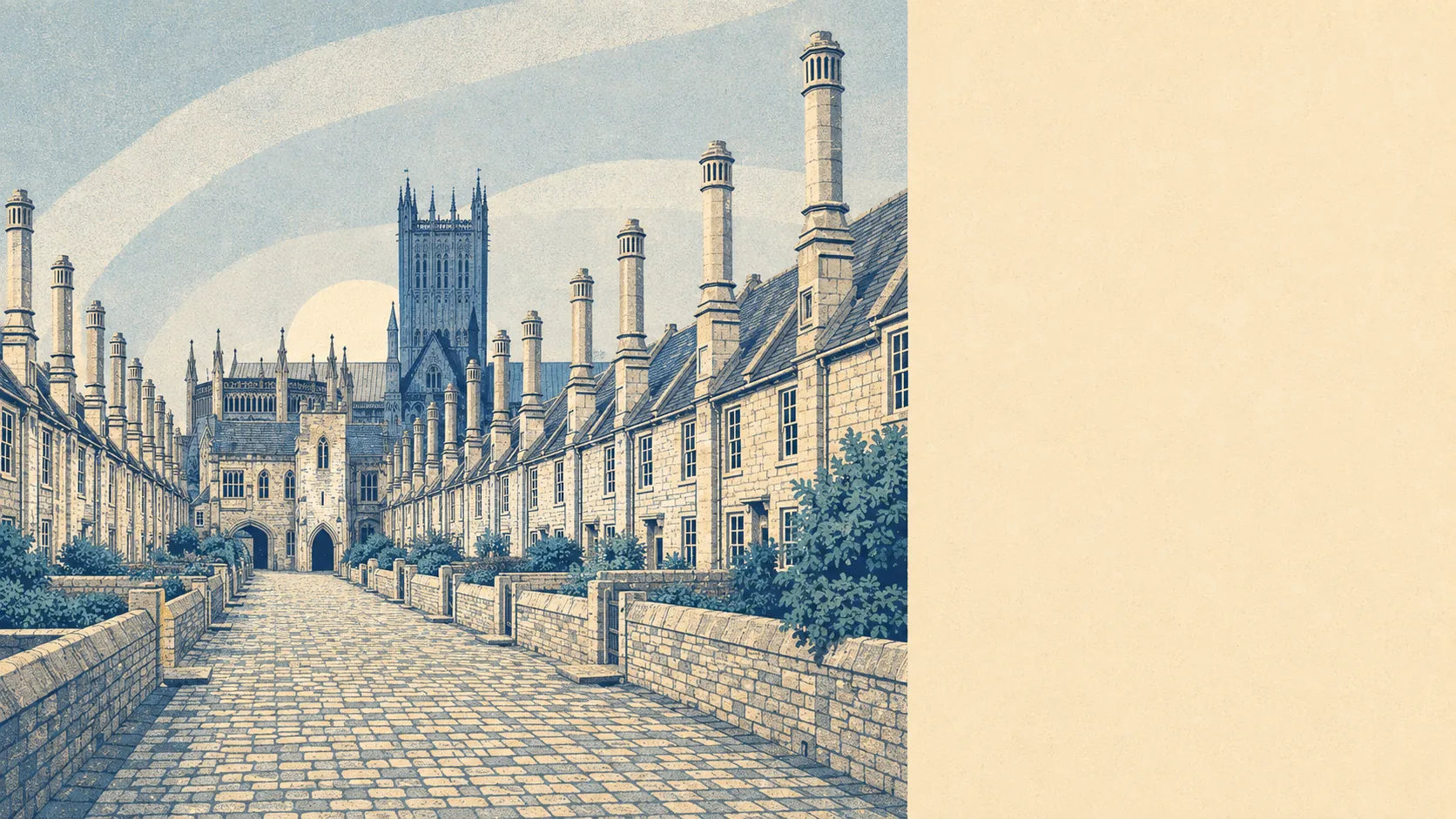
Owners, in the main, and a striking number of them on their own. Roughly seven in ten households own the roof over them. The typical resident is in their early fifties. About a third of households are one person living alone, and a fifth of all households are a single pensioner. The age group most obviously thin on the ground is the one that would have to commute out of here every morning.
Every population figure here comes from the 2021 census. On tenure, about 68% of households own, about 18% rent privately and about 12% rent from a social landlord, which puts renting at roughly 30% overall. That is a solidly owner-occupied city with a rental sector big enough to move into but not big enough to define anything.
The age profile is the fact that shapes most of the others. The median age is about 51, and only about 19% of residents are aged 25 to 44. The prime family-forming and career-building years are underrepresented, which is what tends to happen in a place with no railway station and a housing stock priced above local earnings.
On money, modelled gross household income for the area came in at about £54,000 in the financial year to March 2023, before tax. After tax, the modelled figure is about £40,500. Both describe that year rather than this one, and both are averages across three middle-layer areas rather than a figure for any particular street.
Household make-up is where the character shows. Across 6,012 households, about 37% are a single person, and about 21% of all households are a pensioner living alone, which is a subset of that single-person figure rather than an addition to it. Couples with dependent children account for about 15%, and lone-parent households about 9%. So the dominant domestic unit in Wells is one person in a house with a garden, which explains a great deal about how quiet the streets are on a weekday.
On qualifications, about 38% hold a degree-level qualification and about 15% hold none at all, with full-time students making up roughly 1% of residents. That is a spread of attainment rather than a uniformly graduate city, and the low student share reflects a place with schools rather than a university.
Health is one of the better readings. About 81% of residents report good or very good health, and about 5% report bad or very bad health. Across the Somerset council area, which is a much wider geography than the city, the preventable mortality rate is classed as better than England, and smoking prevalence at about 11% is classed as similar to England. Those are council-area comparisons, and they say nothing about any individual street.
One footnote worth having: about 12,493 residents live in private households and 269 in communal establishments such as boarding houses and care homes, which is small enough that it does not distort any of the shares above.
Who lives in Wells is an unremarkable answer in the most literal sense: a comfortable, older, mostly owner-occupied population with decent health, middling on the wider measures of advantage, and quietly short of thirty-somethings.