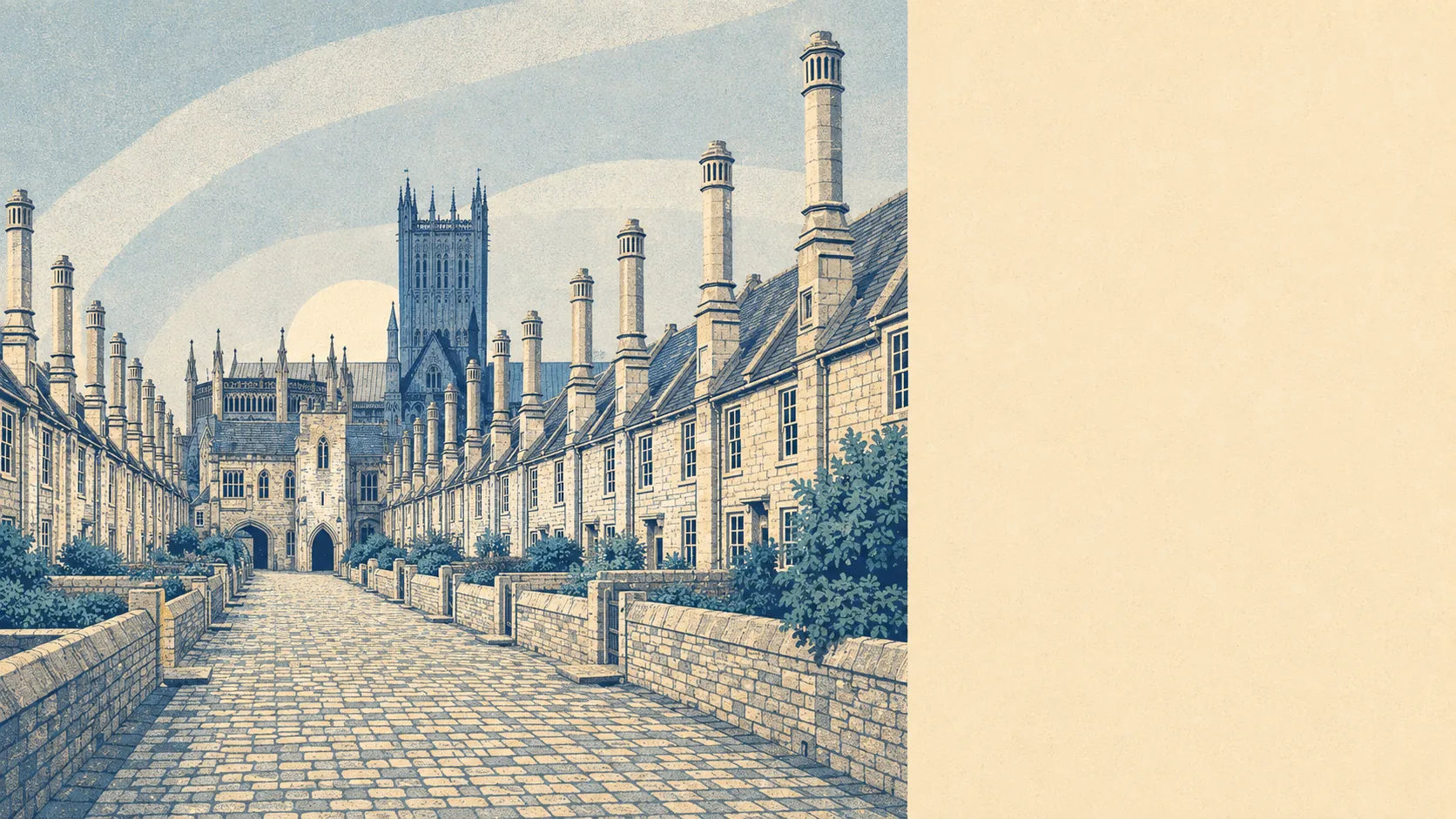
Yes, with consent, and consent is the whole story here. There are 343 listed buildings in the area, two conservation areas and three scheduled monuments, packed into a city small enough to cross on foot. Hundreds of applications still go in. People do extend in Wells; they do it with someone who has read the constraints first. The back of your house belongs slightly to everybody else, and the sooner that lands, the cheaper the project gets.
The listing burden is the main event. Of the 343 listed entries in the area, 25 are Grade I, 36 are Grade II star, and 282 are Grade II. Listing attaches to the whole building rather than the pretty side of it, which means internal layout, staircases, fireplaces, windows, doors and roof coverings all sit inside the protected fabric. Listed building consent is required for alterations affecting character, and the practical effect for an owner is that the permitted development freedoms other people rely on do not apply to the listed structure. Grade I and Grade II star entries attract the closest scrutiny of the lot, and there are 61 of those between them.
Two conservation areas cover the ground, one for Wells itself and one for the Mendip Hospital site. Conservation area designation works differently from listing: the building may be ordinary, but the setting is protected. That typically narrows permitted development, brings demolition and work to trees into scope, and puts things like window replacement, cladding, roof materials and visible external plant under closer control than they would face two streets outside the boundary. The boundary is the thing to check, because it does not follow any logic visible from the pavement.
Three scheduled monuments sit within the area. Scheduled monument consent is the strictest tier in the system and operates separately from the planning process. For most buyers it is irrelevant, right up to the point where it is the only thing that matters, which is when the land itself, rather than the building on it, carries the designation.
The evidence that alterations do happen is in the volume. Somerset's planning register recorded 633 applications across the area between April 2024 and June 2026, with 267 of those in the last twelve months. That is a steady flow of people getting extensions, conversions, window changes and outbuildings through the process. What it does not tell you is how any individual case went, and nobody should read a neighbour's finished kitchen extension as a precedent for their own.
Practically, the split is binary. If the house is unlisted and outside both conservation area boundaries, the ordinary permitted development rules apply and a modest rear extension or a loft conversion is a normal project. If it is listed, in a conservation area, or both, assume consent is needed for anything visible and much that is not, budget for a heritage statement, and get the designation checked against the specific address before you offer rather than after. Most homes in Wells are not listed, which is worth remembering when the cathedral is doing all the talking.
Freedom to alter your own home is the weakest thing about owning one in Wells: the protections are dense, they overlap, and in the historic core they turn a weekend job into a submission.