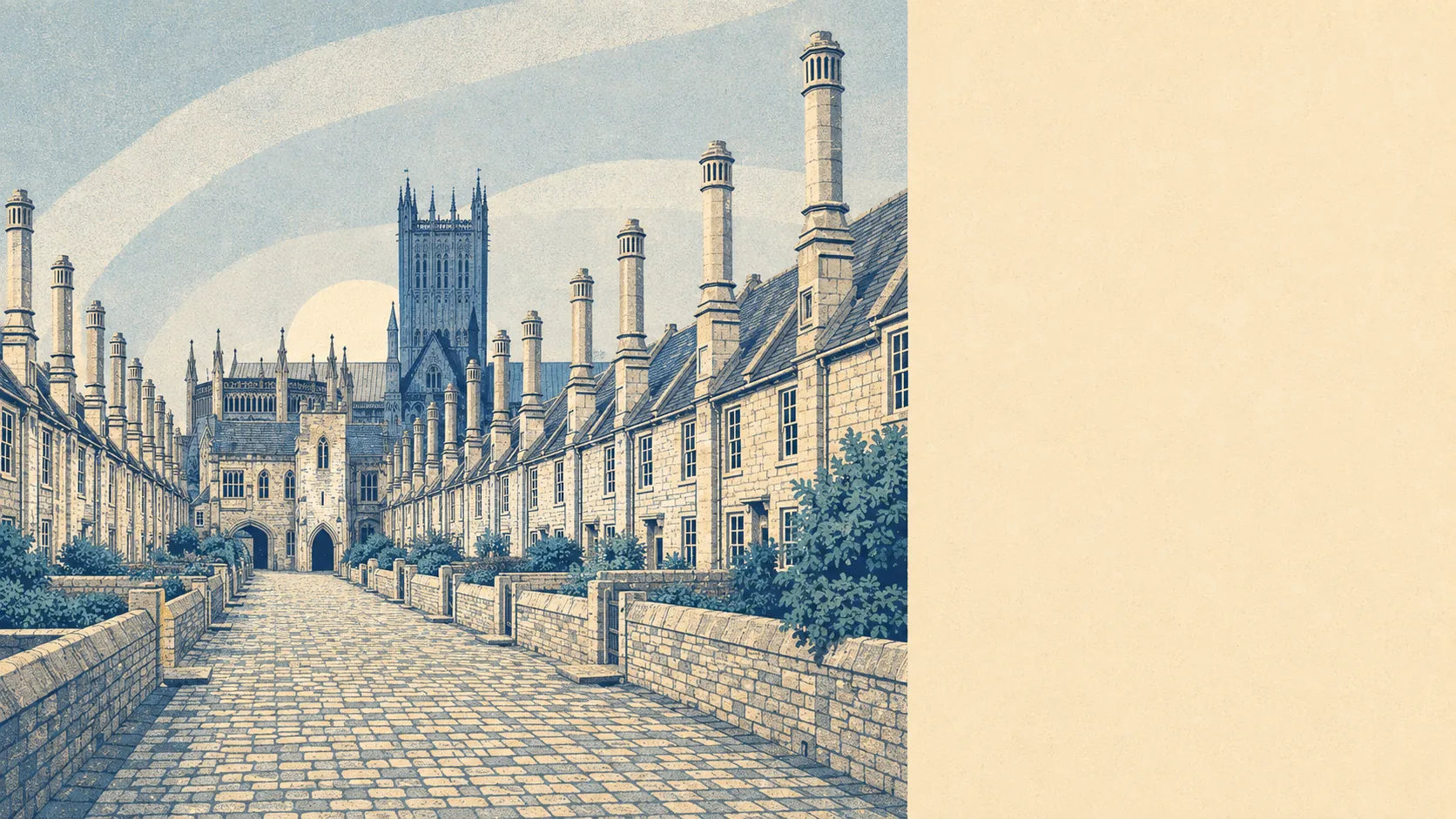
About £333,000 for the middle of the market. That number buys a semi or a terrace, not a view of the cathedral. Detached houses cost well over half a million. Flats start at around two hundred grand, and there are not many of them. For a cathedral city on the edge of protected hills, that is cheaper than the postcard suggests and dearer than the local wages support.
The Land Registry's twelve months to May 2026 recorded 161 sales at a median of £333,000. Split by type, the market is unusually tidy. Flats came in at a median of £199,000 across 30 sales. Terraces at £315,000 across 48. Semis at £320,000 across 46, which means the two middle rungs of the ladder are barely a rung apart. Detached houses at £530,000 across 37, and that gap is where the whole local hierarchy lives. There is no gentle slope between a semi and a detached house in Wells. There is a step, and it costs about two hundred thousand pounds to climb.
Direction of travel, as published rather than predicted: the house price index for the area put the average at around £281,000 in May 2026, up about 3% over twelve months and about 15% over five years. Flats went the other way, down roughly 1% over the same twelve months, which is a small move and should be read as one. The index area is broader than the city itself, so treat it as the regional weather rather than your own street's forecast.
Council tax sits mostly in the middle. Band C is the most common band on the valuation list, with about 27% of dwellings in bands A or B, so the cheap end exists without defining the place. A band D bill runs to roughly £2,560 a year, which is the figure worth holding against whatever you pay now.
Renting is only measurable at the wider scale. Typical private rent across the Somerset area is about £990 a month, a mean from the Office for National Statistics index rather than a median of advertised listings, so it will not match what you see on a portal. By size, that breaks down to around £670 for a one-bedroom, £886 for two, £1,100 for three, and roughly £1,580 for four or more.
Affordability is where the arithmetic gets uncomfortable. Modelled gross household income for the area, before tax, was about £54,000 in the financial year to March 2023. Set that against a £333,000 median and you are looking at a multiple that no ordinary lender enjoys, which is why so much of the buying here is done by people arriving with equity from somewhere pricier rather than people saving up locally.
Of the sales that could be matched to an energy certificate's floor area, roughly 79% of them, the median works out at about £3,760 per square metre on a typical floor area of around 91 square metres. That is the useful comparison when a listing is vague about what you are actually getting, which listings usually are.
On bedrooms, the Census 2021 count has three-bedroom homes leading at about 38% of households, two-bedroom at roughly 28%, four or more at about 23%, and one-bedroom at only around 11%. It is a family-house city with a thin supply of small flats, which explains both the flat prices and the fact that so few of them change hands.
Wells is one of the better-value cathedral cities you can buy in, and the market here is one of its genuine strengths: enough sales to be honest about, a clear ladder, and a middle rung that is still reachable. Just accept that the detached-house step is a different conversation entirely.