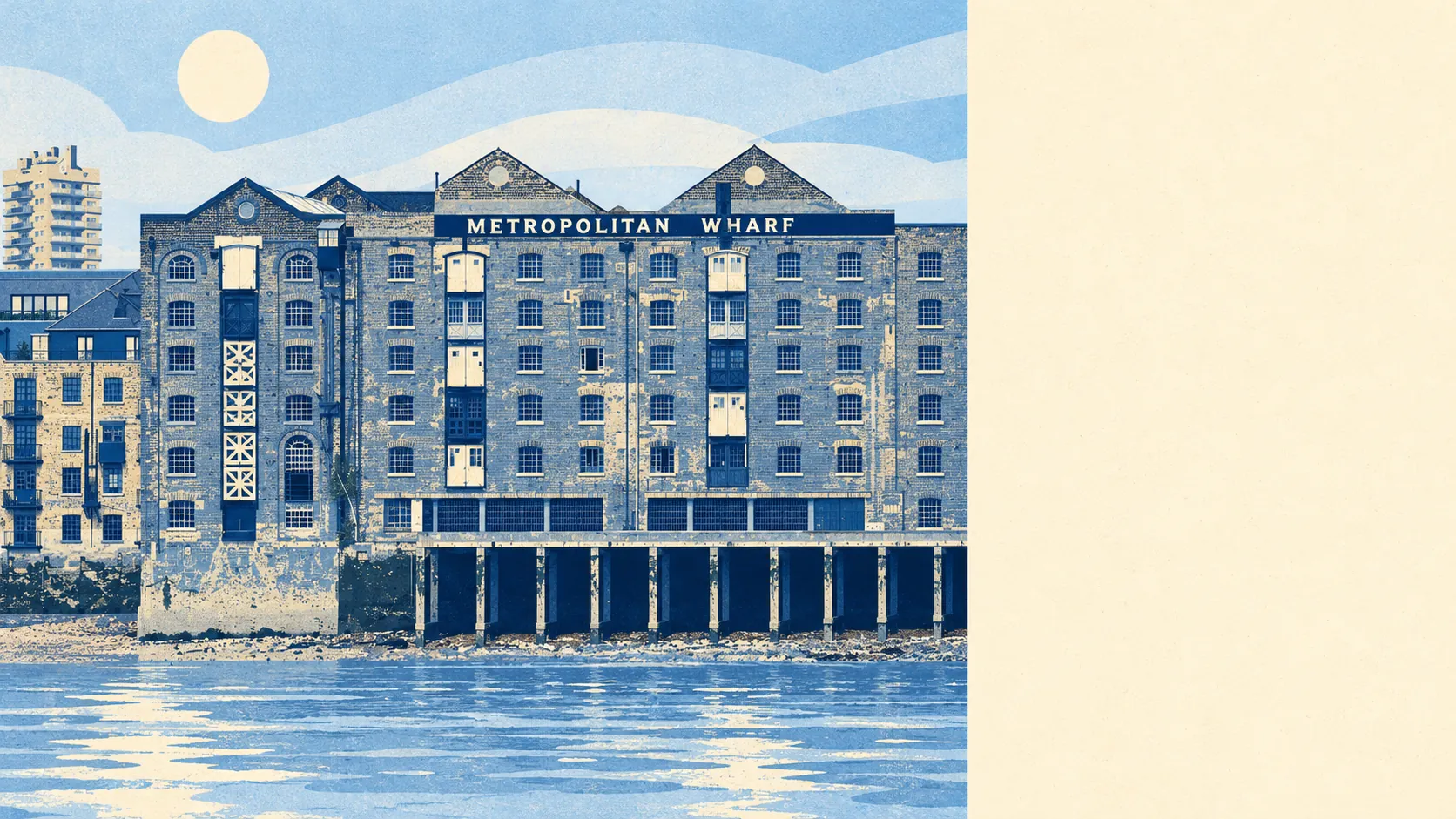
Wapping is a middling place to live, and the reason is mostly about what you are allowed to do to your home. There are 422 listed buildings in and around it, plus a riverside crowded with conservation areas, so the next change you want to make is a conversation with the planners. The river, the parks and the Overground are good to live next to. Your windows, though, are partly public property.
The 422 listed buildings counted across Wapping and its edges include 11 at Grade I and 20 at Grade II*, and 31 conservation areas fall inside the same stretch of map, among them Wapping Pierhead, Wapping Wall and St George in the East. For an owner that means consent for jobs other people do on a bank holiday weekend: a replacement window, a new front door, a change to the roofline. Six of those listed buildings are on Historic England's Heritage at Risk register, a reminder that being protected and being looked after are different jobs.
The flood picture depends on which map you read. The Environment Agency puts about 51% of Wapping in flood zone 3, the highest of its river-and-sea flood zones, rising to about 55% once its climate-change allowance is added. On the wider postcode measure, about 6% of postcodes are at high risk on at least one flood indicator including surface water, 13% at medium and 22% at low. The Environment Agency's own record lists nine floods, the latest in January 1928, when the Thames overtopped its defences. The river wall finished around 1600 is the reason there is a Wapping at all, and nobody living here forgets which side of it they're on.
The Land Registry logged 184 sales in the twelve months to mid-May 2026, at a median of about £745,000. Flats made up 176 of them, at around £703,000, and the eight terraced houses went for about £965,000. A front door at street level is the most expensive feature in the postcode. Council tax most often lands in band E, and only about 18% of homes are in bands A or B.
Renting costs about £2,410 a month across Tower Hamlets, the borough's typical private rent as of April 2026, up 2.2% on a year earlier. That figure covers the whole borough, from tower blocks in Poplar to the river frontage, so a Wapping flat with a balcony will rarely be the typical one.
On the council-tax valuation list, which covers every home, Wapping is about 92% flats and 8% terraced houses, with detached houses and bungalows barely registering. About 16% of homes predate 1930. Energy certificates put about three quarters of certificated homes at band C or better, which is what a late-twentieth-century building boom will do. Only about 46% of households heat with mains gas and about a third heat with electricity alone. An all-electric flat with river views pays for both.
About 30% of households own their home. Around 43% rent privately and 24% from a social landlord. The median resident is 33, and the Office for National Statistics models gross household income at about £76,000 for the financial year to March 2023. The people who could most easily afford to buy in Wapping are mostly paying rent to live in it.
Police.uk puts recorded crime at about 172 per 1,000 residents in the year to May 2026, roughly 10% above the Tower Hamlets average. Anti-social behaviour makes up about 22% of it. Theft from the person is about 8%, against roughly 2% across England and Wales, so the riverside walk is popular with more than just joggers.
Wapping station sits on the Overground's East London line in fare zone 2, with direct trains to Dalston Junction, Highbury & Islington, Crystal Palace and Clapham Junction, and Shadwell station is on the eastern edge. The platforms are so narrow that the station runs under a special exemption from the railway inspectorate. There are 112 bus stops, and about 99% of the ones with timetable data have a weekend service. Gigabit broadband reaches about 87% of premises, which matters because about 59% of working residents were working from home at the 2021 Census. About six in ten households have no car, and nobody seems to miss one.
Hermitage Primary School and St Peter's London Docks CofE Primary are the local primaries, and their pupils average about 109 in maths at the end of primary school. The Department for Transport's 2019 modelling puts the nearest primary about five minutes' walk away on average. Mulberry Academy London Dock is the secondary. Ofsted rates 37 of the 39 graded schools across Tower Hamlets good or better, 13 of them outstanding, so the borough numbers give parents some comfort.
The nearest green space is about 94 metres from the average front door, and water about 260 metres. The Thames Path runs the length of the riverside, the Ornamental Canal cuts through the middle to Shadwell Basin, and St George's Gardens sits behind Hawksmoor's church, in what was its cemetery. Most homes are closer to a park than to a parking space.
The parish has a strange list of former residents. John Newton, who wrote Amazing Grace, came from here. So did the Leveller Thomas Rainsborough, the pirate Walter Kennedy and Arthur Orton, the Tichborne Claimant. Godscall Paleologue, last heir of the Eastern Roman Empire, was born in Wapping and baptised in 1694. An imperial bloodline would still need consent for the porch.
Wapping is right for a car-free renter or buyer in their thirties who works from the flat, walks to the river and likes the building exactly as the developer left it. Anyone who plans to knock through, build up or add a garden room should look somewhere with fewer rules than Wapping.
Buying here means buying something finished, inside streets whose look has already been decided by someone else, and every extension plan starts with that someone else's opinion. Step outside and the parks, the canal and the Thames Path are minutes away. That makes Wapping a fair, middling place to live: excellent once you are out of the front door, and fussy about anything you try to change behind it.