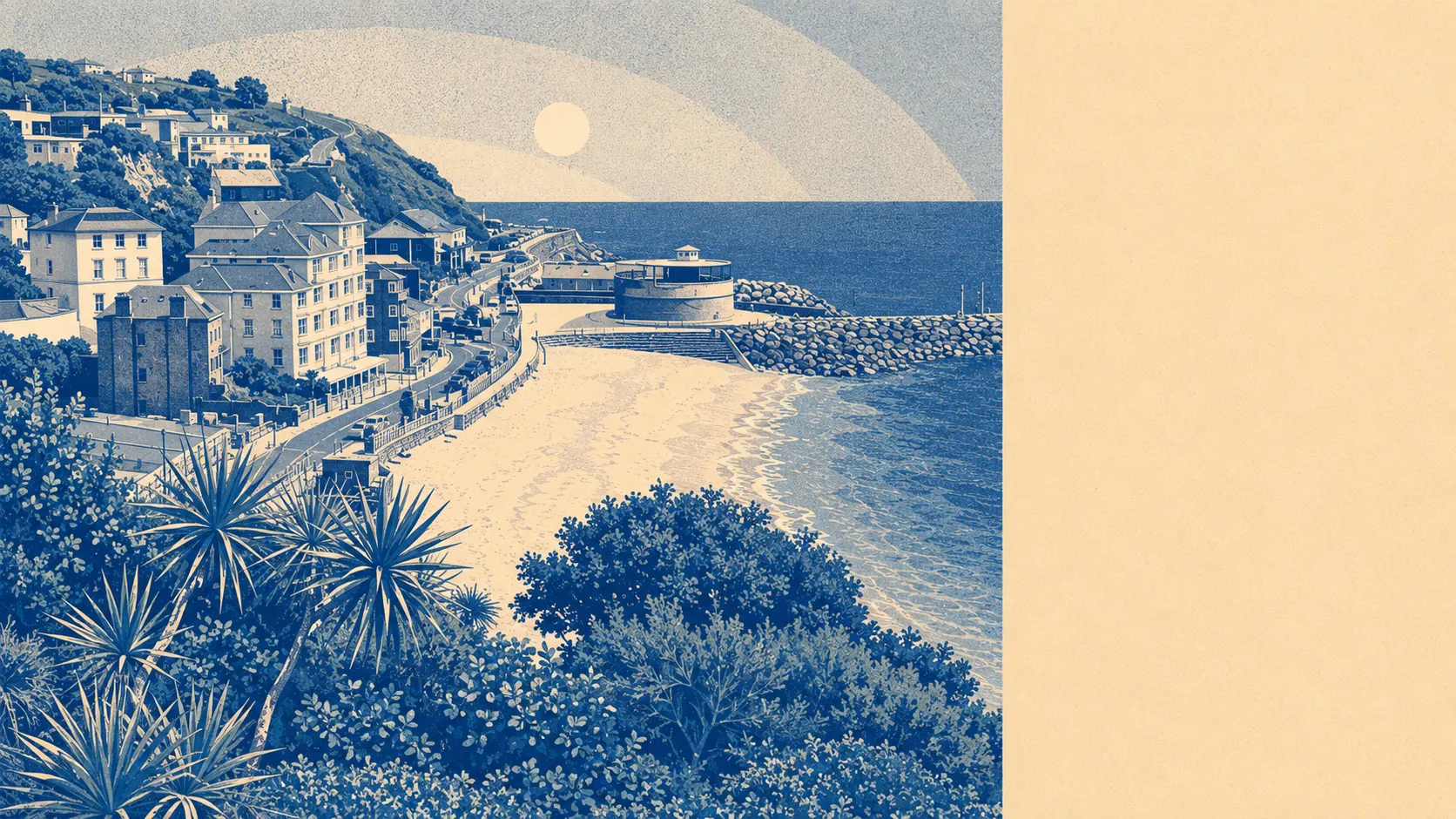
A town without a train. The railway closed in 1966 and never returned. Around half of working residents drive to work. About one in twenty take the bus. Connected to the island by road and broadband, connected to the mainland by patience.
The line from Shanklin and Wroxall reached Ventnor in 1866, and a line from Cowes through Newport reached the town in 1900. Both closed. Ventnor West Station shut in 1952, before Dr Beeching's name became shorthand for closure decisions. Ventnor Station shut in 1966, when the surviving Ryde-to-Shanklin line was electrified and the southern extension was judged not worth the trouble. The local member of Parliament has, more recently, asked about extending the line back; the question hasn't produced an answer that involves new track. The nearest active rail terminus is Shanklin Rail Station, four miles to the north-east. Lake Rail Station sits a little further up the line. The train share of journeys to work in Ventnor is roughly one in a thousand, which is what no train station looks like in the data.
Buses do more of the work. About seventy bus stops sit inside the town's footprint. Two year-round routes connect the town to others: Godshill, Newport, Ryde, Sandown, Shanklin and Niton, plus an island coaster in summer and night services on Friday and Saturday. A local minibus route connects to Bonchurch and the Botanic Garden. About one in twenty residents commute by bus, which is more than the train share and a fraction of the drive share. The bus is what works for the people who don't drive: older residents, non-drivers, and visitors who don't want the parking puzzle.
Broadband is the surprise positive. More than three in four premises have gigabit on offer. Nearly all have superfast. Mobile coverage from at least one operator reaches every postcode. The internet works as well in Ventnor as in most south-coast towns, which is what allows around a quarter of the working population to skip the transport question by working from home.
The day-to-day commute is local. Within the area, the town centre is about eight minutes by car, ten by bike, twelve by bus, and thirteen on foot. The nearest primary school by public transport is around seventeen minutes; the nearest secondary the same. About half of working residents drive, one in seven walk, barely one in eighty cycle, and about one in twenty bus it. The car share takes the rest because the geography insists. There is no London commute that works from here. Anyone trying to make one work discovers why.
A working-island connection, not a mainland-commuter one. Broadband excellent, bus adequate, train a Victorian memory. Connected enough to live in, not connected enough to commute out of.