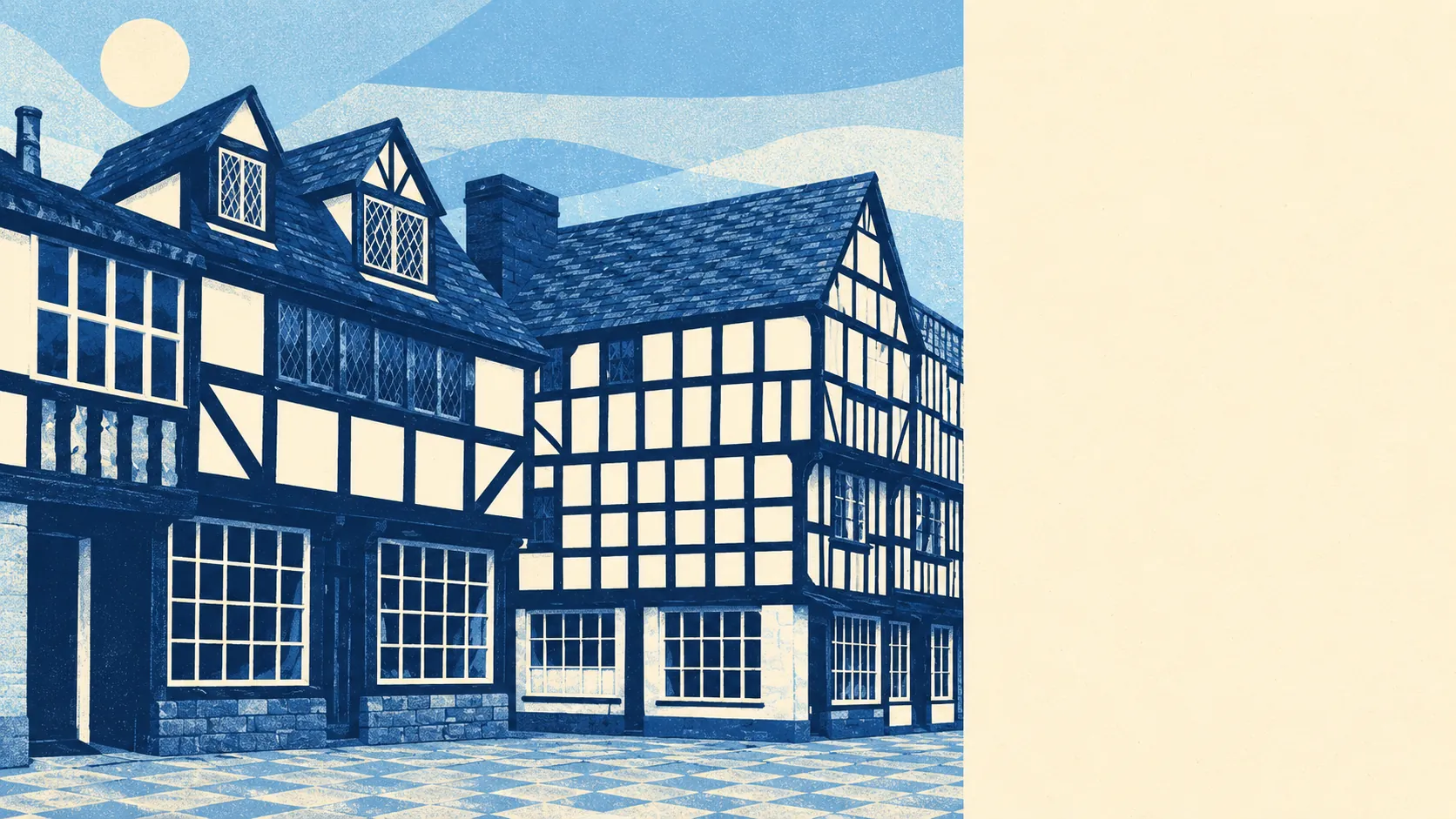
Tewkesbury is surrounded by water and open land, much of it in places where nothing much is allowed to be built. Rivers run on two sides of the town. Parks are within a short walk of most homes. The villages beyond the town are exactly what Gloucestershire village postcards suggest. Nobody has given the area a landscape designation, and the floodplain keeps it open without one.
The typical Tewkesbury home is about 140 metres from the nearest public green space and has about 17 within a kilometre. For a town of this size, that is plenty of choice. Most homes have a park, a playing field or a riverside meadow within a five-minute stroll.
Water is closer still. The average home is about 190 metres from the nearest blue space, with about 71 stretches of river, brook, pond and ditch within a kilometre. Where the Severn meets the Avon, there is water in almost every direction.
The National Cycle Network passes about 580 metres from the average home, and about 52% of postcodes are close to it. There is no ancient woodland in the area. The landscape here is river meadow and farmland, not forest.
The rating list holds 751 rateable premises in the area, among them about 251 shops, 280 offices, 31 pubs, 10 restaurants and 46 holiday lets. Those are premises on the valuation list, not a count of businesses open today. There are more offices than shops on that list, which the postcard view of the medieval high street leaves out. Pubs outnumber restaurants by a long way, so evenings out here mean the pub.
The Tewkesbury council area recorded fine-particle pollution of about 6.3 micrograms per cubic metre in 2024.
Beyond the town, the character changes quickly. Forthampton, across the Severn, is a conservation area of farmhouses, thatched cottages, roadside ponds and wide views. Deerhurst, on the east bank, has Odda's Chapel and a scheduled monastic site, so the old buildings there are older still than Tewkesbury's. To the north are Twyning, Bredon, Bushley and Ripple. Northway and Walton Cardiff are the newer suburbs on the town side of the fields. Within reach are Towbury Hill camp, a moated site called Margaret's Camp and the site of Holm Castle, so there is history behind most of the hedges.
Private gardens are generous. Across the 11 neighbourhoods measured, homes have about 111,000 square metres of garden for every 1,000 residents. Measured as a share of all the land, gardens look small, but only because the fields around them are so large. In a town where the post-war semi is the most common house, most buyers get a decent back garden.
Food hygiene inspectors have rated 127 premises in the area. About 87% have the top score and about 1% are at the bottom of the scale. In a town that eats out mostly in pubs, that means there is little to worry about in the kitchens.
No area of outstanding natural beauty, site of special scientific interest or ancient woodland overlaps the area. The rivers, meadows and the views from Forthampton manage without any of those labels.
The surroundings are one of Tewkesbury's real strengths. Green space and water are close to almost every home, and the floodplain has kept the fields at the edge of town open.