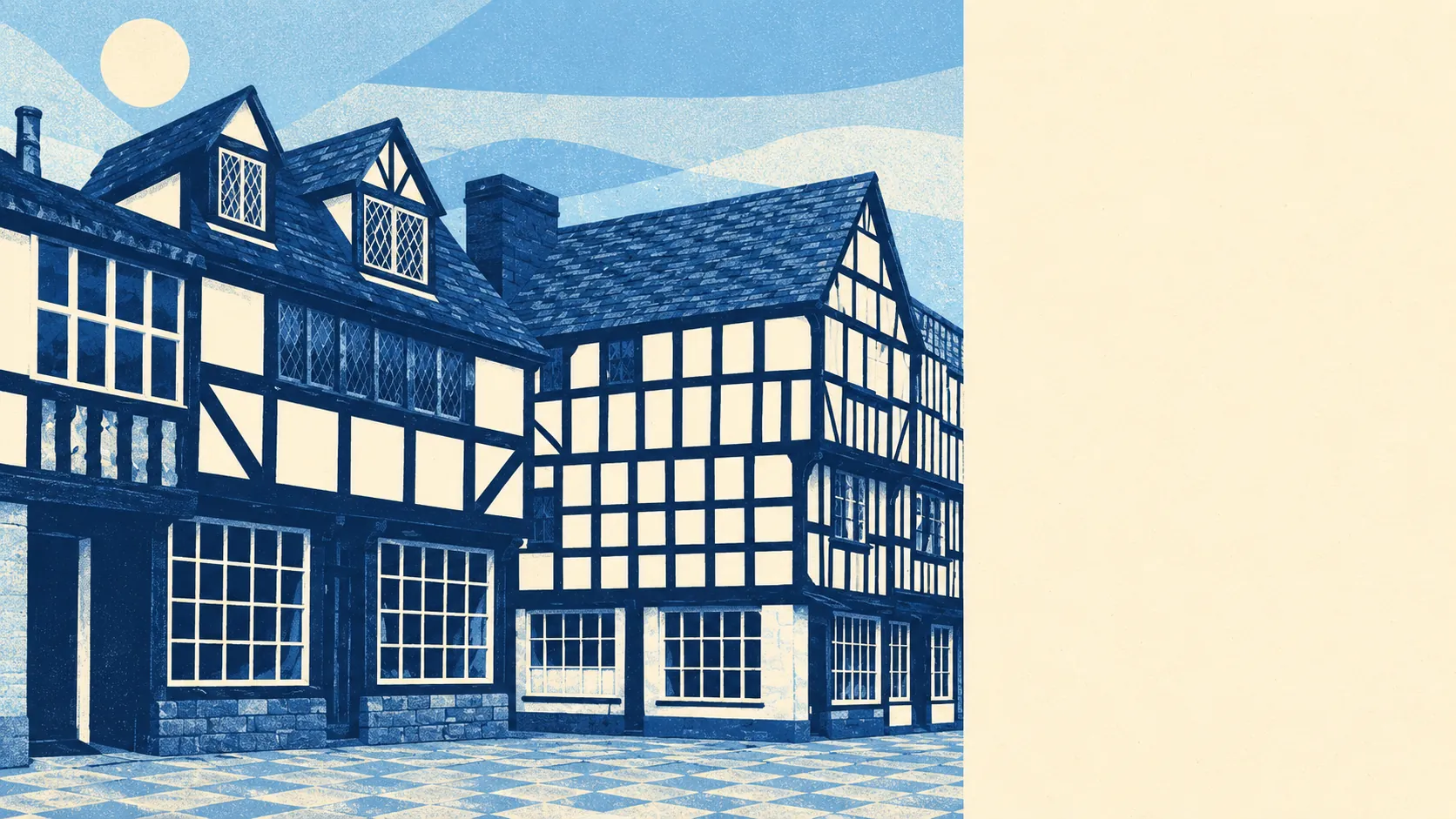
You can extend a house in Tewkesbury, but in the old town expect the council to have a say. The area has hundreds of listed buildings. One conservation area covers the historic core. Outside the old centre, most homes are post-war and much less tightly controlled.
Historic England lists 376 buildings in and around Tewkesbury. Seven are Grade I, 44 are Grade II* and 325 are Grade II. Listing covers the whole building, inside and out, along with structures attached to it. Changing its character, from windows to internal walls, needs listed building consent on top of any planning permission. Doing the work without that consent is a criminal offence, not just a planning dispute. The town's medieval street plan has barely changed in centuries, and the listing rules are a large part of why.
Tewkesbury has one conservation area, named after the town, and it covers the historic core. Inside it, the council controls demolition and looks harder at anything that changes how a building looks from the street. Some smaller works that would be automatic elsewhere need an application here. Tewkesbury Borough Council publishes the boundary map, and that map is the one to check against the exact house, because one side of a street can be inside the line and the other side outside it. A house on the 1965 Mitton estate gets ordinary planning attention. A house on the medieval grid gets close attention.
There are 4 scheduled monuments in the area, the strictest level of protection, under which even the ground is protected. They matter mainly if your garden backs onto one.
Plenty of people still apply. The council received 897 planning applications in the area between April 2024 and June 2026, 416 of them in the last twelve months. Not every one is an extension, and the count says nothing about how many were approved. It does show that a lot of people in Tewkesbury are trying to change their homes, and the council is busy.
Three listed buildings in the area are on Historic England's Heritage at Risk register. A building goes on that register because of its own condition: its repair may qualify for grant support, and any work on it will be closely watched. It changes nothing for an ordinary semi down the road.
Most of the town is easier than the old centre suggests. Only about 15% of homes on the council-tax list were built before 1930, and most of the stock is post-war or later. A house outside the conservation area that is not listed generally keeps its national permitted development rights. Those cover many rear extensions, loft conversions and outbuildings within set size limits, without a full planning application. A listed house has none of that freedom. A house inside the conservation area keeps some of it, with tighter limits on anything visible from the road.
Freedom to extend is limited in Tewkesbury, and the limits are concentrated in the old centre. On the newer estates, the extension you want is likely to be allowed. In the historic core, the house and the council will both have a say.