Yes, provided you accept that the road out is the whole transport plan. Seven in ten own their homes. The median resident is fifty-two. More than a quarter work from home, and almost nobody takes a train. Tavistock solved the commuting problem by declining to commute.
The housing is unusually evenly spread for a town this size. The council tax valuation list, which covers every dwelling rather than only those certificated since 2008, puts the stock at 26% terraced, 23% detached, 20% semi-detached, 17% flats and 14% bungalows, with 26% of it built before 1930 and another 10% put up between 2000 and 2008. Roughly 75% runs on mains gas and 8% on electricity alone. Half of certificated homes sit in bands A to C, 38% land in band D, and 12% come in at band E or worse. An older house on band E with electric-only heating is not a quirk you discover after completion. It is a standing order.
Sale prices reward the patient rather than the ambitious. The Land Registry recorded 187 sales in the year to May 2026 at a median of about £283,000, which splits into roughly £435,000 for a detached house, £290,000 for a semi, £235,000 for a terrace and £155,000 for a flat. Council tax lands mostly at the cheap end, with band B the most common and 40% of dwellings in bands A or B. That combination, low bands and a wide price ladder, is why the town keeps absorbing people who have sold something bigger somewhere flatter.
Renting is priced as the West Devon area rather than as Tavistock specifically. The typical private rent across the wider local authority ran to about £840 a month as of April 2026, up 1.5% over the year, with area-wide figures of roughly £600 for a one-bed, £760 for a two-bed and £940 for a three-bed. Those are the district's numbers, not the town's own, and a market town with a college and a hospital catchment tends to sit at the firmer end of its district.
On safety, the published rate is 57 recorded crimes per 1,000 residents over the twelve months to May 2026, which is about 21% above the West Devon average of 47. Violence and sexual offences make up 46% of the mix against 35% across England and Wales, though that is a broad statutory grouping that includes common assault without injury and tops the table almost everywhere. Anti-social behaviour runs at 13%, below the national 16%. Devon and Cornwall Police charge in 8% of cases against 12% nationally, which is a force-wide figure rather than a Tavistock one, and is worth knowing before anyone tells you rural policing is a formality.
Connectivity is honest about what it is. About 53% drive to work, 13% walk, 26% work from home, 1% take a bus and 0.2% take a train, the last being what happens when the nearest stations are Gunnislake, Bere Alston and Calstock. There are 75 bus stops, averaging 41 weekday services each, and 67 of the 68 stops with published timetables run at weekends too. Department for Transport modelling puts a town centre eight minutes away by car and 18 by public transport, and a hospital 33 minutes by car and 63 by public transport. Broadband is the surprise: gigabit service reaches 84% of premises, superfast 99%, and nothing at all falls below the universal service obligation. At least one mobile operator covers 100% of the area and 91% of it gets all of them.
The setting is the reason people move here and the flooding is the reason some of them regret it. Green space averages 135 metres from the front door with about 25 separate spaces within a kilometre, and water sits 227 metres away on average, which is what living beside the Tavy on the edge of Dartmoor buys you. Against that, 22% of postcodes carry a high rating on at least one flood indicator including surface water, and 17% a medium one. In the Environment Agency's river and sea flood zones, 9% of the town sits in zone 3 and 7% in zone 2, with 19% inside the climate-change extent. Two flood events are formally recorded, the most recent in December 1979 when the main river exceeded its channel capacity. Underneath all of it, 82% of postcodes have abandoned mine workings within 500 metres and 104 have one directly beneath, and the whole area sits in the highest radon band. A town built on tin and copper does not stop being built on tin and copper because the mines shut.
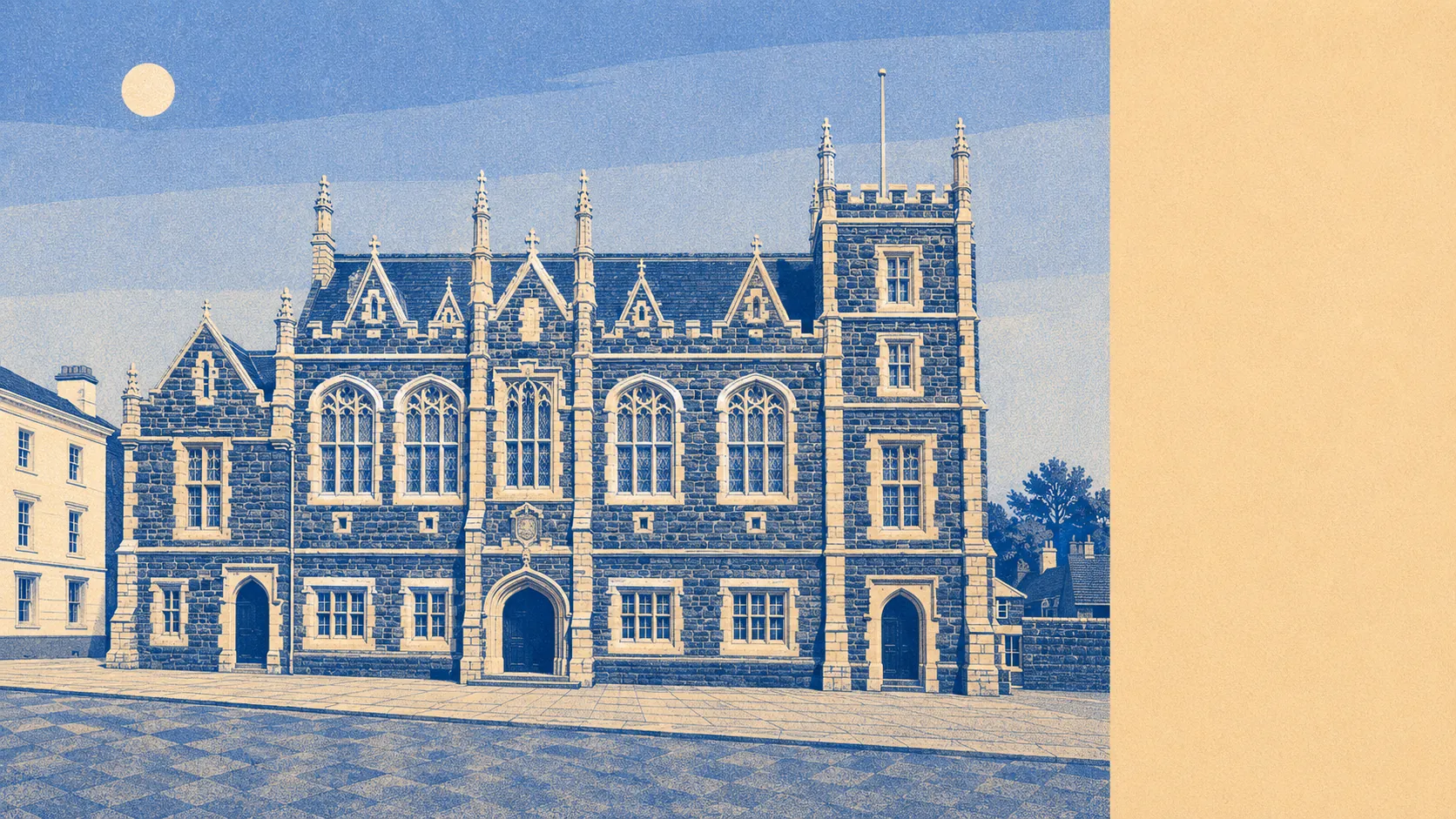
Heritage constraints are real and concentrated. There are 170 listed buildings, five of them Grade I and three Grade II star, two conservation areas covering Tavistock and Whitchurch, and four scheduled monuments including Tavistock Abbey and Pixies' Cross on Whitchurch Down. Around Bedford Square, the Abbey Gatehouse and Betsy Grimbal's Tower, the practical translation is that windows, solar panels and extensions are conversations with the planning department rather than decisions you make on a Saturday.
The people, in aggregate, are settled. Around 69% own their homes, the median age is 52, and median gross household income ran to about £50,000 in the financial year to March 2023. This page also covers Mary Tavy to the north, sitting inside Dartmoor National Park on top of old copper and tin workings, and Whitchurch to the south-east, which was folded into the town in 1930 and kept its own conservation area anyway.
It suits people buying a life rather than a launchpad: remote workers with good broadband and no need of a platform, families using Tavistock College or Mount Kelly, downsizers converting a city terrace into a detached house with change, and anyone whose weekend involves boots.
It does not suit anyone who needs a station, anyone who wants a Victorian property they can alter without consulting a conservation officer, or anyone buying near the river without reading the flood mapping first.
Tavistock has form for producing people who then leave. Francis Drake was born at Crowndale Farm, the poet William Browne and the lawyer and member of parliament John Maynard both came out of the town, and Anna Eliza Bray and Mary Colling wrote from it. The Russells, Earls and later Dukes of Bedford, held the place for over 450 years and rebuilt its centre in their own house style, which is why so much of Tavistock looks like one landlord's opinion, expressed at scale, and why it still works.
Its real strength is where it sits: green space at the end of the street, Dartmoor at the edge of town, and water in every direction. The weak spot is what that water occasionally does, and no amount of moorland view fixes a postcode in flood zone 3. Buy the surroundings, check the mapping, and take the drive as the price of admission.