Yes, provided you arrive with the money already made. Eight in ten own their home. Half the houses are detached. Half the working village commutes to the spare room. Nobody climbs the property ladder in Speldhurst; they bring it with them and park it next to the second car.
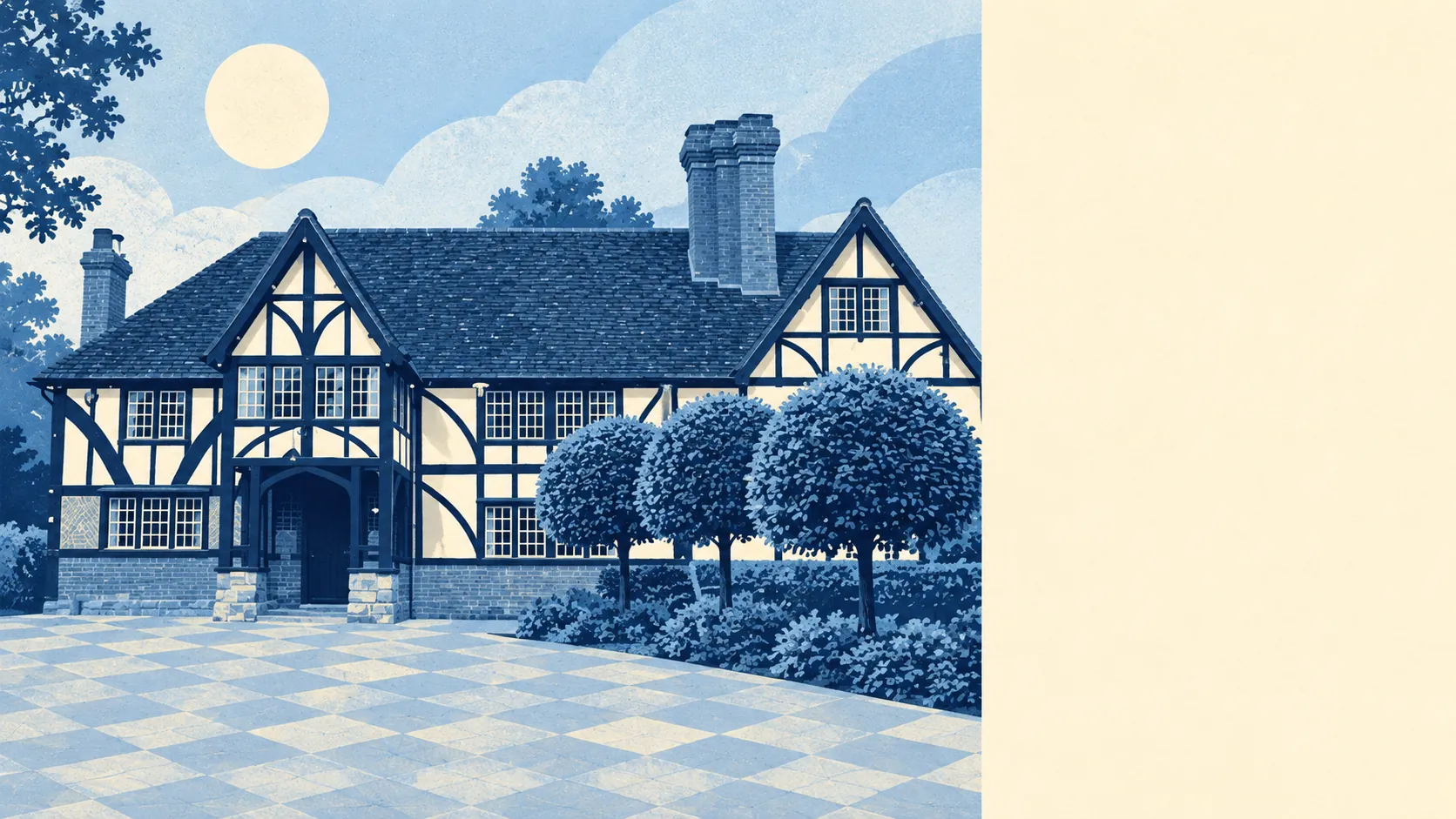
The housing is big and it is old. On the council-tax valuation list, which covers every dwelling rather than only the ones with an energy certificate, half of Speldhurst's homes are detached, about a fifth are semis, 11% are terraced, 9% are bungalows and 8% are flats. That flat figure is the village telling first-time buyers something without having to say it out loud. More than four in ten homes (43%) were built before 1930. The energy certificates follow the age: half of certificated homes sit in band D, 18% in E or worse, and 32% make A to C. Three-quarters of households are on mains gas and 7% rely on electric-only heating. The character goes in the estate agent's brochure. The draughts go in the surveyor's report.
Prices are where Speldhurst stops being polite. The Land Registry recorded eight sales in the twelve months to May 2026, at a typical price of about £705,000. The three detached houses that sold went for a median of about £931,000, and the five semis for about £425,000. Eight sales in a year is less a market than a waiting list with solicitors. Council tax follows the same logic: the most common band is G, and only 8% of homes sit in bands A or B. A Band D bill runs to about £2,450 a year, and Band D is a modest address round here.
Renting is possible in theory. The typical private rent across the Tunbridge Wells area was about £1,510 a month as of April 2026, a borough-wide figure rather than one measured in the village itself, and the big detached houses that dominate Speldhurst will cost more than that. Only about 10% of households rent privately and 7% rent socially. Finding a rental here mostly involves waiting for a landlord to change their mind.
Crime is low enough to be a talking point rather than a worry. Police figures for the year to May 2026 put Speldhurst at about 24 crimes per 1,000 people, roughly 65% below the Tunbridge Wells borough average of about 70. The main threat to the peace is the neighbour's planning application.
Schools are the reason a lot of these families are here. Speldhurst Church of England Voluntary Aided Primary School is about a nine-minute walk on the Department for Transport's modelling, with Langton Green Primary School and Bidborough Church of England Voluntary Controlled Primary School also close. Across the four primaries in the postcode district, the average maths score at the end of primary school is 107. Ofsted has graded 221 of Kent's 245 graded settings good or better, 38 of them outstanding. Secondary is another matter: about 12 minutes by car, 26 by public transport, 46 on foot. The secondary run is where the second car earns its insurance.
The connectivity story is that people stopped needing any. At the 2021 Census, 55% of workers were working from home, 36% drove and 3% took the train. Just over six in ten households run two or more cars. The village has four bus stops averaging about 12 weekday departures each, with weekend services at three of them, which is a timetable nobody bothers to memorise. Tunbridge Wells, High Brooms and Tonbridge stations are the realistic rail options, and the town centre is about 15 minutes by car or 31 by public transport on 2019 modelling. Superfast broadband reaches 96% of premises but full-fibre gigabit only 18%, which matters rather a lot to a village that does its commuting over Wi-Fi. Mobile coverage from at least one operator is complete, and 98% from all of them.
The surroundings are the whole point. Every part of Speldhurst sits inside the High Weald Area of Outstanding Natural Beauty, the nearest green space is about 130 metres away on average, and there are around six within a kilometre. On flooding, none of Speldhurst falls in the Environment Agency's river-and-sea flood zones. Counting postcodes on at least one flood indicator including surface water, about 8% carry a high-risk flag, 3% medium and 24% low. The radon risk is in the lowest band. Check the individual address, but flooding is not what keeps people awake here.
Heritage is a constraint to plan around rather than a wall. There are 52 listed buildings, three at Grade II* and 49 at Grade II, including The George and Dragon, and no conservation areas are recorded. The designated landscape does its own policing, though: an extension here gets judged against the view, by people who will never have to cook in it.
The people match the houses. About 82% of households own their home, the median age is 48, and the Office for National Statistics models average gross household income for the wider area at about £85,000 in the financial year to March 2023. Nearly half of adults hold a degree. These are households that have finished arguing about money and moved on to arguing about hedges.
The page also covers Langton Green and Bidborough, which share the same postcode, the same schools and broadly the same sense that Tunbridge Wells is a nice place to drive into and a nicer place to drive out of.
Speldhurst suits the family that has already done the hard years somewhere else, has equity from a sale, works from home at least half the week and wants a good primary within walking distance and a field within sight. It suits retirees who still drive and intend to keep driving for a long time.
It does not suit first-time buyers, anyone who needs a bus that runs after teatime, or anyone who will be working on a video call over copper broadband. Buyers who want Tunbridge Wells' restaurants and station on foot should buy in Tunbridge Wells and accept the smaller garden. That trade works in both directions.
Speldhurst is a good place to live and an expensive place to get into. Its real strength is the community: settled, owner-occupied, low on crime and high on school-gate organisation. The weak spot is value, with prices that assume the buyer stopped worrying about money a long time ago. The village is right about that assumption more often than not.