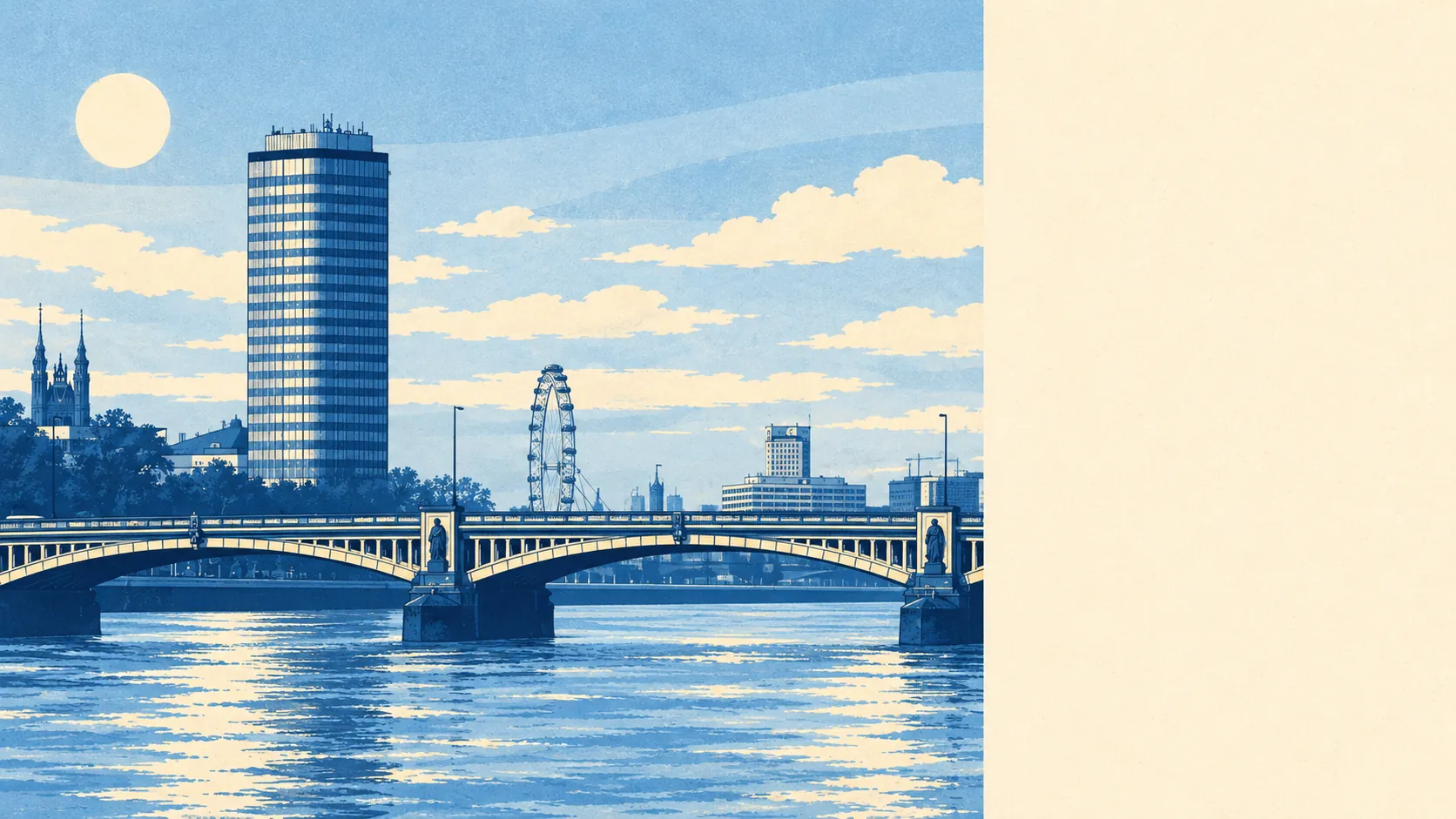
South Lambeth comes out as a fair, middling place to live, and what holds it back is the 383 listed buildings around it, each of which turns a new window into a planning conversation. For a buyer, the house you view is broadly the house you keep. Most people here live in flats, so the question of extending never comes up for them. For the minority in old terraces, it comes up every time they look at the loft.
The listed stock is almost all Grade II, with 19 buildings at Grade II* and none at Grade I. Historic England's lists also put 31 conservation areas inside the wider patch around South Lambeth, including South Lambeth Road, Clapham Road, Vauxhall and Albert Square, and two listed buildings nearby are on the Heritage at Risk register. In a conservation area, changes to windows, doors, roofs and front boundaries usually need consent that would be routine elsewhere, and a listed building adds consent for work inside as well. Albert Square has the name of a soap set and the planning rules of a cathedral close.
Flood risk is the other weak spot, and it reads worse on paper than on the street. In the Environment Agency's river-and-sea flood zones, about 65% of South Lambeth is in Flood Zone 3, the highest band, and about 92% under the agency's climate-change modelling. Those zones are drawn as if the river walls weren't there. The agency's property-level assessment, which counts the defences, puts no homes at high or medium risk from the river and about 7,700 at very low risk. On a separate measure, about 11% of postcodes are at high risk on at least one flood indicator, surface water included, and 19% at medium. The last flood the agency records from the river was in 1928, when the defences were overtopped. Since then the river walls have done their job, and the insurance forms still ask the question.
Crime runs at about 153 recorded offences per 1,000 residents in the year to May 2026, according to the police.uk figures, about level with Lambeth's rate of 151. The mix is distinctive. Theft from the person makes up about 14% of recorded crime here against about 2% across England and Wales, while violence and sexual offences are a smaller share than the national figure. The Metropolitan Police charged about 10% of cases over the same year, below the national 12%, and that is a force-wide figure covering all of London. In South Lambeth, phones go missing more often than people get hurt.
Getting about is easy, and the bus does most of the work. There are 157 bus stops in and around South Lambeth, and the average stop sees about 643 scheduled departures on a weekday, around 35 an hour at peak, with weekend service at every one. Vauxhall and Wandsworth Road stations are on the edge of the district. At the 2021 census about two-thirds of households had no car, and nearly half of working residents worked from home. Gigabit broadband reaches about 87% of premises and superfast about 98%. Nobody here waits long enough for a bus to learn its number.
Buying is expensive, and the type of home sets the price. The Land Registry's last twelve months to mid-May 2026 show 270 sales at a median of about £552,000. The 219 flats went for a median of about £500,000; the 48 terraced houses went for about £900,000. The Office for National Statistics house price index puts the average at about £545,000 in May 2026, down about 3% on a year and about 7% over five years. Council tax is most often band C, with about 21% of homes in bands A and B. The gap between a flat and a terrace buys you a front wall you are allowed to argue with the council about.
Across the whole borough, Lambeth's typical private rent was about £2,530 a month in April 2026, up about 7% on a year. That is a borough-wide mean from the Office for National Statistics, and one-bedroom homes across Lambeth averaged about £1,880. South Lambeth's own streets will vary either side of it.
The council-tax valuation list, which covers every dwelling, shows the stock is about 89% flats and 9% terraced houses, with detached and semi-detached homes barely registering. About 22% was built before 1930. Energy certificates are better than the age of the stock suggests, with about 72% rated A to C and only about 5% rated E or worse, because modern blocks pull the average up. About 62% of homes heat with mains gas and about 18% are electric-only, which in a purpose-built block is normal and in a converted Victorian flat is worth knowing before you see the bills.
Only about 24% of households own their home. Roughly equal shares rent from a private landlord and from the council or a housing association. The median resident is 32. Gross household income averaged about £75,600 in the financial year to March 2023, a figure the Office for National Statistics models for neighbourhood areas, not one anyone filled in. Young, renting and well paid is the profile, and the flat-heavy stock is why.
The primary picture is strong. Ofsted has graded 41 schools and settings in the area's count, with 35 rated good or better and 11 outstanding. The 8 primaries in the district average about 103 in the key stage 2 maths test, and Wyvil Primary, Herbert Morrison Primary and St Stephen's Church of England Primary are among the local options. The Department for Transport's 2019 modelling puts the nearest primary about five minutes' walk from the average home.
The surroundings are where South Lambeth wins. The nearest green space is on average about 95 metres from a front door, with around 64 within a kilometre, and water is about 585 metres away. Kennington Park and Battersea Park are within reach for anything bigger than a lunchtime walk. Vauxhall made its name with pleasure gardens, and the modern version is smaller, free and full of dogs.
Young renters, first-time flat buyers and anyone who wants central London without driving will find it works. Families who need a garden, a driveway or room to build out should look elsewhere, because the stock rarely offers the first two and the heritage rules ration the third.
The parks are close enough to treat as an extra room, and the buses mean you never need to own a car. What you give up is control. If you buy one of the old houses, its fabric belongs partly to the conservation rules, so you are paying for the house as it is and not for what you hoped to turn it into. South Lambeth works well for people who want the location and leave the building alone, and less well for anyone who comes with plans.