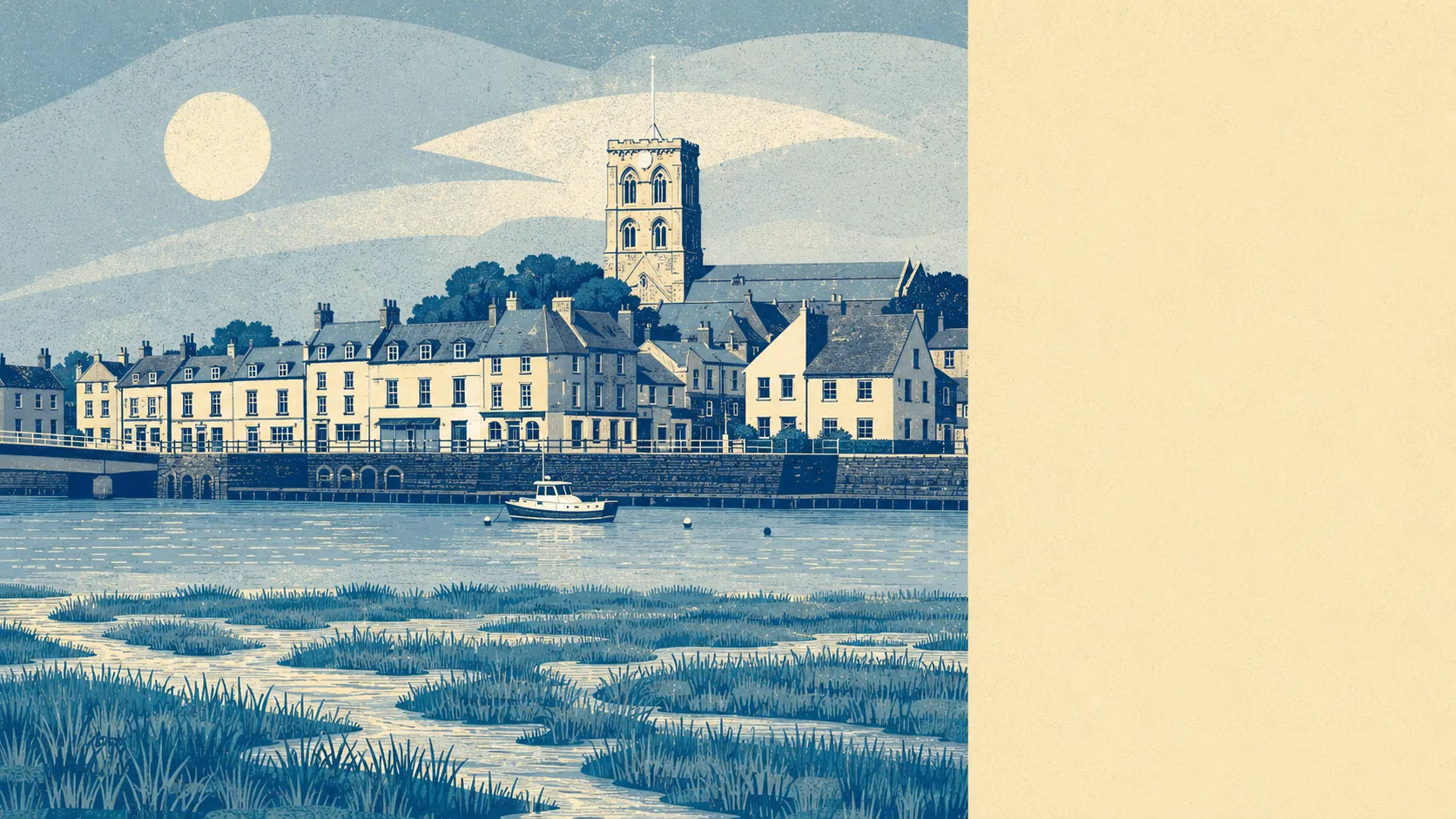
Shoreham is home to a settled, mostly owner-occupier population whose median age is forty-six and whose typical household earns shy of fifty-seven thousand a year. Over seven in ten homes are owned outright or on a mortgage. A quarter of households rent, split roughly between private landlords and social providers. The town's ranking on the relative-deprivation scale has been climbing steadily. These are the people who bought in and stayed, and the last decade has left them quietly better off than they arrived.
Home ownership is the main story of Shoreham's tenure map. Over seven in ten households own their homes, whether outright or on a mortgage. About one in six households rents privately, and roughly one in nine sits in the social sector. The overall shape is high-ownership and slow to change, which is why the character of the town's residential streets does not shift much between years, and why the same names come up on the same road for two decades at a time.
The age profile skews middle. The median resident is forty-six. Over one in five residents falls into the twenty-five-to-forty-four working-age band, which is a smaller share than a young town would show but larger than a retirement community. Older working-age adults and pensioners fill out the rest, and the town's residential streets carry more grey hair than a Brighton pavement would.
Household income comes in shy of fifty-seven thousand pounds for the typical Shoreham household. That is a comfortable middle-class income for a south-coast town of this size. Combined with the ownership rate, it puts most Shoreham households in the position of owning the house they live in and having enough disposable to hold onto it. The number is not a Brighton earner's number, but Brighton earners cannot afford Brighton houses, which is why so many of them ended up here.
Household make-up runs across the usual mix for a town this size. Roughly a third of Shoreham households are single-person, which is consistent with the town's median age. About one in six is a single pensioner, most of whom own the house they live in. One in five is a couple with dependent children. Around one in ten is a lone parent household. The rest are couples without dependent children, older shared households, and the in-between arrangements a real town will always contain.
Above-average on the who-lives-here picture, which the data earns. Shoreham has a settled, mostly owner-occupier population that is more comfortable than the postcode's history would suggest, and that comfort has been growing steadily. Which is either good news for the people who arrived early, or a warning about who will still be able to afford to arrive in ten years' time.